
Screening for Vertical and AP Issues without a Ceph, Using an E-Line
I. Introduction: Why Facial Analysis Comes First
- In orthodontic treatment planning, especially at the early stages, facial assessment should be your first step—even before looking at x-rays.
- At StraightSmile Solutions, we recommend starting with extraoral photos and using the E-line as a simple, reliable screening tool.
- This sets the tone for a patient-centered, visually guided approach that helps prioritize harmony and aesthetics.
II. What is the E-Line?
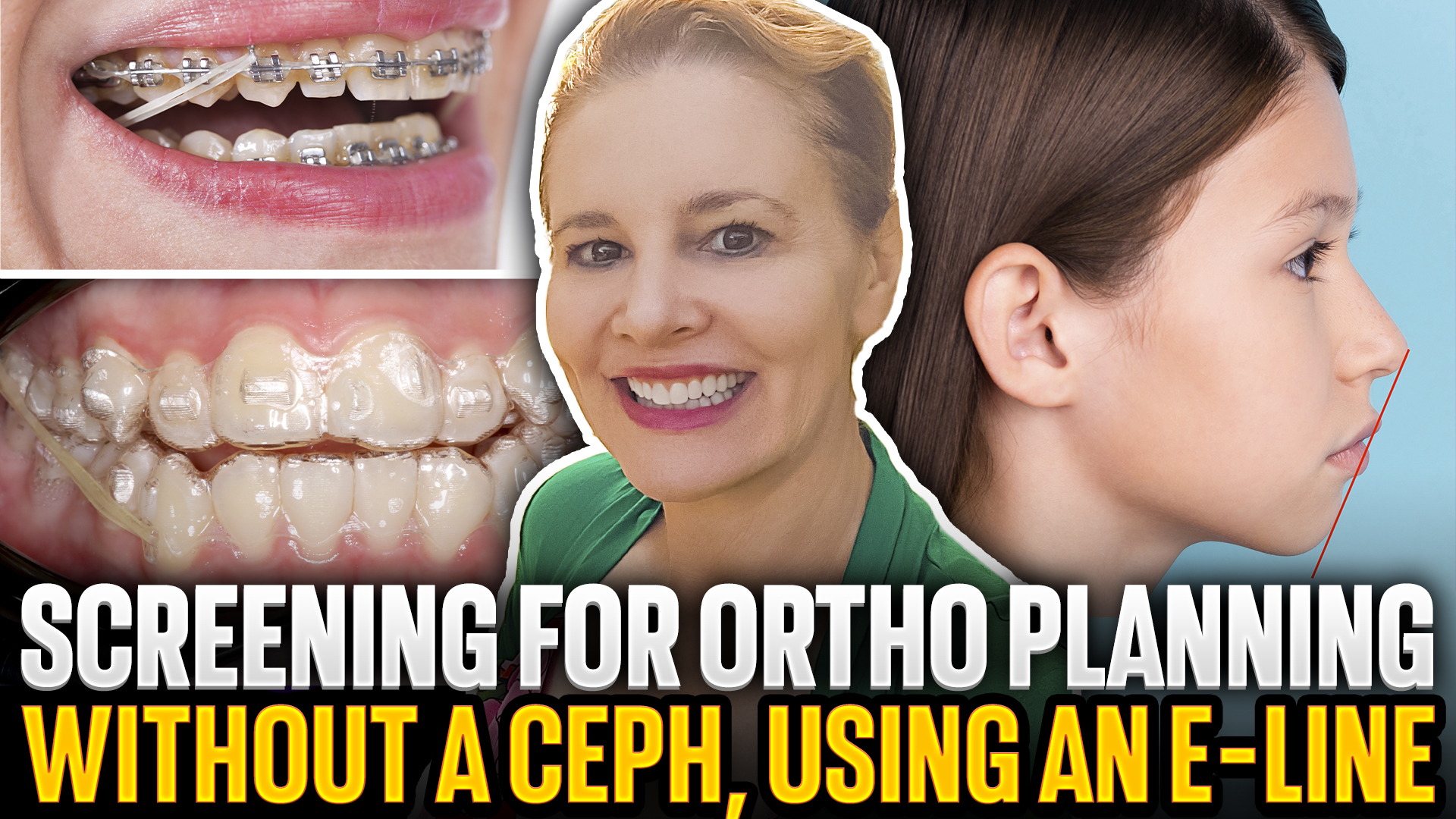
- The E-line (esthetic line) is drawn from the tip of the nose to the tip of the chin in a profile photograph.
- It helps evaluate how the upper and lower lips relate to each other and the rest of the facial profile.
- Aesthetically ideal lips tend to fall just behind or near this line, though beauty standards vary and soft tissue changes over time.
III. Why Use the E-Line in Treatment Planning?
- The E-line offers a free and easy tool to screen patients for jaw positioning and facial imbalance.
- Common observations using E-line analysis:
- Retrusive maxilla or mandible
- Protrusive or prognathic jaw
- Lip incompetence
- These findings help flag sagittal and vertical discrepancies before radiographs are needed.
IV. What If You Don’t Have a Ceph Machine?
- Many orthodontists take a cephalometric x-ray (ceph) for every case, often just because the equipment is available.
- However, not every practice has a ceph machine, and that’s okay:
- Follow your local Dental Practice Act for regulations on diagnostics.
- Explore options nearby—oral surgeons, periodontists, or imaging centers often offer cephs.
- For adult cases especially, a small field CBCT can often provide enough information, since you’re not managing growth.
V. How to Use Extraoral Photos Effectively
- When we work cases with doctors, we start by reviewing:
- Resting face photo
- Smiling photo
- Profile photo (used for E-line)
- Before you check intraoral photos, x-rays, or scans, ask:
“What do we see in the face?” - Look for:
- Flat cheekbones
- Venus pooling under the eyes
- Short or long lower face height
- Nasolabial angle (ideally acute but not too sharp or obtuse)
VI. Patient Communication: Choose Words Carefully
- Please be cautious when discussing facial observations with patients or parents.
- Avoid subjective, judgmental terms like “big,” “small,” or “weird.”
- If the patient or parent mentions a concern first (e.g., “She has no chin”), you can acknowledge it and build from there.
- Use objective terms supported by measurements when needed.
- Practice scripting with your team so everyone—doctors, hygienists, and treatment coordinators—knows how to communicate kindly and clearly.
VII. A Personal Perspective
- Many teens are sensitive to appearance, and poorly delivered comments can harm their self-esteem.
- One uncomfortable experience at 17 can stick with a patient for life.
- Make it a priority to build trust, not insecurity.
VIII. Final Thoughts
- The E-line is a powerful screening tool that costs nothing and can guide your treatment strategy effectively.
- It helps sort cases early and identify potential red flags.
- With the right training and thoughtful communication, you can offer better care—and stronger patient relationships.
- At StraightSmile Solutions, we’re here to help you plan, assess, and speak with confidence.