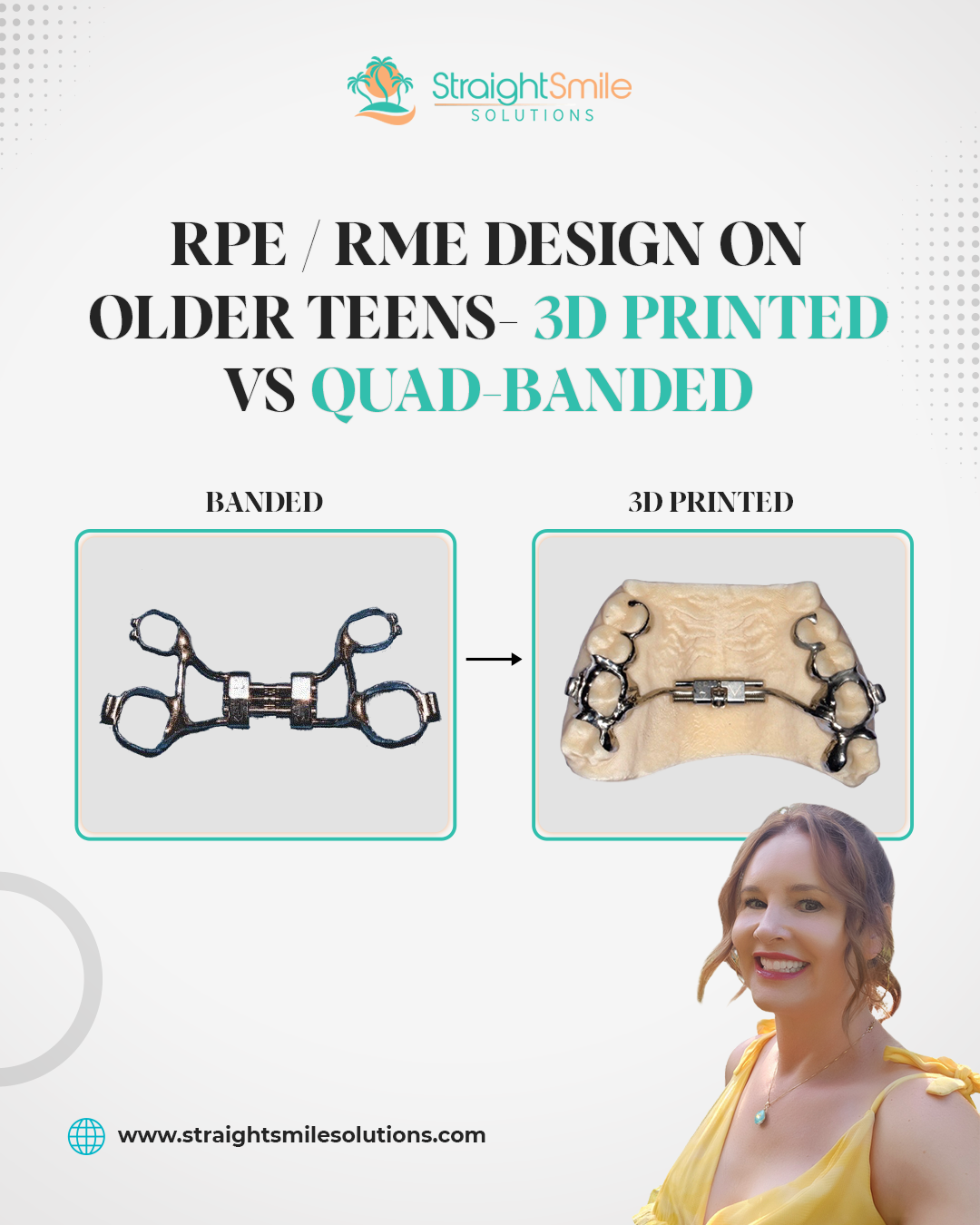
RME and RPE Design for Older Teens, Lab Slips for Expanders
Introduction
- Dr. Amanda discusses preferred designs for Rapid Maxillary Expansion (RME) and Rapid Palatal Expansion (RPE) in older teens.
- Expansion is more straightforward during mixed dentition, but fully erupted permanent teeth make treatment trickier.
- Focus is on achieving balanced expansion and avoiding common pitfalls with poor appliance design.
Challenges with Older Teen Expansion
- Expansion in older teens tends to create a V-shaped result if only mini-palatal expanders are used.
- Less effective widening in the anterior region compared to mixed dentition.
- Proper design is critical to achieving uniform results and long-term stability.
Appliance Design Preferences
- Traditional Banded 46/46 Appliances:
- Old-school method requiring spacers.
- Provides more effective, stable expansion compared to minimalistic soldered bar designs.
- Considered healthier for gum tissues.
- 3D Printed Expanders:
- Must be well-adapted and fit precisely; should “drop right in” without adjustments.
- Poorly fitted or loose expanders should be rejected and remade.
- Superior fit reduces risks of gingival inflammation, decalcification, and decay.
- Larger labs with 3D metal-printing capabilities are generally recommended for quality appliances.
Practical Considerations
- Appliance costs range $150–$225, making proper fit essential to avoid wasted time and resources.
- Expanders typically stay on for 5–6 months, covering both activation (turns) and retention (holding) phases.
- Poor designs like simple soldered bars are ineffective and not worth using.
- Clinicians should maintain open communication with their labs to ensure design precision and durability.
Conclusion
- For older teens, achieving effective and healthy expansion requires careful appliance selection.
- Traditional banded expanders and precisely fitted 3D printed appliances provide the most reliable results.
- Ensuring fitness, lab quality, and patient comfort minimizes complications and maximizes long-term orthodontic success.