
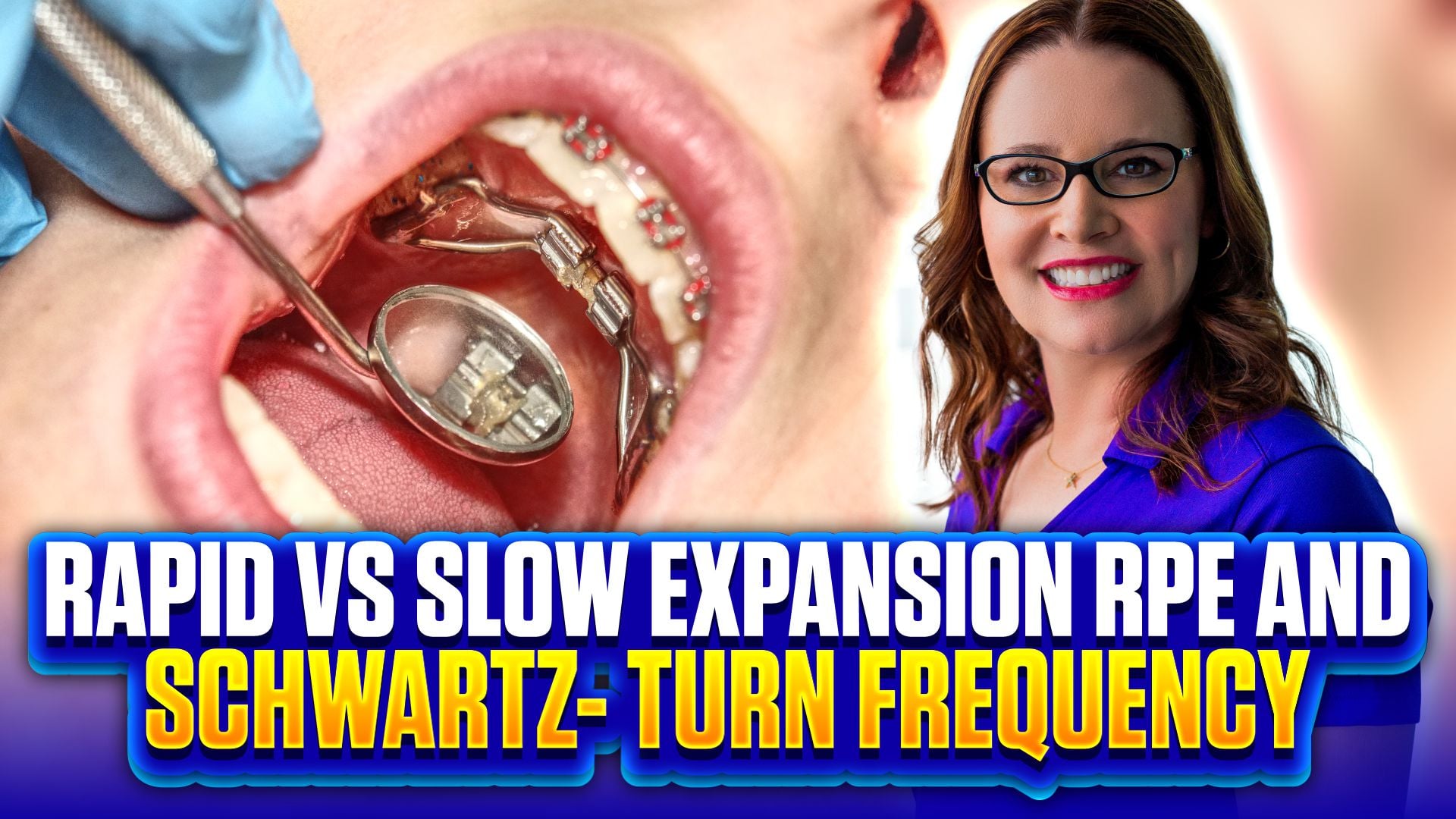
Rapid vs Slow Turns with RPE and Schwartz
When it comes to expansion cases, should you be using rapid or slow turns with RPE or Schwartz? There are benefits associated with both rapid and slow turns, and keeping this in mind is important to ensure that your orthodontics patient is fully aware of the process and that finishing cases is simple and low-risk.
The Challenges of Rapid Expansion
There are several potential orthodontics challenges with rapid expansion and turns in fixed cases, and this can make finishing cases comfortably and successfully difficult. One common issue is that patients who speak English as a second language may struggle to understand the rapid turns, which can lead to discomfort if they use too rapid turns. Additionally, in a handful of rare cases, there is a risk of excessively rapid turns being used as a punishment.
Benefits of Slow Turns
Slow turns can make finishing cases in orthodontics much slower, but there are numerous benefits associated with this. For one thing, this allows you to keep the same instructions for both removable and fixed expansion cases, regardless of whether you use RPE or Schwartz; this makes instructions much more consistent.
Slow turns can also lead to fewer risks and complications, while also preventing the large gap between the front teeth that can arise with rapid turns. This also helps provide gentle, more comfortable alignment.
Don’t forget, with slow turns especially, make sure you get the patient in regularly to check the frequency. In addition, all expander patients should have an appointment to follow up; never ghost an expander patient, as strange things can potentially happen.