
I. Introduction
A. Dr. Amanda from Straightsmile Solutions
B. Explaining “pre-phase 1 Ortho treatment”
II. Phase 1 Ortho Treatment
A. Usually starts around age 7-9
B. Criteria for phase 1 treatment
1. First permanent molars erupted
2. Eruption of lower anterior teeth (5, 6, 7, 8)
3. Ideal: Eruption of upper anterior teeth (7-10)
C. Goal of phase 1 treatment
1. Correct overjets
2. Address negative overbites
3. Manage crossbites (anterior and posterior)
4. Develop arches to prevent impactions and crowding
D. Phase 2 treatment should be simplified if Phase 1 is done correctly
E. Rare cases may not need phase 2 treatment
III. Pre-Phase 1 Ortho Treatment
A. For younger kids with baby teeth or limited permanent teeth
B. Considerations for pre-phase 1 treatment
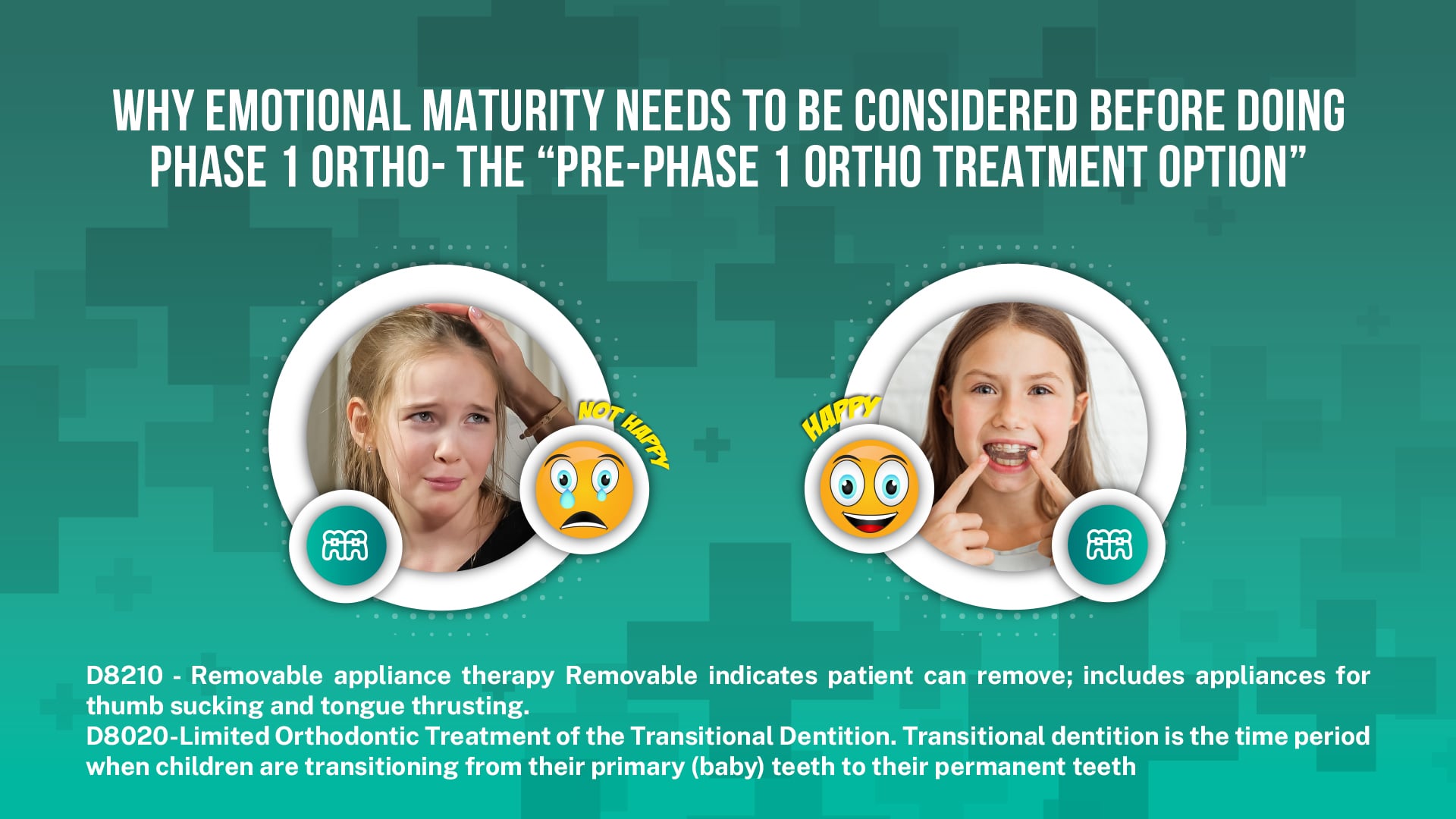
1. Emotional maturity of the child
2. Parent’s awareness and concerns
3. Potential habits or issues (e.g., open bites, constricted palate)
C. Custom treatment is not recommended for very young kids
D. Simple, off-the-shelf options
1. UT trainer or U concept appliances from Great Lakes Orthodontics
2. Healthy Start appliances (requires certification)
3. Myobrace appliances (another option)
E. Emotional maturity is crucial in pre-phase 1
1. Crying, fidgeting, inability to follow instructions
2. Patience and readiness are essential
F. Reevaluate the child’s readiness over time
IV. Billing and Insurance
A. Insurance may not always cover pre-phase 1 treatment
B. Pre-authorization is recommended
C. Consider the impact on the patient’s lifetime insurance benefits
D. Charging a cash payment or providing credit for future phase 1 treatment
1. Offer a credit if pre-phase 1 goes well and they proceed to phase 1
2. Ensure compliance and motivation
E. Be aware of your state’s laws and regulations regarding billing and insurance
V. Conclusion
Pre-Phase 1 interceptive treatment benefits young patients, but its success relies on a child’s emotional maturity. Emotional maturity is crucial for a comfortable and productive orthodontic experience. Orthodontists must assess emotional readiness and consider alternative approaches when children show unease or uncooperativeness. This ensures a smoother and more successful orthodontic journey for young patients, ensuring a comfortable and productive experience for both the child and the orthodontic team.