Posterior Bite Bumps (Turbos): Dangerous or Just Bad Orthodontics? How to Manage Risks Safely Through Proper Case Selection
Introduction
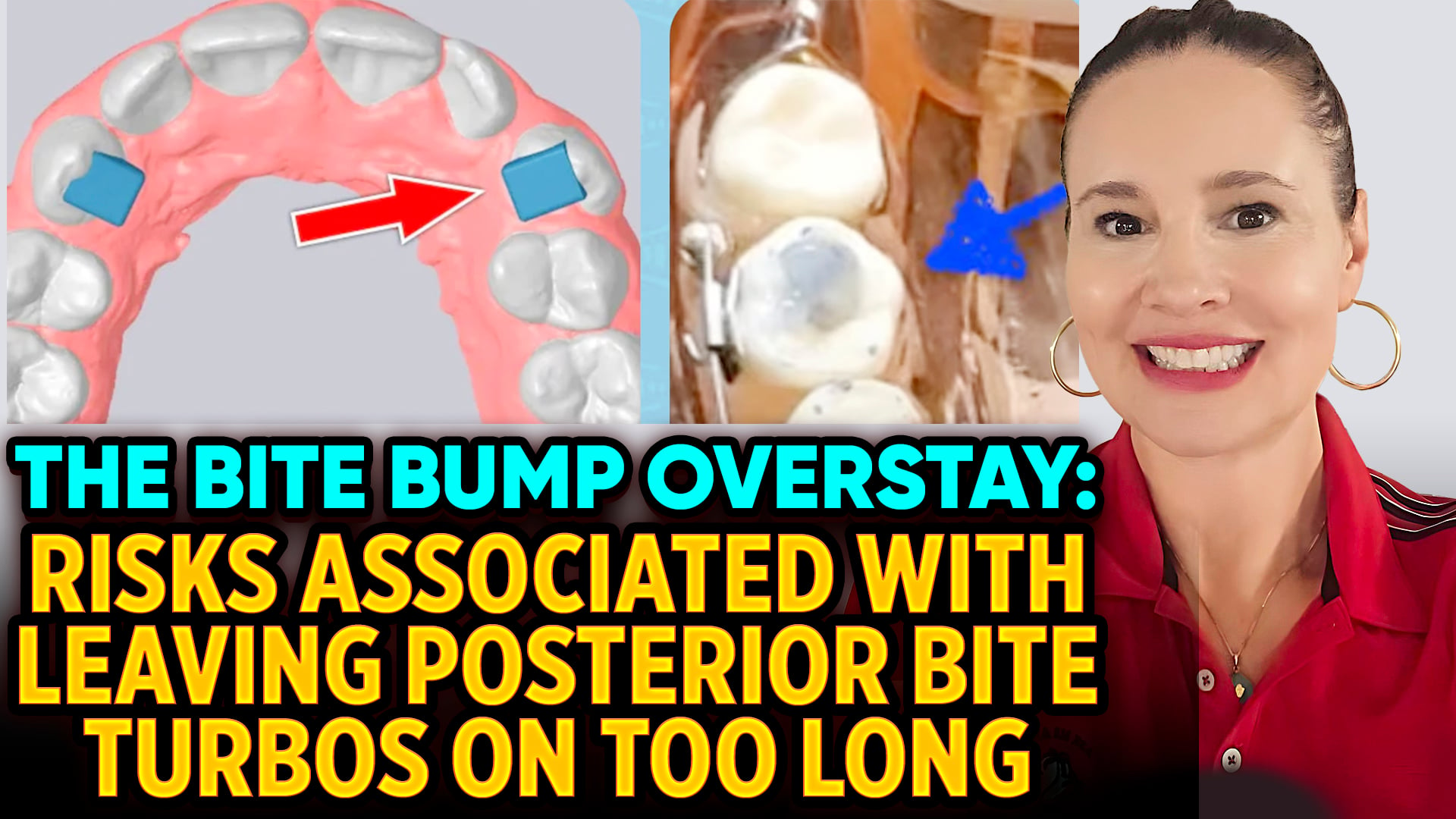
Dr. Amanda of Straight Smile Solutions discusses posterior bite turbos, also known as bite bumps or bite ramps, and explains why they pose significant biological and medicolegal risks when used improperly. While bite turbos can be effective for opening the bite in braces cases, she emphasizes that they should be used rarely as part of routine treatment. Poor planning, incorrect placement, and prolonged use can turn a short-term aid into a long-term liability.
Clinical Risks and Management Considerations
What Posterior Bite Bumps Do
- Composite placed on posterior teeth to temporarily open the bite
- Commonly used in braces cases to prevent bracket interference
- Forces are concentrated on individual teeth (unlike aligners, where forces are distributed)
Why They Can Be Dangerous
- Excessive force loading on a single tooth
- Increased risk of:
- Root resorption
- PDL trauma
- Tooth mobility or damage
- Patient discomfort and pain
- Using only one bite bump is especially harmful and should be avoided
Common Clinical Mistakes
- Leaving bite turbos on for months or years
- Forgetting they are present
- Poor tooth selection or excessive height
- Using them routinely instead of proper treatment planning
Risk Management Requirements
- Bite turbos should never be part of a default plan
- Must be monitored at least every 4 weeks
- Chart alerts and removal deadlines are mandatory
- Missed appointments require immediate follow-up
- If used longer than 2–3 months, forces must be distributed across multiple teeth
Preferred Alternatives
- Removable posterior appliances (Gelb/GEL appliances)
- Safer, healthier force distribution
- Best for temporary bite opening when lower teeth interfere with upper movement
- Bite turbos are only justified when patients refuse removable options
Conclusion
Posterior bite turbos are not inherently evil, but careless use is. Dr. Amanda stresses that excellent treatment planning should make them rare, short-term, and closely supervised. When used thoughtfully, documented carefully, and removed promptly, risks are minimized. When overused or forgotten, they represent poor mechanics and unnecessary danger.