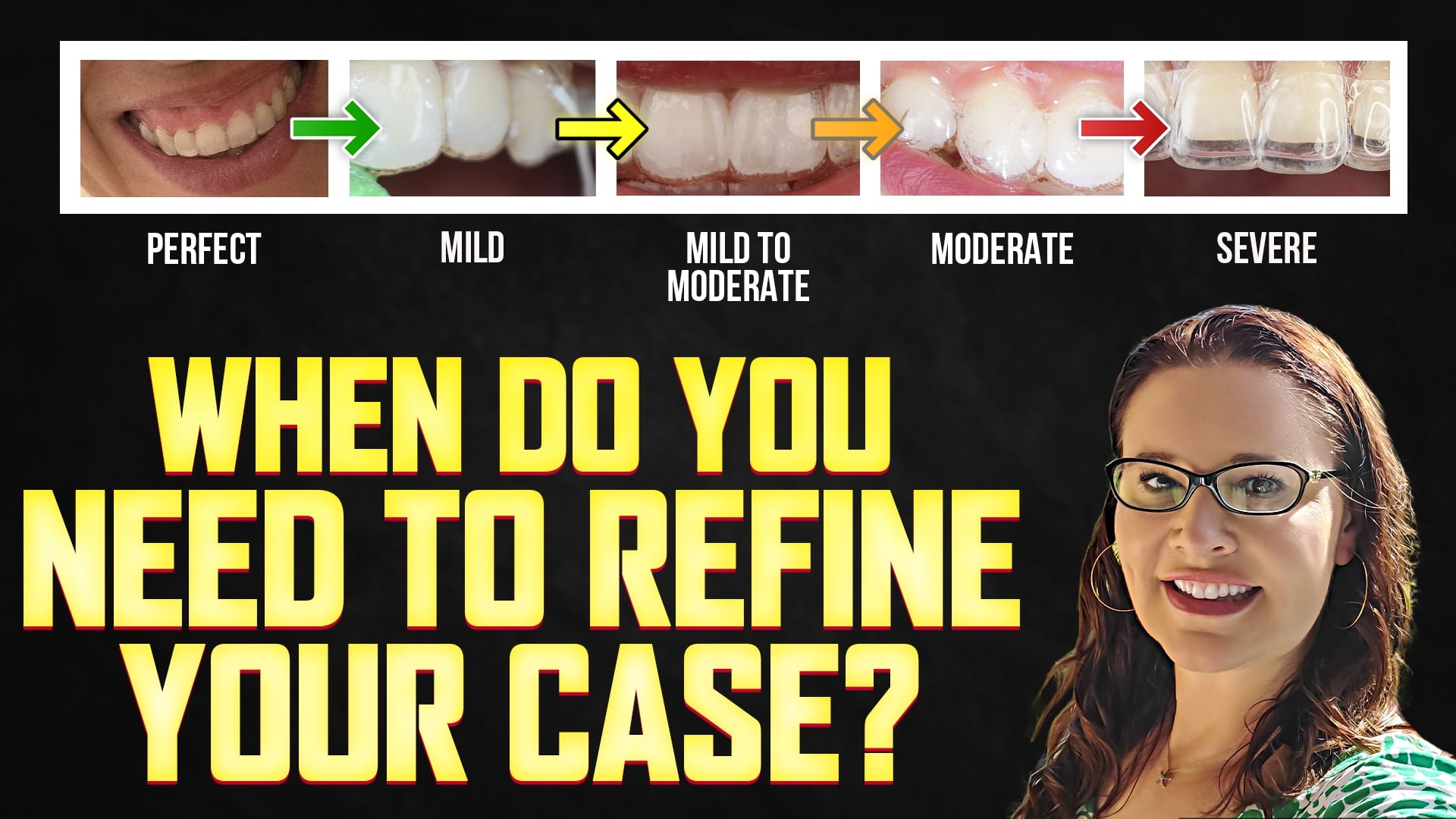
- Understanding Minor Tracking Issues
• Minor tracking issues are common and not necessarily alarming if there’s no pathology and the bite remains stable.
• When issues arise, reboot the case to the original plan—no need for major changes unless problems worsen.
• Clinicians are advised against trying to “push through” misaligned cases with more aligners; this may cause complex setbacks.
• Do not appease patients by giving too many trays—limit to five until tracking improves.
• Virtual or in-person monitoring every few weeks is critical to catch and manage issues early. - Efficient Refinement Submission Tips
• Use existing attachments if they’re intact and well-placed—avoid unnecessary removal and re-bonding.
• Select “continue towards achieving the same final treatment plan” during submission to avoid resetting the whole case.
• Avoid the “make finishing adjustments” option, as it often derails previously optimized setups.
• Always review revised plans closely—even with proper selections, Invisalign may introduce unintended IPR or attachment changes.
III. Custom Treatment Instructions for Refinement
• Sample instructions include:
- “Use existing attachments unless replacement is necessary.”
- “Add additional attachments as needed for extrusions, torque, or rotations.”
- “Refer to movements in the previous plan.”
- “Finish with 3-point molar, 2-point premolar, and light canine guidance.”
• Inform the lab if IPR has already been completed to avoid repetition or under correction.
• Always count trays and estimate based on prior usage to avoid short refinements.
- Clinical Strategy for Success
• A strong initial ClinCheck, tight tracking oversight, and saved aligners allow for smooth reboots.
• Refrain from giving all trays at once unless systems are in place for accountability.
• Establishing refined workflows reduces the need for ongoing consultation and saves long-term time.