
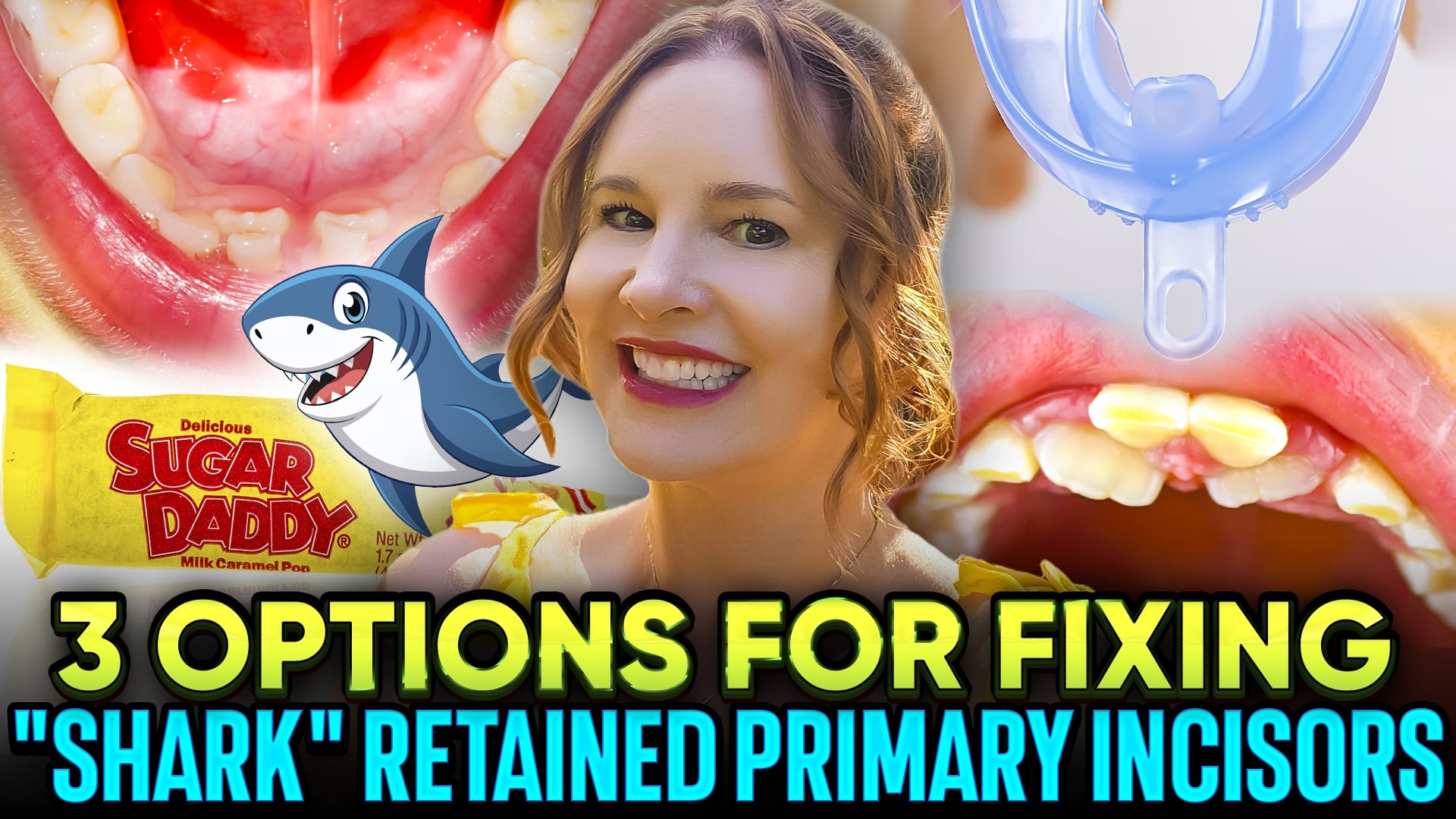
Non-Extraction Options for Shark-Retained Teeth
- Introduction
- Dr. Amanda from Straight Smile Solutions discusses “shark teeth,” a common condition where kids have two rows of teeth due to retained baby teeth.
- This occurs when the roots of baby teeth don’t resorb fully, often during the eruption of permanent incisors or molars.
- It’s a developmental variation—not always a cause for alarm.
- The key is understanding the child’s behavior (wiggler vs. non-wiggler) and family dynamics for appropriate treatment planning.
- Rushing into extractions isn’t always the best first step.
- Conservative Strategies for Shark Teeth
- Wiggling Encouragement: Children should be encouraged to manually loosen their baby teeth if they’re comfortable.
- Candy Orthodontics:
- Supervised biting of hard, sticky candies like Sugar Daddies helps dislodge retained teeth.
- Effective in children who can’t or won’t wiggle their teeth themselves.
- Must be paired with proper oral hygiene to prevent decay.
- These methods use natural muscle forces—what Dr. Amanda calls “free orthodontics.”
- Avoids trauma or complications of premature extractions.
III. Appliance-Based Support
- Bio-Trainers & U Concept Devices:
- Functional appliances that improve tongue posture, lip seal, and nasal breathing.
- Simultaneously help realign teeth and correct oral habits.
- Especially useful in sensory-sensitive children or when natural methods don’t work.
- These devices offer dual benefits: orthodontic support and improved orofacial function.
- Role of Parents & Hygiene
- Successful treatment depends on active involvement from both parents.
- Involving dads is essential—conflicts arise if only one parent consents.
- Hygiene is critical during the “shark teeth” phase.
- Tools like WaterPiks and Sonicare brushes help clean hard-to-reach areas.
- Especially important when candy, orthodontics, or appliances are used.
- Conclusion
- Most cases of shark teeth resolve without invasive procedures.
- Dentists should delay extraction unless infection, pain, or hygiene problems arise.
- Encourage natural loosening, involve both parents, and use tools like appliances or candy-based methods when needed.
- With proper supervision, children can benefit from their body’s natural mechanics to achieve healthy, aligned smiles.