
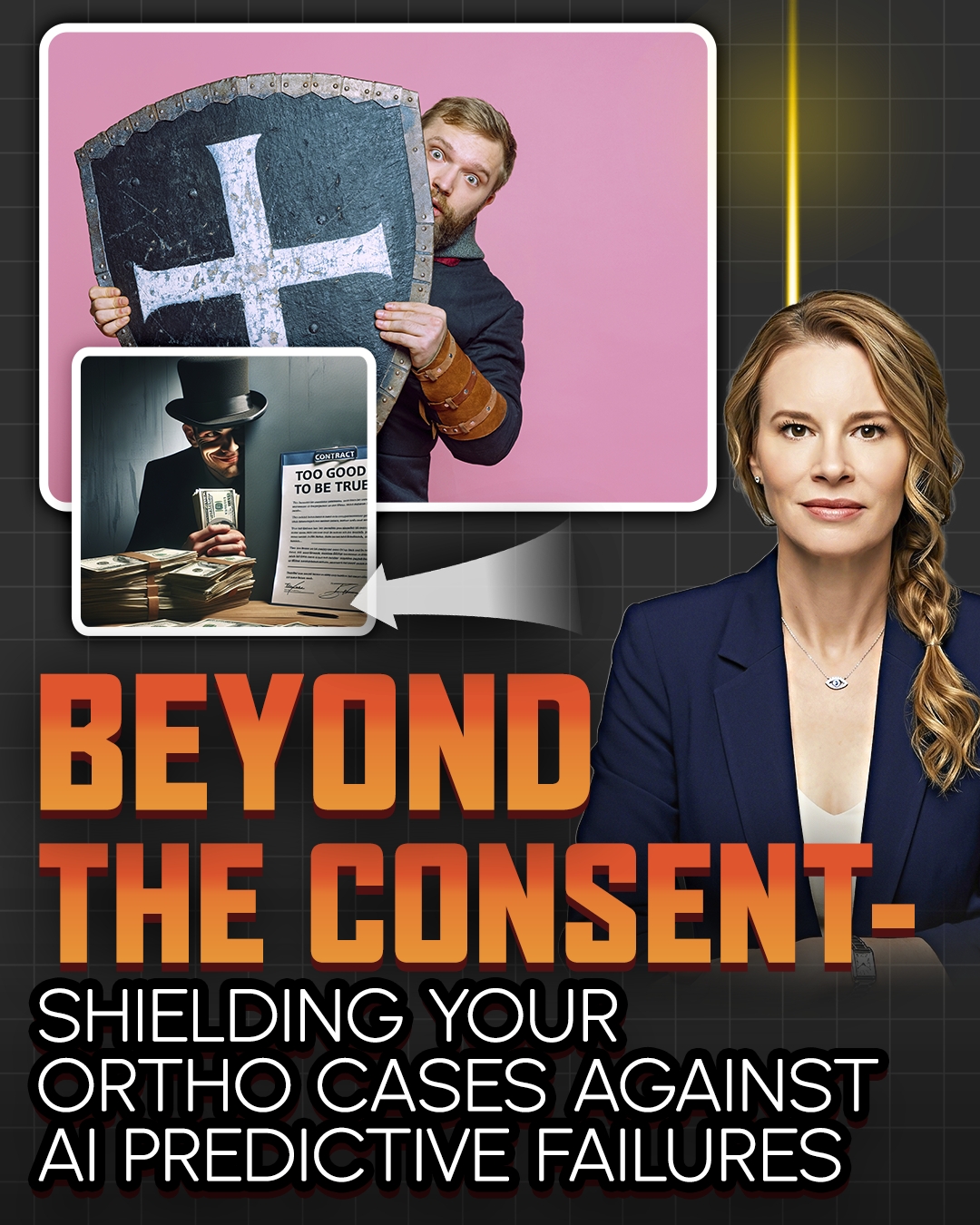
 Navigating the Legal Risks of AI Predictions in Modern OrthodonticsArtificial intelligence is rapidly reshaping the dental landscape. From digital smile simulations to CBCT root predictions, AI tools provide powerful visual aids for treatment planning. However, relying heavily on these digital previews introduces significant legal and clinical vulnerabilities for practicing dentists. Dental practitioners must actively manage patient expectations to protect their practices from modern liability traps.The Illusion of Perfection vs. Biological RealityAI predictive software operates on mathematical algorithms rather than human biology. These programs easily generate perfectly leveled midlines, symmetrical gingival margins, and idealized smile lines on a digital screen. Unfortunately, algorithms cannot accurately control for individual biological variables like bone density, tongue thrusting, root morphology, or patient compliance. Because teeth rarely move exactly as a computer predicts, showcasing an idealized simulation can cause a patient to assume that the digital preview is a guaranteed mirror of their future smile.The Breach of Contract TrapWhile standard medical consent forms state that results may vary, they rarely shield a provider from the legal traps of digital simulations. Presenting a highly detailed, AI-generated image of a patient’s exact face and teeth can inadvertently create an implied contract or express warranty. If a patient saves a screenshot of that simulation and their final physical result differs, an attorney could argue that the clinician promised a precise physical outcome.Proactive Protection StrategiesTo bridge this informed consent gap, dental teams must immediately adjust how they present digital simulations. Consider implementing the following steps to safeguard your practice:Train Your Staff: Ensure assistants and treatment coordinators never say that this is how teeth will look.Shift Your Phrasing: Reframe the simulation as a blueprint the software uses to help the doctor see the direction of treatment, rather than a final destination.Implement Custom Documentation: Standard consent forms may not cover AI failures. Consult with a local healthcare attorney to create a supplemental informed consent form tailored to digital simulations.Thoroughly Record Every Visit: Patients frequently use smartphones to record consultations. Always document your explicit verbal disclaimers in the patient’s chart after every single case presentation.AI is an excellent educational benchmark, but it remains a tool rather than a definitive guarantee. Prioritizing transparent communication and robust legal protections ensures your practice thrives safely in a technology-driven era.