
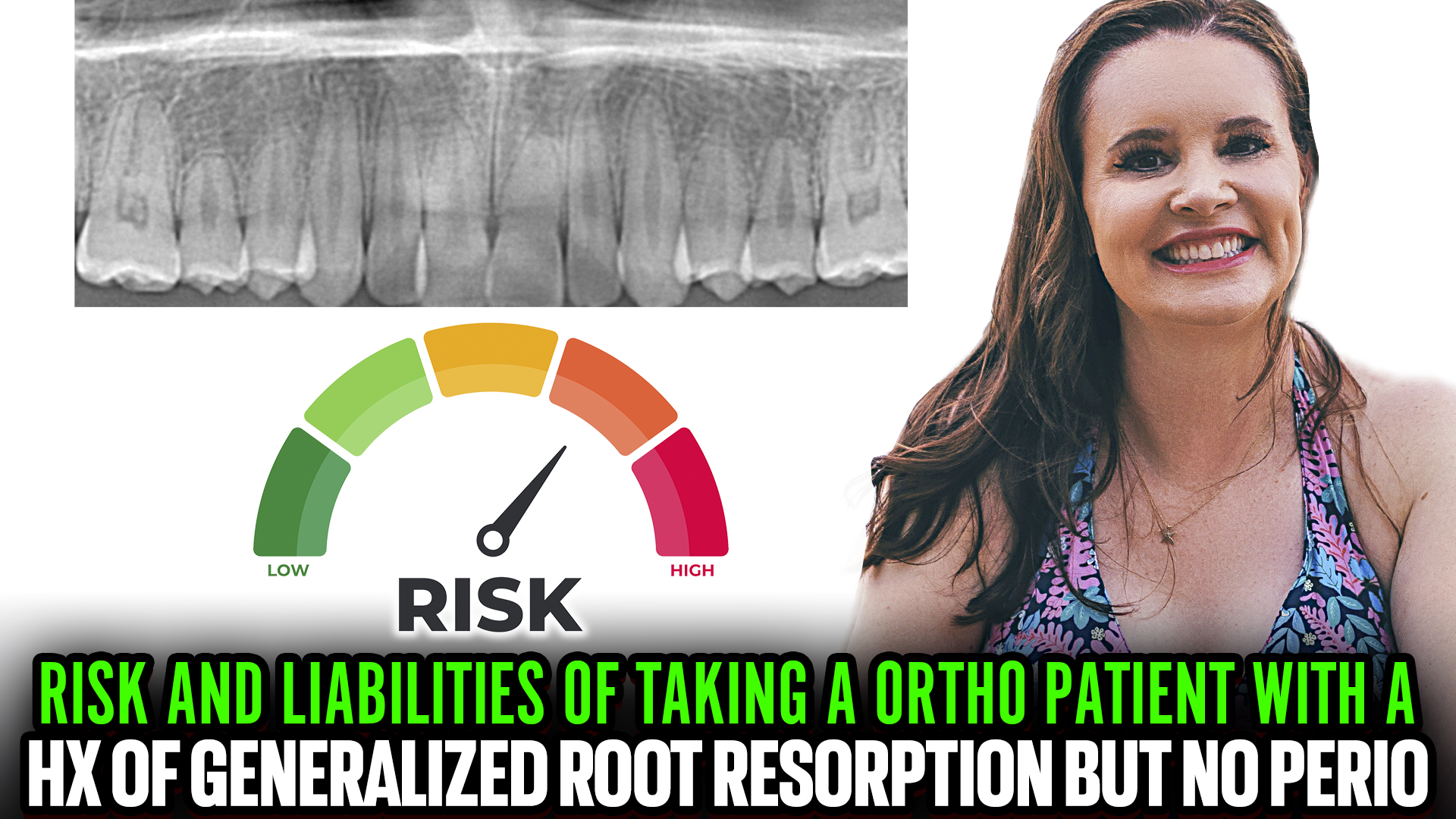
 Navigating Orthodontic Risks: Generalized Idiopathic Root Resorption (G.I.R.R.)General practitioners expanding into orthodontic treatments face complex clinical responsibilities. While correcting misalignments can transform smiles, failing to recognize underlying pathology before applying active forces presents a major source of professional liability.The latest session on the StraightSmile Solutions YouTube Channel highlights a critical condition that demands immediate attention from general dental practitioners: Generalized Idiopathic Root Resorption (G.I.R.R.). This complex dental anomaly requires careful management, diagnostic precision, and an understanding of when to halt orthodontic plans entirely.Understanding Generalized Idiopathic Root Resorption (G.I.R.R.)Generalized Idiopathic Root Resorption is an aggressive and rare condition causing unexpected root structure loss across multiple teeth. Unlike standard localized resorption, which is a known localized risk of minor orthodontic movement, G.I.R.R. is independent of mechanical force and frequently tied to systemic factors.If a practitioner initiates or continues orthodontic treatment on a patient with active G.I.R.R., the risk of rapid, catastrophic tooth loss multiplies exponentially. This introduces massive clinical complications and significant legal liability for failing to observe the condition beforehand.The Systemic and Genetic LinksG.I.R.R. rarely happens in a vacuum. A patient exhibiting signs of idiopathic root resorption must be evaluated for complex medical syndromes, systemic diseases, or metabolic disorders.Key genetic and medical links every dental professional should monitor include:Endocrine Disorders: Conditions like severe hypothyroidism.Metabolic Conditions: Genetic bone and tissue disorders, such as hypophosphatasia or Paget’s disease.Genetic Syndromes: Rare conditions including Papillon-Lefèvre syndrome, Turner syndrome, and Goltz syndrome.Systemic Inflammatory Triggers: Conditions like Stevens-Johnson syndrome.Clinical Action Plan: The Non-Negotiable ProtocolIf you identify or suspect active G.I.R.R. during diagnostic workups or routine evaluations, your clinical pathway must shift immediately. Keep your practice secure and your patients safe by utilizing the following steps:Halt Orthodontic Progress Immediately: Do not move forward with braces, clear aligners, or active appliance therapies. Applying force to a compromised root structure accelerates tooth loss.Refer Directly to Primary Care: Connect with the patient’s primary care physician to begin checking for underlying metabolic or systemic issues.Engage Medical Specialists: If a standard medical workup is inconclusive, refer the patient to a pediatric endocronologist, medical geneticist, pediatric rheumatologist, or immunologist.Coordinate Internal Dental Specialists: Build a collaborative network by looping in endodontists and periodonitists to stabilize the remaining dental structures.Managing Patient Expectations and Practice LiabilityDiscovering that a patient is an unsuitable candidate for orthodontics can be disappointing. However, the reality is clear: for patients with active G.I.R.R., orthodontic treatment should be avoided entirely.As a clinician, communicating this honestly is a matter of proper risk management. Ensure you thoroughly document all radiographic findings, maintain open correspondence with medical specialists, and prioritize long-term biological stability over cosmetic outcomes. While G.I.R.R. is a challenging condition to manage, identifying it early protects your practice from board complaints and prevents permanent dental damage for the patient.