
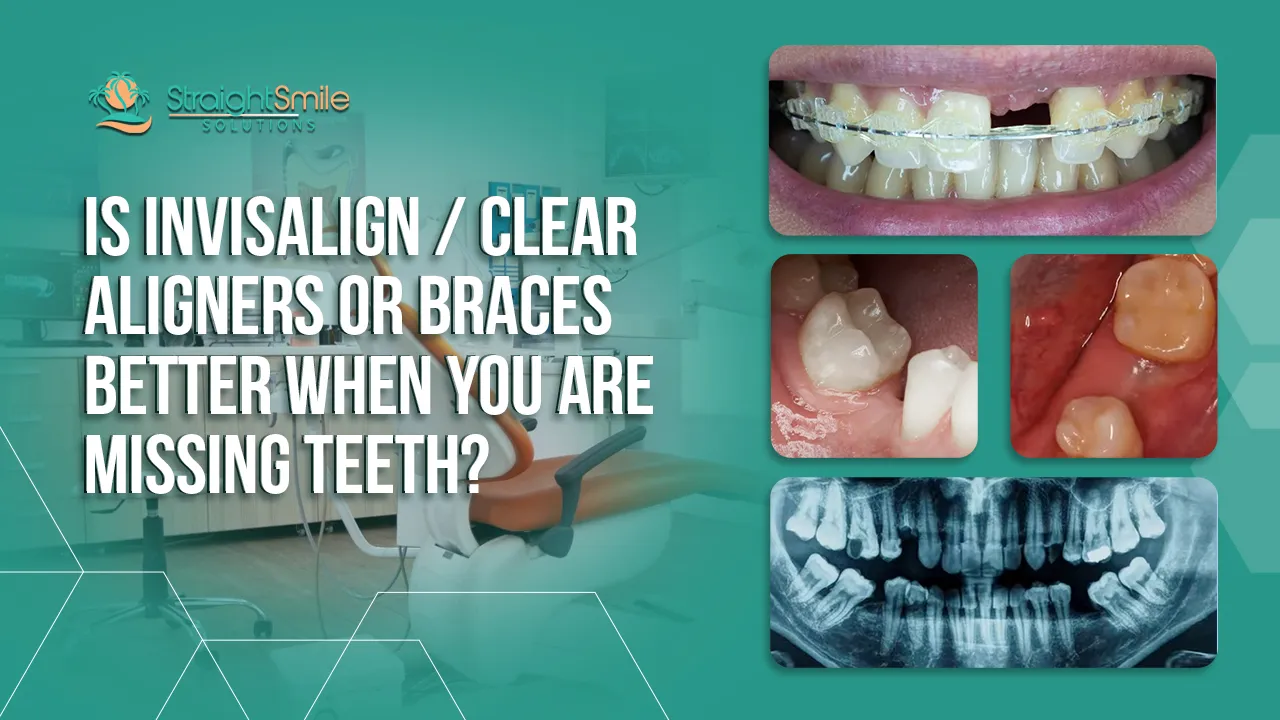
Missing Tooth Cases; Invisalign and Clear Aligners or Braces?
When we think about typical clear aligner cases, we tend to think about patients who have a full set of teeth – however, occasionally, you may have a patient who has recently lost a tooth asking for clear aligners or braces. Knowing how to approach these cases might not always be clear, which is why we’ve outlined some key things to consider today.
Which is Better for Missing Teeth: Clear Aligners (Invisalign) or Braces?
There’s no simple way to say whether you should use clear aligners such as Invisalign or braces with a missing tooth patient. This will generally depend on two things, in particular:
1) Where is the missing tooth located? First, you should consider where the missing tooth is located. If the missing tooth is in the back of the mouth and the patient doesn’t need a pontic, both braces and clear aligners could work.
2) How big is the span? In addition to considering where the missing tooth is located, you should also consider how big the span is (i.e., is the empty space large or small). If the missing tooth has a small span, braces may work, but this could still have complications compared to using clear aligners.
While you can potentially use braces on a missing tooth patient, this may represent a choking hazard, meaning this can have a lot of liability involved. Moreover, when working up to heavier wires, there may be a greater risk of the wires snapping, so a very soft diet will be crucial.
Fortunately, products such as Invisalign can work with missing tooth cases with a pontic, so be sure to keep this option in mind.