
I. Introduction
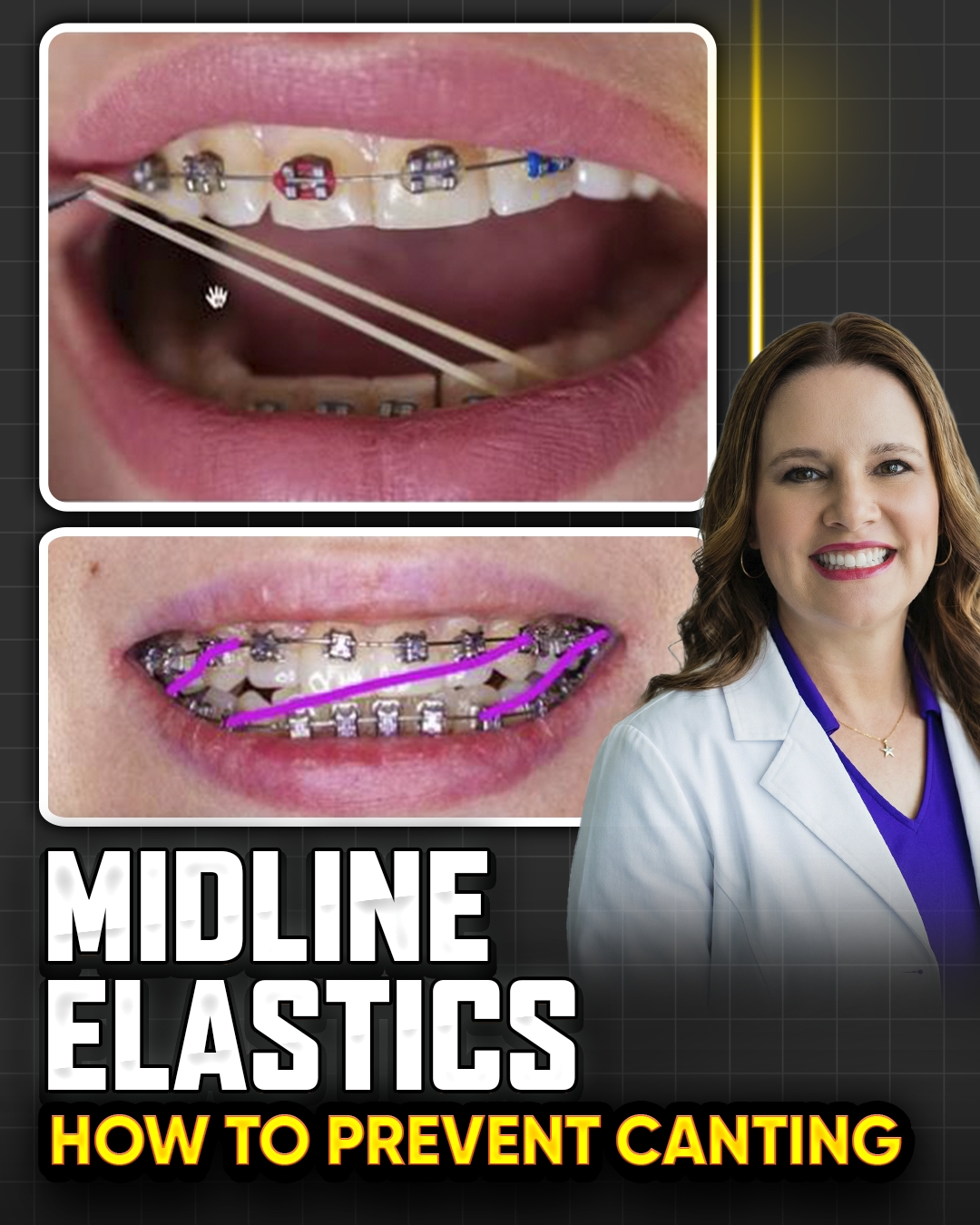
Dr Amanda from StraightSmile Solutions addresses a common question: midline elastics and canting.
She has extensive content on midlines already; this video focuses specifically on why midline elastics are problematic.
Her bottom line: She does not recommend midline elastics in most circumstances.
II. The Problem with Midline Elastics
They are unpredictable.
They frequently cause canting (tilting of the occlusal plane).
Once canting occurs, it often creates more problems than you started with—and those problems may not be fixable.
The risks outweigh the benefits.
III. When Midline Elastics Might Be Considered (Rarely)
Only in the very last phase, after levelling and alignment are complete.
Heavy, stable wires must be in place.
Existing spaces between teeth increase the chance of success.
Even then, Dr Amanda still avoids relying solely on midline elastics.
IV. Better Alternatives
Use differential anchorage to shift the midline.
Sequential distalization works much better (especially in Invisalign).
In braces, you have fewer tricks, but midline positioning should be built into the initial plan.
V. Invisalign-Specific Advice
Use the Invisalign smile visualizer to set midline positioning into the plan from the beginning.
Don’t try to fix midlines at the end with elastics.
VI. The Bottom Line
Midline elastics are unpredictable and cause canting.
If you have spaces, alternative mechanics work better.
If you don’t have spaces, midline elastics probably won’t work anyway.
Dr Amanda’s strong advice: avoid midline elastics altogether.