
I. Introduction
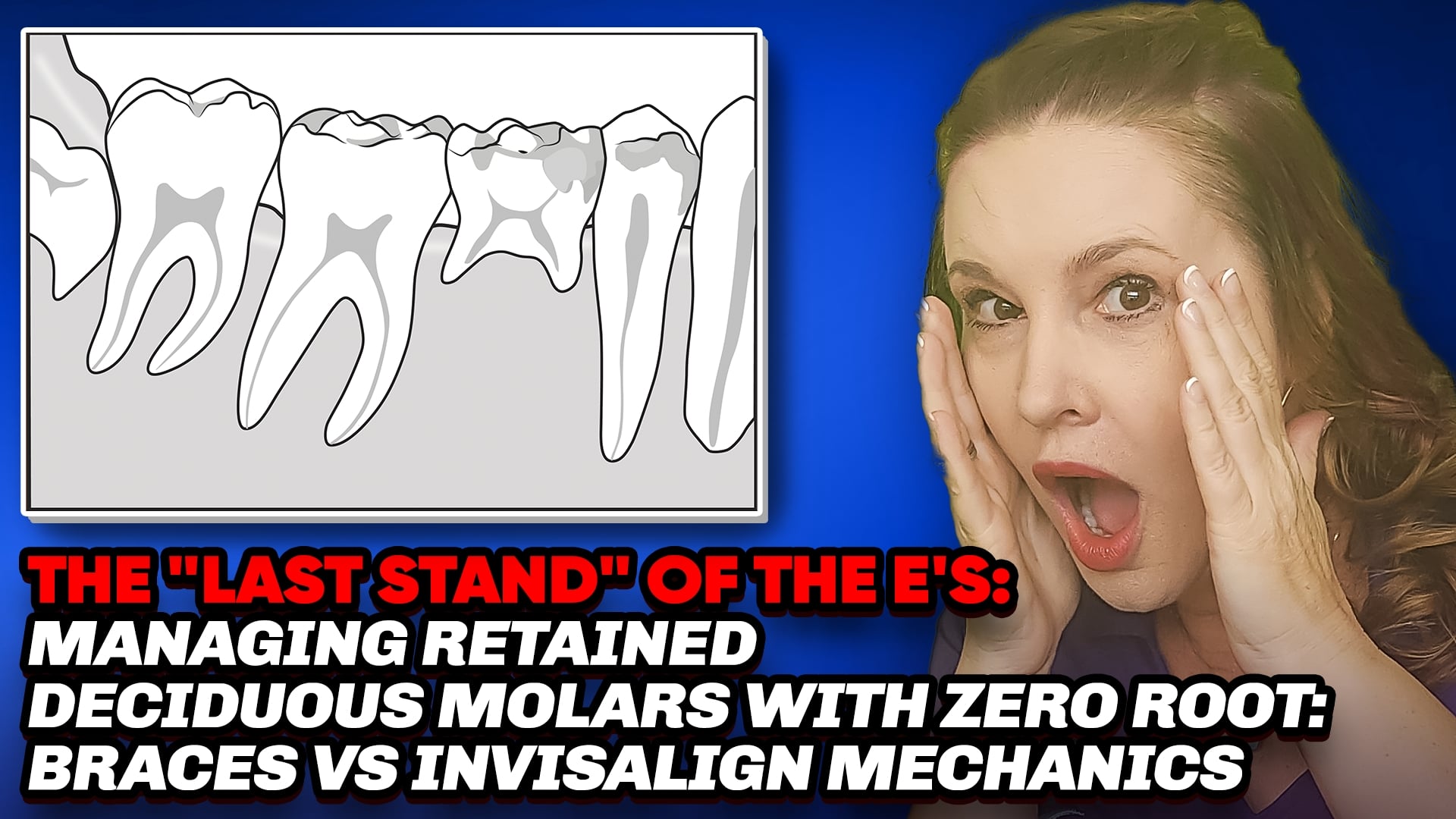
● Dr. Amanda from StraightSmile Solutions tackles the retained primary second molar, the “E” tooth.
● These baby molars sometimes have no permanent successor, and they can last a lifetime with good care.
● But in orthodontics, they create unique challenges and unique opportunities.
II. The Bolton Factor
● Primary molars are roughly 10-11mm wide. Premolars? About 7-8mm.
● That’s a 2-3mm discrepancy per side up to 5mm of mandibular Bolton excess.
● Teeth need to fit like gears. An extra lower tooth structure pushes you toward Class III.
● But if the patient started Class II, that extra lower length might actually help.
III. Keep or Pull? It Depends on Occlusion
● Class I with peg laterals? That’s already a mandibular Bolton. Add retained E’s, and you’ve got 7mm of excess—a nightmare.
● Class II patient? Those E’s become an asset, adding exactly what you need.
● You can’t decide without understanding the whole occlusion picture.
IV. When Extraction Makes Sense
● Sometimes the roots are stumpy and won’t survive orthodontic forces anyway.
● In crowding cases, you can’t upright curves and level without engaging the tooth, which accelerates loss.
● If it’s going to fail, better to extract on your terms.
● And if you need IPR, why shave healthy enamel when you can reduce a doomed tooth instead?
V. The Chop and Keep Strategy
● Numb it up. Take a bur. Reduce the E mesially and distally.
● Create space for proper interdigitation while preserving bone.
● Now you have perfect space for an implant later, and everything fits as it should.
● Better than sacrificing healthy teeth to accommodate a dying one.
VI. Mechanics Matter
● Braces apply heavy force, which is risky for teeth with compromised roots.
● Aligners are gentler. Slow, low force is kinder to fragile E’s.
● Expanders can bypass the E entirely, working off molars to roll out the curve of Spee without direct force on the questionable tooth.
● Choose your mechanics based on the tooth’s prognosis.
VII. The Bottom Line
● Retained E’s aren’t automatically problems or gifts, they’re variables.
● Run the Bolton. Assess the roots. Look at the occlusion.
● Sometimes they’re keepers. Sometimes they’re space creators. Sometimes they’re both.
● When in doubt, run the case by an experienced orthodontist before committing.