
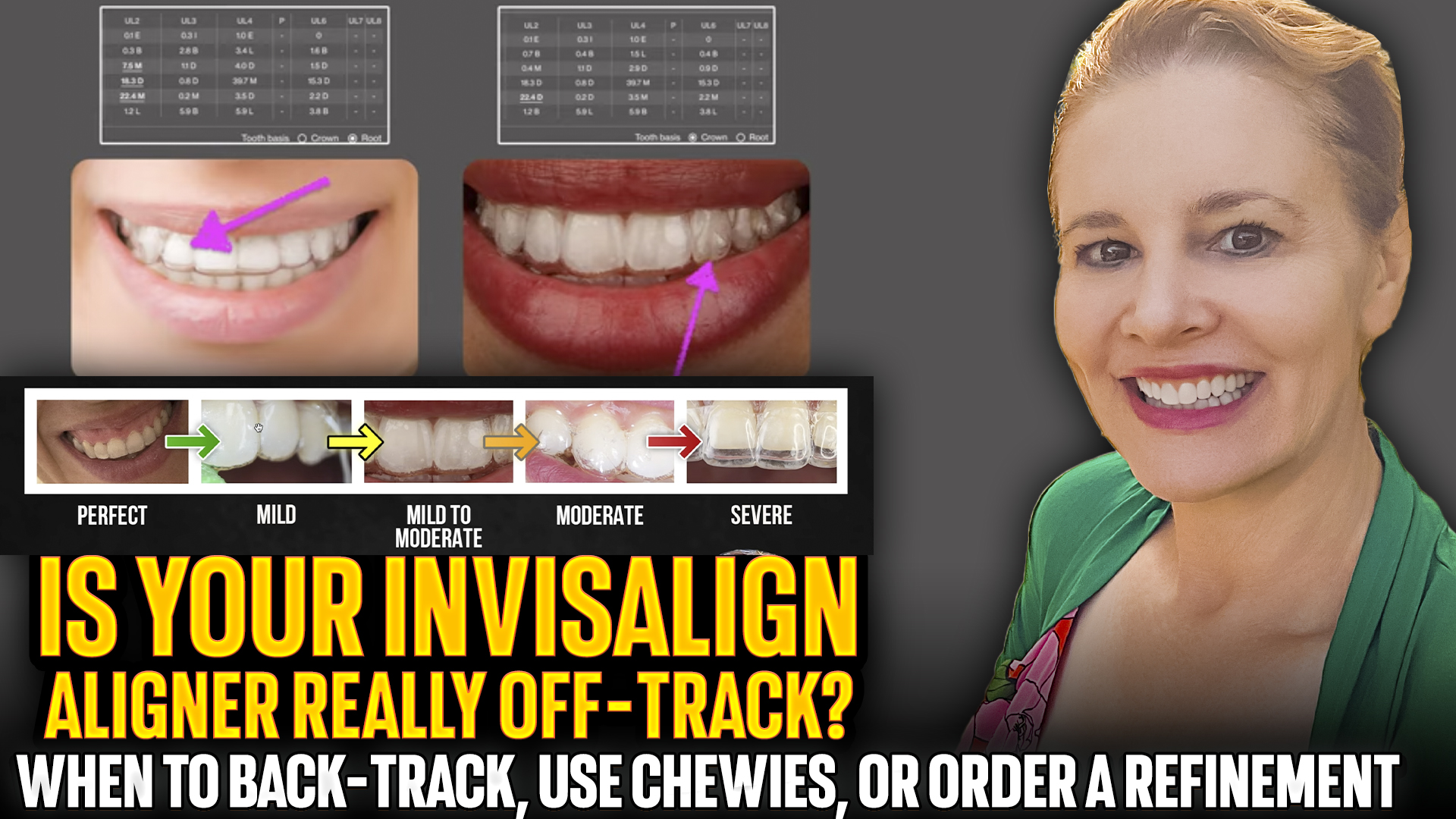
Dr. Amanda breaks down the common confusion surrounding Invisalign tracking, specifically, how to determine whether an aligner is truly “off track,” when to panic, when to stay calm, and what alternatives exist before resorting to a refinement. She stresses that most tracking issues are preventable and fixable if patients understand proper use of chewies, save old aligners, and if clinicians know how to read movement tables (TMT) to understand exactly what each aligner is programmed to do.
Chewies Done Right
Most patients receive chewies with no instruction, leading to poor results.
Dr. Amanda recommends Ortho Munchies for better structure, grooves, and guided technique.
Suggests clinicians create short training videos to increase compliance and build value.
Reinforces that proper chewing technique can resolve many minor gaps without refinements.
Before Assuming an Aligner Tracking Problem
Always review the Treatment Movement Table (TMT) to understand what each aligner is programmed to do.
Essential for determining if the tooth is supposed to:
Intrude
Extrude
Rotate
Torque
Root move
Tracking must be judged based on the planned movement, not appearance alone.
Gap interpretation:
Small gaps: Normal – advise chewies.
Moderate gaps: Consider backtracking or a replacement aligner.
Large gaps: True loss of tracking – refinement likely needed.
Backtracking as a Fast Fix
Works only if patients saved old aligners. Stress this at the start of treatment.
Patients should always bring old trays to appointments.
Staying longer in the same aligner + chewies can help, but the tray may stain – possible need for a replacement.
Often resolves mild to moderate tracking issues without refinement.
When Refinement Is Necessary
Backtracking fails or movement stalls despite chewies.
TMT shows complex biomechanics (e.g., torque, rotation) that the current aligner cannot achieve.
Virtual monitoring helps catch issues early, preventing major tracking failures and reducing refinements.
Conclusion
Not every gap or fit issue is a ” real “loss of tracking.” By reviewing programmed movements, coaching proper chewy use, backtracking when possible, and monitoring consistently, clinicians can resolve most problems without unnecessary refinements, saving time for both patients and providers.