
Introduction
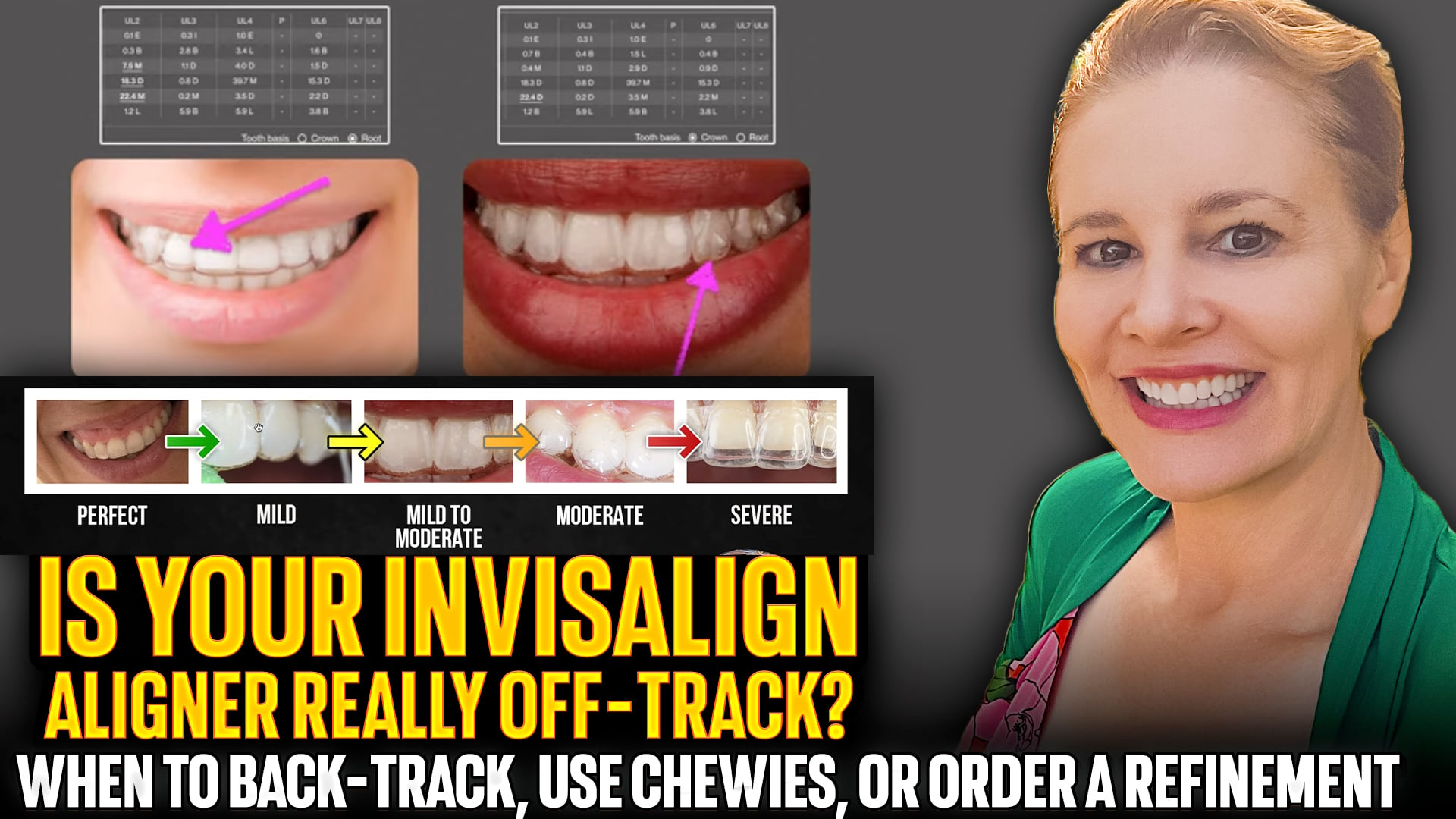
Dr. Amanda of Straight Smile Solutions addresses one of the most common clinical questions in clear aligner therapy: how to determine whether an Invisalign aligner is truly off track. She explains that not every visible gap is a treatment failure and that most tracking issues can be prevented or corrected without immediately moving to refinement. Proper patient education, correct use of aligners, saving old aligners, and a careful review of the Tooth Movement Table (TMT) are essential for making informed clinical decisions.
Key Clinical Considerations
Chewies and Patient Compliance
- Chewies are often given without proper instruction, limiting their effectiveness
- Ortho Munchies offer a more intuitive design with grooves for different tooth groups
- Instructional videos help patients perform chewing exercises correctly and consistently
- Creating a practice-specific chewy protocol can improve compliance and differentiate the practice
Evaluating True Tracking Issues
- Always review the Tooth Movement Table (TMT) before assuming loss of tracking
- Each aligner may be programmed for intrusion, extrusion, rotation, torque, or root movement
- Some movements, especially intrusion, can appear off track due to thicker plastic
- Visual gaps must be interpreted in the context of the planned movement
Clinical Response Based on Severity
- Small gaps: acceptable; reinforce chewy use and monitor
- Moderate gaps: hold the patient in the same aligner or backtrack
- Large gaps: indicate true loss of tracking and require refinement
Backtracking as a First-Line Solution
- Patients should always save and bring old aligners to appointments
- Backtracking one or two trays is often faster than refining
- Extended wear may discolor aligners, making replacement trays necessary
Monitoring and Workflow
- Virtual monitoring allows early detection of tracking issues
- Consistent review makes identifying problems faster and more predictable
Conclusion
Not every aligner discrepancy represents a true tracking failure. By analyzing programmed movements, educating patients on the proper use of chewy products, utilizing backtracking when possible, and closely monitoring progress, clinicians can resolve most Invisalign tracking issues efficiently, avoiding unnecessary refinements and saving valuable chair time.