
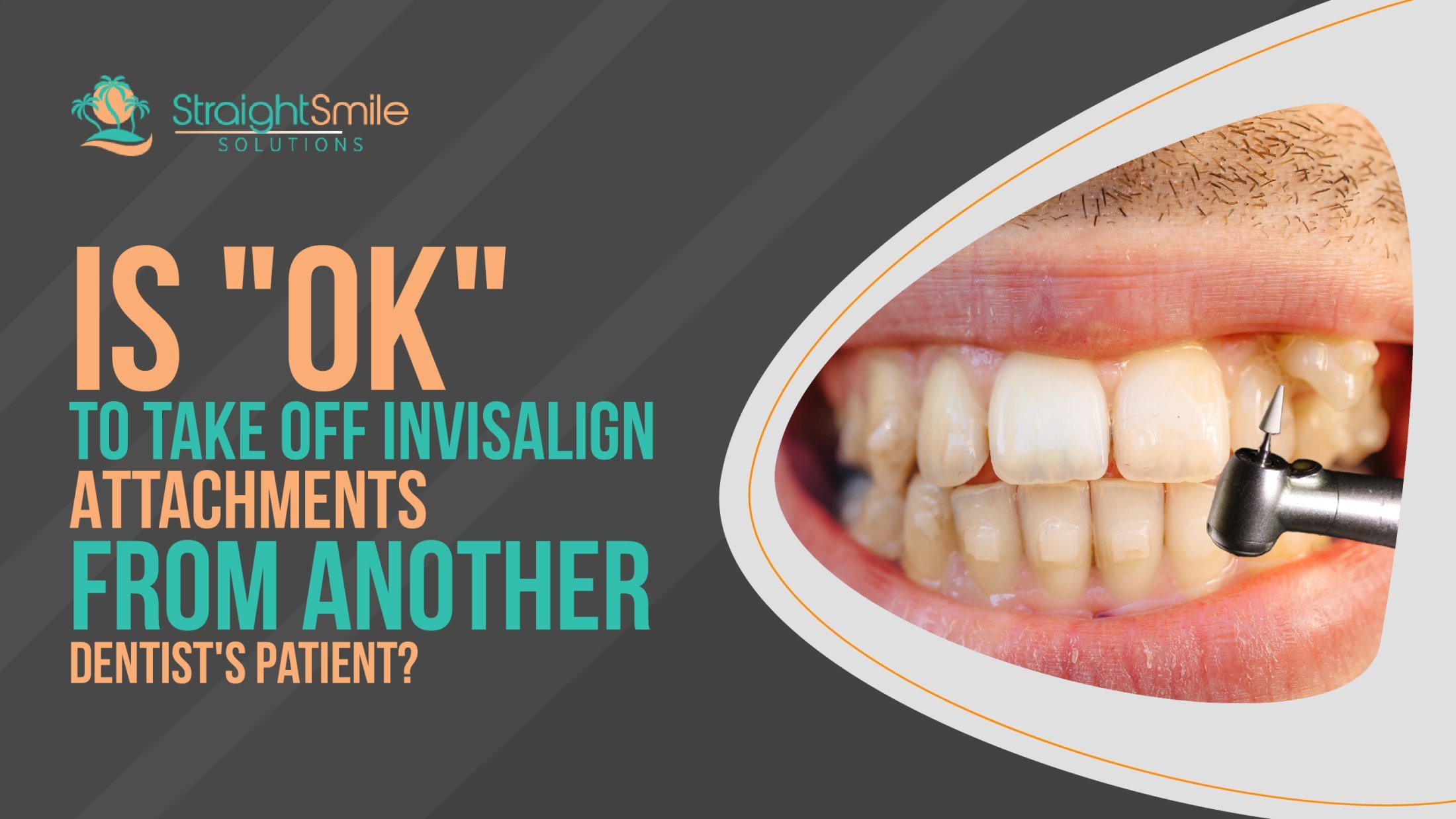
Is it “OK” to Take Off Invisalign Attachments from another Doc’s Patient?
1. Initial Context: Invisalign is a removable form of braces. When patients have attachments, they are under treatment and the care of a particular orthodontist. Removing these attachments implies that the orthodontist is now part of the treatment plan and responsible for any potential damage.
2. Patient Relocation: If a patient moves states and requests the removal of their attachments, the orthodontist may discontinue treatment. However, this requires several procedures and necessary paperwork.
3. Required Procedures include deep bonding (polishing the teeth) and taking vinyl records before and after the procedure—a clear understanding of the patient’s condition and the type of retainers used.
4. Type of Retainers: If the patient is unaware of the type of retainers used, the orthodontist should not remove the attachments. The orthodontist becomes responsible for the patient’s relapse and retainer retention visits, thus necessitating the proper documentation.
5. Scenarios for Removal: Situations might involve checking with articulating paper, scanning, and x-rays. If the patient’s occlusion is unbalanced, the orthodontist may need to bond the teeth while working on bite settling. If complications arise, the orthodontist must start the Invisalign process again unless the case has been transferred formally.
6. Proper Protocol and Charges: Proper procedures and documentation are crucial for a patient’s relocation. A complete evaluation of the patient’s teeth, airway, and contacts is performed, considering the new case. The orthodontist may charge at least $1,000 for retainer work. Additional costs may apply for other services.
7. Refunds and Old Dentists: Patients may have already paid another doctor for the procedure, and it’s their responsibility to seek a refund. While some may wish to return to their old dentist, this is not always possible. Issues arise not because of patient relocation but because the original doctor discontinues treatment.
8. Standard of Care: Withholding treatment until the patient pays their bill often leads to a messy situation and can negatively impact the dentist’s reputation.
9. EO Release Form: When a patient moves, the dentist should provide an EO release form with all pertinent information. The charge should remain at $1,000 without fluctuation. If the dentist isn’t familiar with removal procedures, the patient should be referred to an orthodontist.
Please consult your liability insurance and dental practice for any questions or concerns.