
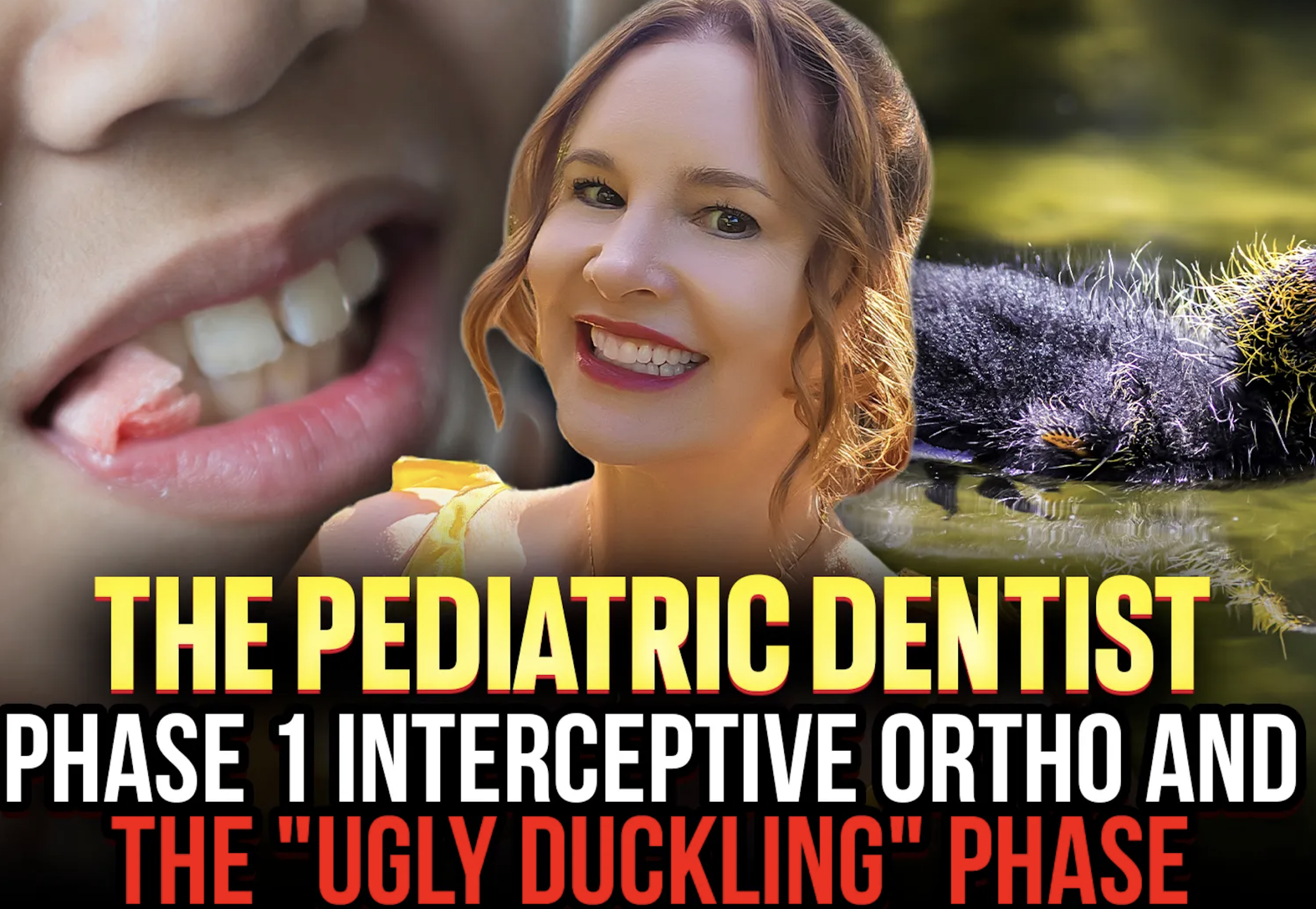
 Current dental literature and expert consensus increasingly support the idea that many early dental conditions—specifically the “ugly duckling” stage—are normal developmental phases that resolve without intervention. Research emphasizes that Phase 1 treatment should be reserved for specific functional issues rather than cosmetic spacing in young children.
Key Evidence for Avoiding Unnecessary Phase 1 Treatment
The “Ugly Duckling” Stage (Broadbent’s Phenomenon): Literature defines this as a natural stage (typically ages 7–12) where a midline gap (diastema) and flared front teeth appear as the permanent canines push against the roots of the incisors. Expert consensus confirms these issues are often self-correcting as the canines eventually erupt into their proper place, requiring no immediate treatment.
Lack of Long-Term Advantage: Multiple reviews, including those highlighted on platforms like the Kevin O’Brien Orthodontic Blog, suggest a “lack of evidence” that early treatment for common issues like Class II malocclusion offers significant benefits over waiting for a single phase of treatment later.
Specific Exclusions: Clinical guidelines state that minor crowding (less than 2mm) or small gaps should be monitored rather than treated. Most comprehensive orthodontic organizations, such as the American Association of Orthodontists, only recommend Phase 1 for severe malocclusions, jaw growth discrepancies, or risks to permanent teeth.
When Phase 1 Is Actually Necessary
According to current literature, intervention is typically only prioritized for:
Impacted Canines: To prevent root resorption of neighboring teeth and ensure proper eruption.
Bite Problems: Such as crossbites (which can cause asymmetric jaw growth) or severe underbites/overbites.
Arch Constriction: Where the jaw is too narrow to accommodate permanent teeth.
Social/Psychological Impact: If a child is experiencing significant bullying or distress due to their dental appearance.