
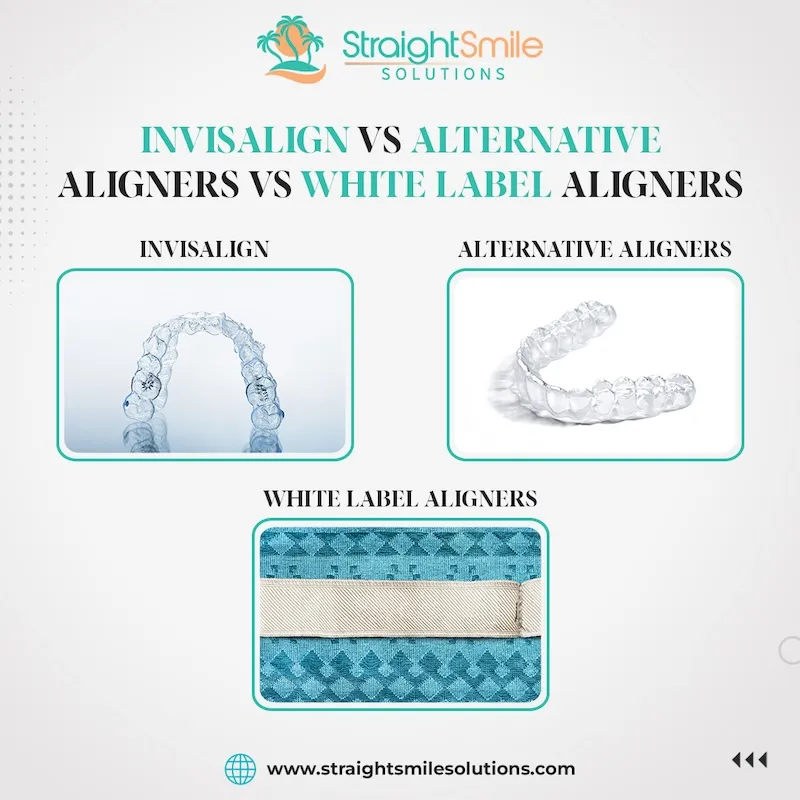
Invisalign vs. Alternative Aligners vs. White Label Aligners
I. Introduction
Dr. Amanda from StraightSmile Solutions. Today, we delve into the fascinating world of orthodontic aligners, breaking down three key terminologies that might be familiar to some but are crucial for everyone involved. At the forefront is the OG of aligner systems – Invisalign, a pioneer since 1998. We explore alternative aligner systems, a diverse landscape with countless brands emerging post-Invisalign patents. Learn the importance of case selection, predictability, and accountability loops for successful outcomes. Lastly, discover the cost-effective realm of white label aligners, offering flexibility and cash flow advantages. Join us on this journey as we unravel the intricacies of modern orthodontics.
II. Invisalign – The OG Aligner System
A. Originated in 1998
B. First exposure in 1998 at UCSF
C. Leading aligner system with advanced features
D. Higher lab fee due to R&D, marketing, and brand awareness
E. Capabilities: Lower jaw growth, expander attachment
F. Continuous innovation but expensive and requires an upfront payment
III. Alternative Aligners
A. Hundreds of brands globally
B. Proliferation post-expiration of Invisalign patents
C. Caution: Quality varies, some good, some not
D. Case selection crucial for success
E. Recommendation: Watch case selection videos for guidance
F. Predictability depends on a reliable ClinCheck and accountability loop
G. Accountability Loop: Virtual or in-person check-ins for each aligner
H. Low revision and refinement rates achievable with proper planning
IV. White Label Aligners
A. Term: Unbranded aligners from the manufacturing system
B. Cost: Setup price ranges from $90 to $200
C. Process: Third-party setup, local lab manufacturing
D. Appearance: Generic, unbranded aligners
E. Branding legality: Check FDA approvals for custom branding
F. Cost-effectiveness: Lower lab fees, around $18-$25 per aligner
G. Batch printing option for cost control
H. Accountability Loop crucial for success
V. Choosing Between Options
A. Invisalign
1. Benefits: Advanced features, continuous innovation
2. Drawbacks: Expensive, upfront payment, higher lab fees
B. Alternative Aligners
1. Benefits: Variety, case-specific suitability
2. Drawbacks: Quality varies, and thorough case selection is crucial
C. White Label Aligners
1. Benefits: Cost-effective, batch printing option
2. Drawbacks: Generic appearance, accountability, Loop essential
VI. Conclusion
Navigating the world of aligner systems requires a thoughtful consideration of various options. Invisalign is the pioneer, boasting advanced features at a higher cost. Alternative aligners, numerous in variety, offer viable choices if the right case is selected and a predictable setup is ensured. White label aligners provide a cost-effective alternative, allowing flexibility in batch printing and minimizing upfront expenses. However, success hinges on maintaining an accountability loop, whether virtual or in-person. Choosing the most suitable system depends on individual preferences, desired outcomes, and financial considerations. With the right knowledge and strategic approach, practitioners can effectively incorporate aligner systems into their orthodontic practice.