
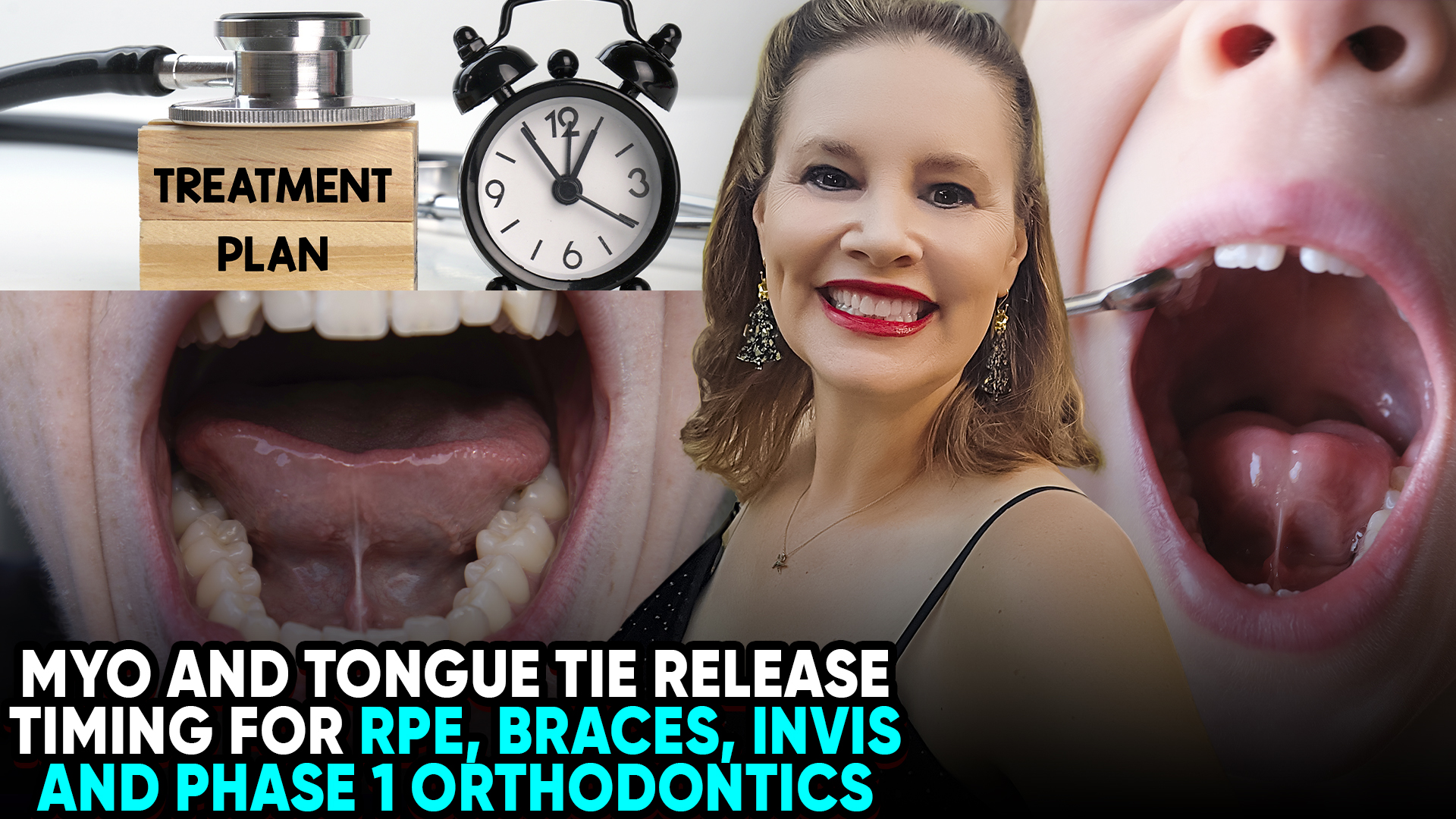
 1. The Importance of Expansion First
The speaker strongly advises starting with maxillary expansion (such as a Rapid Palatal Expander or RPE) before proceeding with a tongue-tie release (frenectomy).
Creating “Tongue Space”: Expanding the upper arch provides the necessary room for the tongue to rest properly in the roof of the mouth.
Stability: If a tongue tie is released before there is enough room for the tongue to sit high, the procedure is often unsuccessful, and the tissue may re-attach.
2. The Role of Orofacial Myofunctional Therapy (OMT)
Myofunctional therapy is presented as a non-negotiable part of the process.
Pre-Surgical Prep: Patients should engage in OMT exercises before the release to strengthen the tongue and learn proper coordination.
Post-Surgical Healing: Continuing OMT after the surgery is critical to prevent scarring and to “train” the tongue to use its new range of motion.
3. Integrated Timeline
The ideal workflow suggested is:
OMT Evaluation & Initial Exercises: Begin therapy to prepare the muscles.
Orthodontic Expansion: Use Phase 1 interceptive ortho to widen the arch.
Tongue-Tie Release: Perform the frenectomy once adequate space is established.
Continued OMT: Follow-up exercises to ensure the tongue maintains its new posture and function.
Key Takeaway
The core message is that form follows function. A successful tongue-tie release requires both the physical space (orthodontics) and the muscular training (OMT) to be effective. Performing a release in isolation without these supporting treatments often leads to suboptimal outcomes or the need for revision surgery.
Disclaimer: This content is for general informational purposes for dental professionals and does not constitute medical or dental advice. Always consult with a licensed provider for specific cases.