
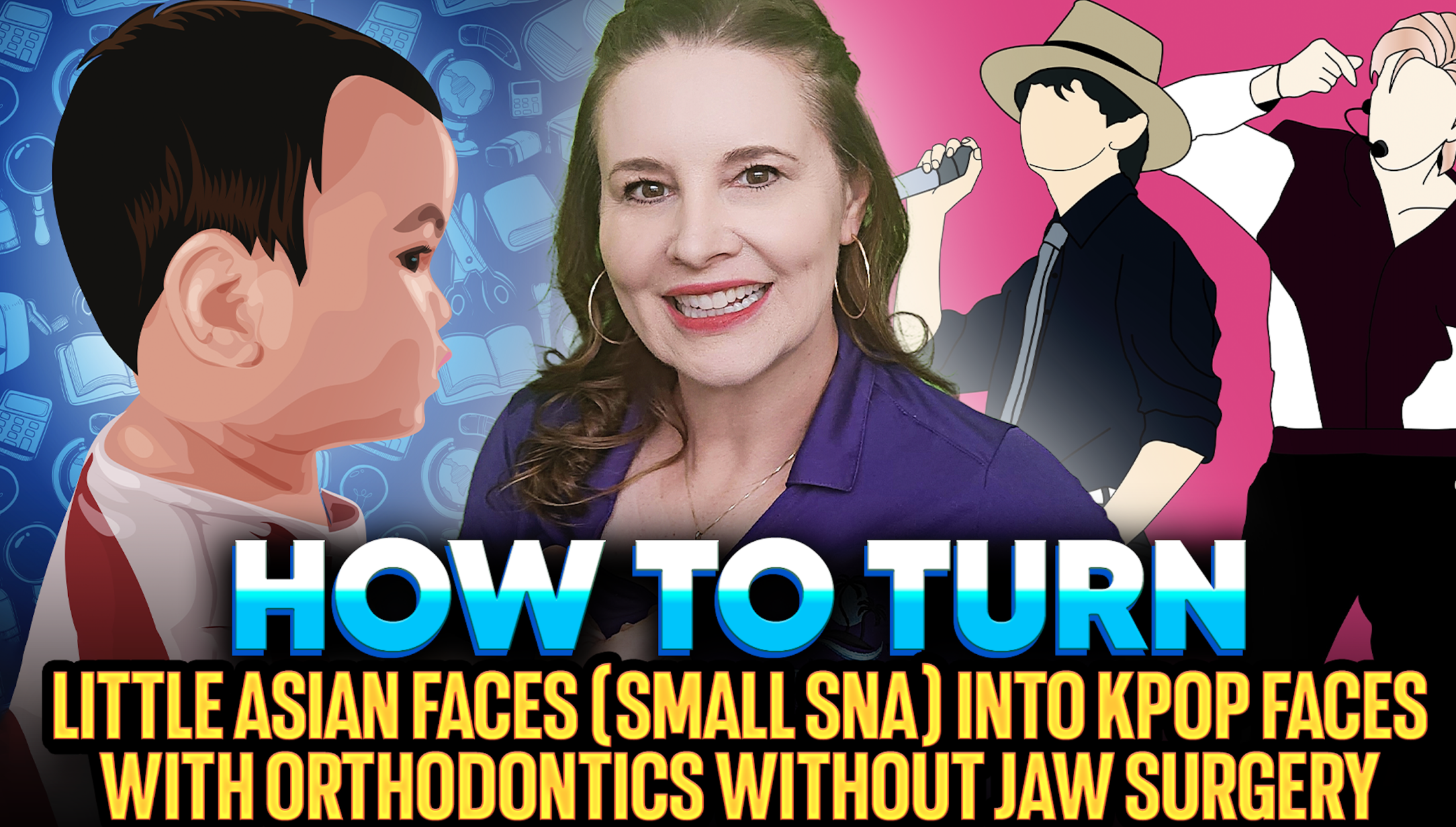
How to Turn Little Asian Retrognathic Small-SNA Faces Into K-Pop Superstar Full-Broad-Smile Cases
Introduction
Dr. Amanda explains a growing orthodontic trend among East Asian families seeking a broad, full “K-Pop style” for children who naturally have small SNA values and retrusive midfaces. She shares cultural insights, clinical considerations, and the ethical limits of creating facial fullness without surgery. Her guidance emphasizes sensitivity to cultural expectations, realistic growth potential, and the responsible selection of patients.
Understanding Cultural Aesthetics
- Many East Asian parents worry about teeth appearing too “bucky,” “toothy,” or excessively full.
- At the same time, the broad “K-Pop style” is seen as attractive and vibrant and is increasingly desired.
- These preferences vary, and discussing them insensitively can offend families unfamiliar with Western orthodontic ideals.
Clinical Realities of Small-SNA Faces
- Small SNA = retrusive maxilla; if the mandible is normal, this creates Class III patterns treatable with protraction face masks.
- The challenge arises when a child is Class I, functionally normal, but parents request more facial fullness.
- Creating a malocclusion to fix it later is risky, potentially unethical, and may lead to conflict if parents dislike the outcome.
What Growth Guidance Can and Can’t Do
- Orthotropics, posture work, and diet can influence facial development from ages 1-4; effectiveness decreases significantly after age 8.
- Expansion and forward growth stimulation can help, but cannot fully remodel a midface without innate growth potential.
- Advancing the maxilla electively introduces liability: forward growth cannot be reversed without surgery.
Compliance, Family Dynamics & Case Selection
- Phase I success requires a child who communicates independently, follows instructions, and is supported, not overshadowed, by the parent.
- Red flags: parent answering all questions, minimizing hygiene issues, or making excuses for lack of cooperation.
- Without reliable compliance, complex growth-modification plans are likely to fail.
Conclusion
Transforming small-SNA faces naturally into broad, “K-Pop style” requires cultural sensitivity, ethical judgment, and careful case selection. While some growth guidance is possible, elective maxillary advancement carries risks that must be communicated clearly. Ultimately, the safest and most successful outcomes result from selecting the right patients, setting realistic goals, and prioritizing long-term facial health over fleeting trends.