
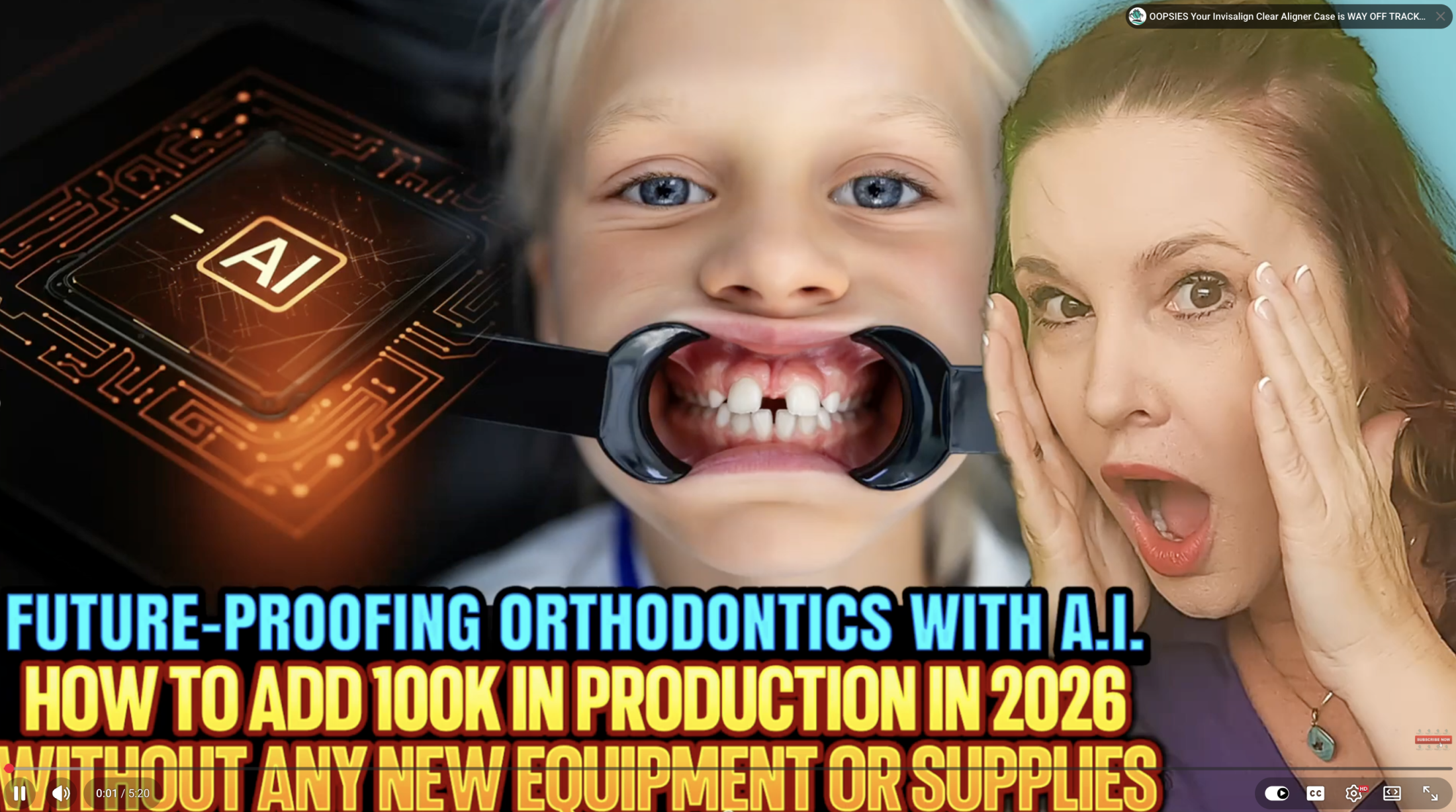
How to Future-Proof Your Practice and Make an Extra $100K per Year with Orthodontics and A.I.
I. Introduction
Dr. Amanda from Straight Smile Solutions discusses how orthodontics has evolved in 2026 and beyond. Many practices can add $100,000+ in annual revenue without major new investments. The key lies in optimizing existing systems, staff, workflows, and smart use of A.I. When done correctly, orthodontics becomes both financially rewarding and professionally fulfilling.
II. The Reality of Modern Orthodontics in 2026
- Most practices already have what they need to scale orthodontics.
- Success depends on choosing the right orthodontic services, not buying the most equipment.
- Doctors who follow proven systems often exceed revenue expectations while improving patient satisfaction.
- Orthodontics can become one of the most enjoyable and meaningful parts of clinical dentistry.
III. The Role of A.I. in Orthodontic Efficiency
- A.I. is a support tool, not a decision-maker; clinical judgment remains essential.
- The doctor retains full responsibility for diagnosis and outcomes.
- A.I. is best used to streamline workflows, reduce time, and improve consistency, not replace expertise.
IV. Where A.I. is Already Transforming Orthodontics
- Cephalometric analysis
- Eliminates manual tracing and saves significant time
- Helpful even for experienced clinicians as a confirmation tool
- Digital treatment planning
- Clear aligners, indirect bonding, and setup simulations are largely A.I.-driven
- Requires careful review and communication with technicians
- Malocclusion detection tools
- Useful for less experienced providers
- Optional for seasoned orthodontic clinicians
- Outcome simulations & appliance design
- Invisalign and other systems already rely heavily on A.I.
- Enhances patient understanding and case acceptance
- Virtual monitoring
- Reduces unnecessary in-office visits
- Saves chair time, increases efficiency, and improves patient satisfaction
V. Rethinking Traditional Braces and Old Workflows
- Monthly in-person visits are outdated and inefficient.
- Traditional braces with frequent adjustments increase:
- Chair time
- Gum inflammation
- Bone stress and root resorption risk
- Modern orthodontics prioritizes lighter forces and smarter monitoring.
VI. Equipment: What You Actually Need (and What You Don’t)
- An iTero scanner is highly recommended, but it does not need to be new.
- Older models work well for orthodontics and save tens of thousands of dollars.
- Supplies depend on your orthodontic menu:
- Removables: minimal additional costs
- Phase 1 ortho: very low overhead
- Fixed appliances: modest investment (bands, wires, basic instruments)
- Pediatric dentists may benefit from additional scanning or imaging technology, but it’s not mandatory.
VII. Why $100K Is Just the Starting Point
- Adding $100,000 annually is very achievable with proper systems.
- Practices that fully integrate orthodontics often exceed this benchmark.
- The biggest limiting factor is process, not equipment.
- With the right structure, orthodontics becomes scalable, ethical, and predictable.
Conclusion
Orthodontics combined with thoughtful A.I. integration offers a powerful way to future-proof your practice. By modernizing workflows and avoiding over-investment in equipment, doctors can increase revenue, reduce inefficiencies, and deliver better care. As Dr. Amanda emphasizes, when orthodontics is done the right way, everyone wins: the practice, the patients, and the provider.