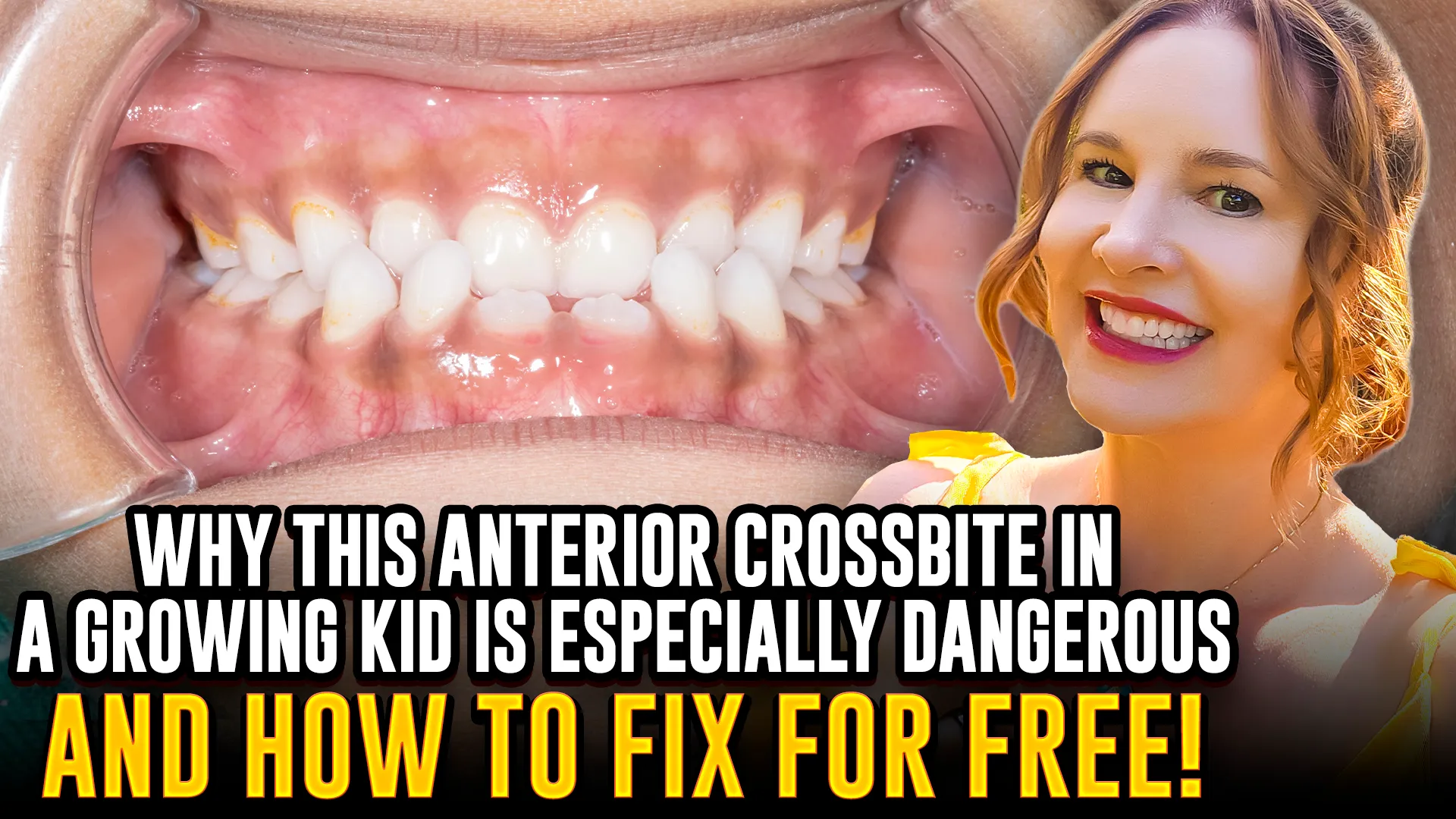
How to Fix an Anterior Crossbite in Early Mixed Dentition for Free
Introduction
Anterior crossbites in early mixed dentition can be a significant concern if not addressed promptly. This dental issue, where upper front teeth are trapped behind lower front teeth, can hinder upper jaw growth if left untreated. The key to success lies in early detection before most permanent teeth have erupted, making treatment simpler, faster, and often cost-free.
Importance of Early Intervention
- Treatment is most effective when only primary teeth are present or when a single permanent tooth is less than 30% erupted.
- Once multiple permanent teeth have fully erupted, simpler methods no longer work, and more advanced appliances become necessary.
Identifying the Cause
- Often, crossbite occurs because upper incisors are retroclined and trapped behind lower teeth.
- This mechanical blockage can prevent proper forward development of the maxilla (upper jaw).
Treatment Approaches
- Early-Stage Solutions:
- Popsicle Stick Method: A simple wedging technique to encourage forward bite correction.
- Bite Bumps: Composite material applied to molars or incisors to open the bite, allowing trapped teeth to move freely.
- Advanced Stage Solutions:
- If jaw growth is already restricted, cephalometric X-rays are needed to determine the degree of underdevelopment.
- Treatment may require palatal expansion and a facemask to stimulate forward jaw growth.
Professional Guidance
- A dentist or orthodontist should supervise the popsicle stick and bite bump methods, which are safe for use on a dentist’s own family but not recommended for unsupervised DIY.
- Demonstration videos can be found on YouTube by searching “anterior crossbite popsicle stick orthodontics.”
- Further training and detailed instructions are available on Dr. Amanda’s Phase One Course and her YouTube channel.
Conclusion
Anterior crossbites, when caught early, are among the simplest orthodontic problems to fix, often without expensive appliances. Using cost-effective techniques like the popsicle stick method and bite bumps, dental professionals can correct the issue before it causes lasting jaw growth problems. The message is clear: early detection, professional supervision, and timely action are the keys to success.