I. Introduction
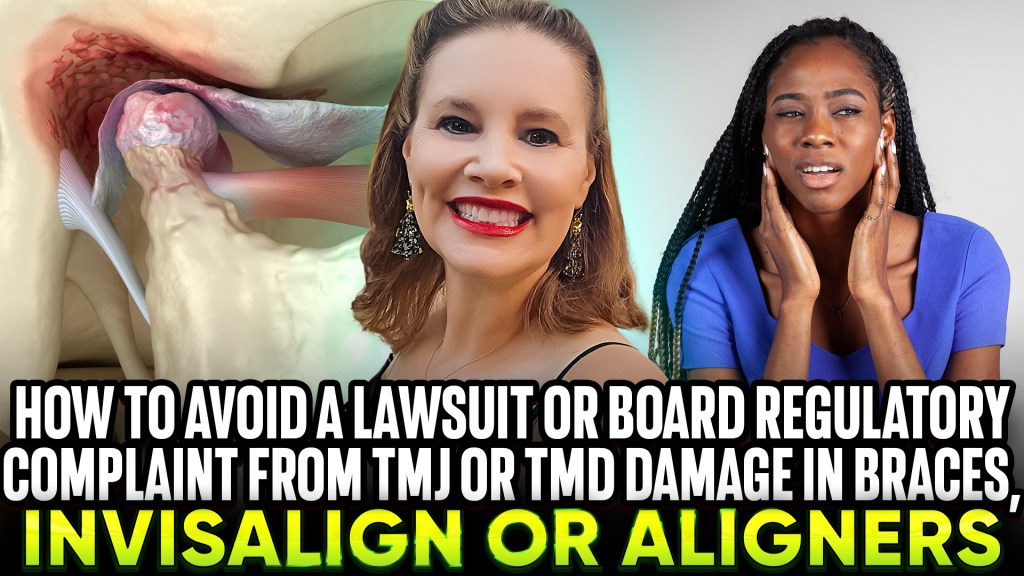
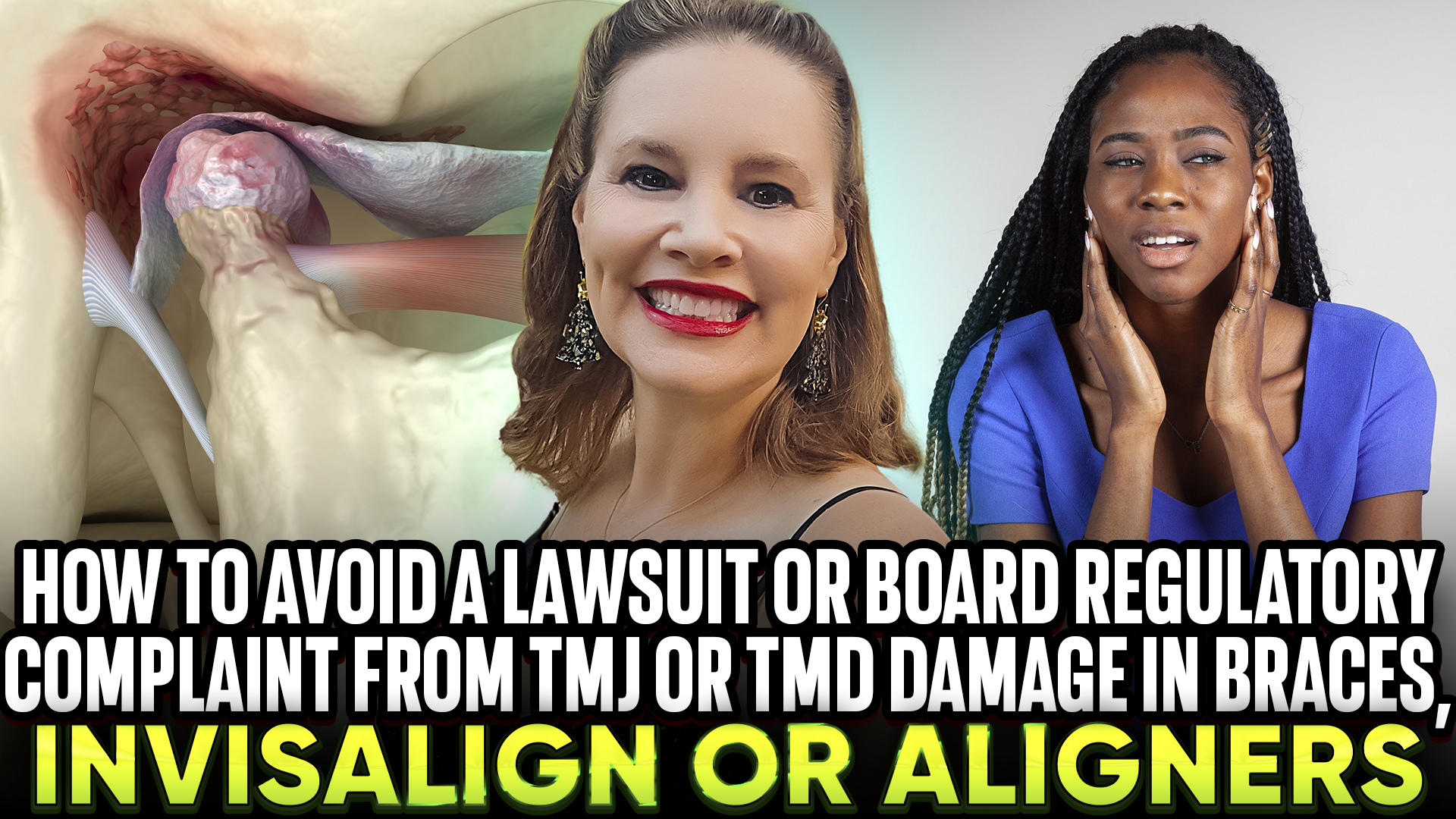
- Dr Amanda from StraightSmile Solutions continues her liability series, now addressing TMJ/TMD complaints.
- This category is lower in frequency but nebulous and harder to defend.
- Her core advice: If you suspect a TMJ issue, do NOT start ortho without specialist clearance in writing.
II. The Specialist Problem
- TMJ/TMD is not an ADA-recognized specialty, but oral pain specialists, prosthodontists, or OMFS/MD are the appropriate referrals.
- If you hear clicking, popping, or feel asymmetry, stop. Do not start ortho.
- Get a written release from a specialist before proceeding.
III. Red Flags on Exam
- Unilateral posterior open bites (POBs) are a major red flag.
- Asymmetries, condylar degeneration, or any POB = do not start the case.
- If you see a POB, you can try deprogramming or settling, but never start active ortho without further investigation.
IV. Imaging Requirements
- CBCT with a large enough FOV to visualize both condyles is essential.
- Use a reading service (e.g., Beam Readers, 3DX) to evaluate hard tissue asymmetry or degeneration.
- CBCT will not show disc or ligament issues, but it catches hard tissue problems.
- If you lack the right FOV technology, pass the case to someone who does.
V. Standard of Care
- A large percentage of US dentists have CBCT. If you start a case without ruling out TMJ pathology and something goes wrong, it’s on you.
- Don’t let production pressure push you into risky cases.
- You don’t have to treat every patient. Passing on a TMJ case is smart, not weak.
VI. The Bottom Line
- TMJ/TMD complaints are tough to win, but they are avoidable.
- Screen thoroughly. Never start a case with unilateral POB or joint symptoms without a specialist’s written blessing.
- Document everything. Get clearance. Sleep well at night.