
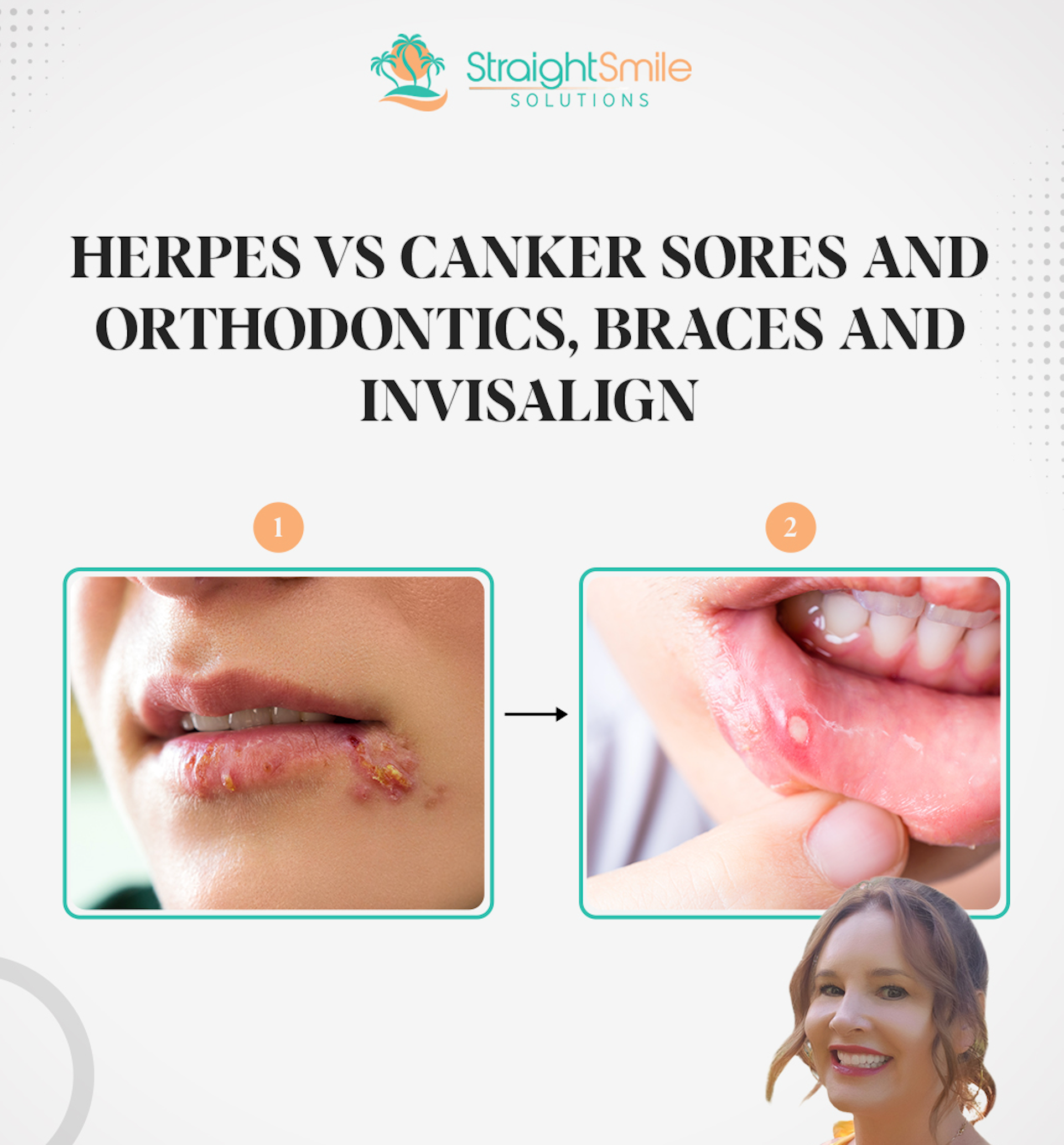
 Herpes vs Canker Sores in Orthodontics
Introduction
Dr. Amanda explains the difference between oral herpes (herpes simplex virus) and canker sores (aphthous ulcers) in a dental/orthodontic context. She clarifies terminology to avoid confusion, using both medical and common terms.
Herpes Simplex Virus (Cold Sores)
• Caused by the herpes simplex virus; contagious.
• Transmission: kissing, oral sex, or close contact (e.g., kissing a baby, potentially infecting their eye).
• Always located on the vermilion border edges or corners of the lips.
• It contains viral fluids in pustules; stretching or rubbing can rupture them, spreading the virus.
• In orthodontics, patients with active herpes are rescheduled to avoid cross-contamination and self-inoculation (especially to the eyes).
• Once contracted, herpes remains in the body for life, flaring during stress.
Canker Sores (Aphthous Ulcers)
• Not contagious; often related to autoimmune responses, friction, spicy foods, or trauma from orthodontic appliances.
• Located inside the mouth—on the mucosa of the lips, free gums, or cheeks, but not on attached gums.
• Can be caused or worsened by orthodontic irritation; treatment includes wax application, analgesics, and anti-inflammatories.
• Typically, harmless and self-limiting.
Orthodontic Considerations
• Cold sores require appointment rescheduling until lesions heal (about a week or with antiviral treatment).
• Infection control: avoid saying “herpes” publicly in the office; use “cold sore” when speaking to patients/parents discreetly.
• Universal precautions are followed, but the main concern is preventing eye infections and facial spread in the patient.
Key Differences
• Herpes: Contagious, viral, on lip border, lifelong condition.
• Canker sore: Non-contagious, autoimmune/trauma-related, inside mouth, temporary.
Conclusion
Recognizing and distinguishing the two conditions helps orthodontic staff manage infection control, patient comfort, and appointment timing appropriately.