
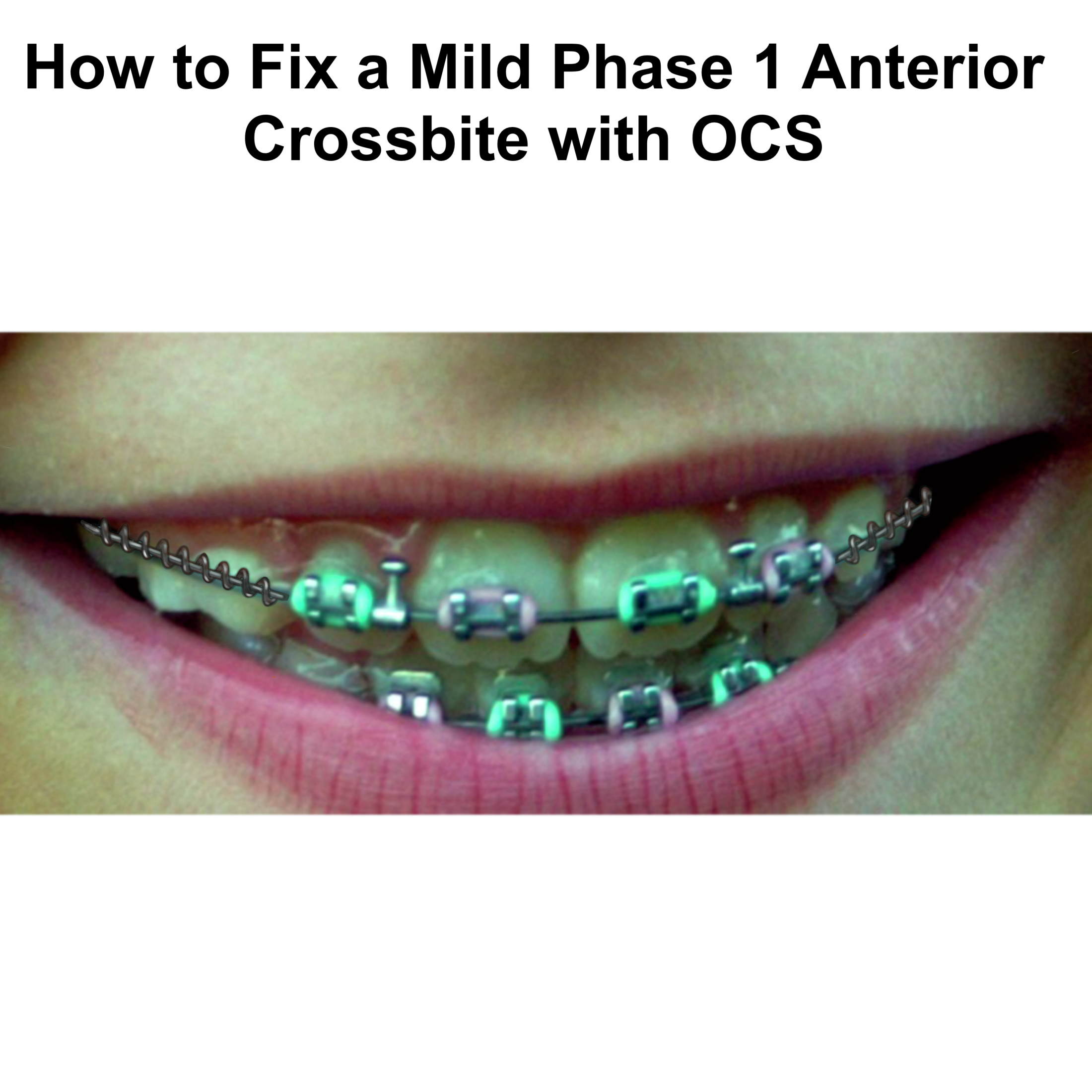
Fixing Generalized Mild Phase 1 Anterior Crossbites with OCS
When treating generalized mild Phase 1 anterior crossbites, there are many different options you could potentially consider – and choosing the right treatment plan can have a significant influence on the success of your orthodontics cases. As such, we’re outlined some of the key things you should know about using OCS to fix generalized mild Phase 1 anterior crossbites as follows to help.
OCS Should Only be Used in Young Patients
If you’re looking to use an OCS treatment plan, this should only be used for young Phase 1 patients. Indeed, for older patients, OCS may not be a suitable approach to treating a generalized anterior crossbite; however, just because a patient is young does not necessarily mean OCS will work for their case.
Always Diagnose the Cause Before Using OCS
OCS can be an incredibly valuable tool provided the cause of the negative overjet or anterior collisions. If the cause is due to an inclination of the incisors, and there is no skeletal malformation (e.g., the SNA, SNB, and ANB are normal), then OCS can potentially be used, provided you have contacts that can be used. It’s also possible to use OCS if the upper incisors are upright; however, if they are flared, you should not use OCS.
If you do use OCS, seeing the patient regularly is absolutely critical; otherwise, it is possible to push the teeth through the bone, which can naturally cause severe complications. Indeed, OCS is a very active mechanic and can do damage if not monitored closely.
Fixing an anterior crossbite in Phase 1 patients always depends on the diagnosis. If you’re not sure about the most appropriate treatment plan for your case, be sure to reach out to a professional orthodontist, such as our team here at Straight Smile Solutions, to help.