
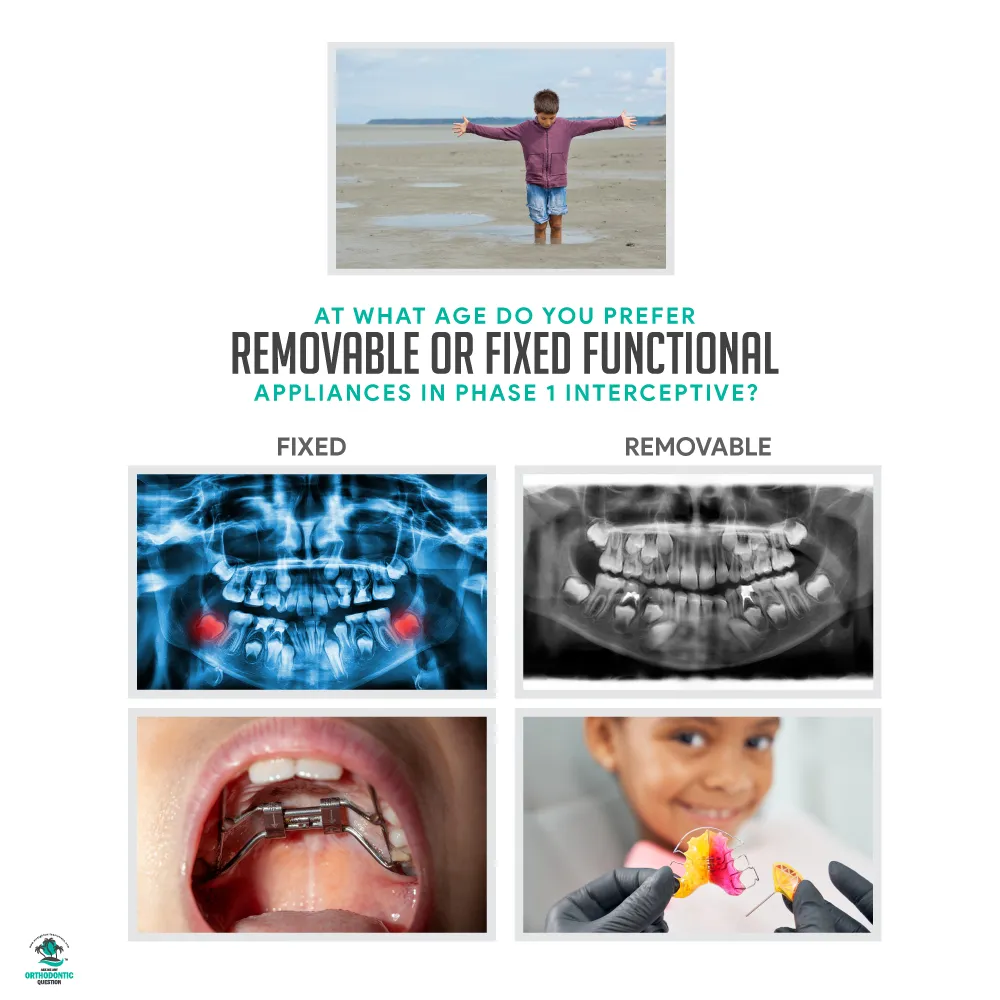
 Fixed vs. Removable Expanders: ( RPE vs. Schwartz )
I. Introduction
Dr. Amanda discusses considerations for when to use removable versus fixed functional appliances for phase one orthodontic treatment in growing patients. She references insights from a course by Dr. Simon Wong. She shares his analogy of not doing treatment “in the quicksand” – during periods of rapid tooth loss and eruption where retainers may need frequent adjustments. Dr Amanda explains her criteria for appliance timing based on the eruption of key permanent teeth. She then compares the pros and cons of removable versus fixed expanders, highlighting that fixed appliances have better compliance and retention, but removable ones have lower upfront lab fees. Factors like patient age, compliance, and treatment timeline play into appliance selection.
II. Timing and Foundation
A. Analogy of being in quicksand – the importance of laying a foundation before using appliances
B. Emphasis on waiting until the first molars are erupted before starting appliances
C. Psychosocial considerations and maturity level for timing decisions
III. Dr. Wong’s Approach
A. Dr. Wong’s preference for delaying expansion or sagittal appliances
B. Caution against starting appliances too early due to potential complications
C. Mention of Dr. Wong’s live program in New York and speaker’s potential involvement
IV. Fixed Functional Appliances
A. Differentiation between removable and fixed appliances
B. Speaker’s preference for waiting until at least six anterior teeth are present for fixed appliances
C. Discussion on psychosocial considerations and timing for boys vs. girls
V. Quicksand Analogy
A. Further exploration of the quicksand analogy in relation to removable appliances
B. Speaker’s perspective on using fixed appliances to avoid complications during tooth eruption
C. Mention of potential fit issues and retainer-related challenges with removable appliances
VI. 3D Printed Metal Expanders
A. Introduction to 3D printing technology for orthodontic appliances
B. Advantages of 3D printed metal expanders, including custom fit and reduced fit issues
C. Mention of increased cost compared to traditional methods but with potential time and comfort savings
VII. Patient Management
A. Considerations for patient compliance with removable appliances
B. Importance of clear communication about treatment timelines and potential complications
C. Addressing additional fees if patients deviate from the recommended treatment plan
VIII. Conclusion
This article focuses on deciding when to use removable versus fixed functional appliances for growth modification in mixed dentition. The key factors are the patient’s maturity level, cooperation, and stage of tooth eruption. Removable appliances allow flexibility but require diligent wear time and may need frequent adjustments during periods of rapid tooth eruption. Fixed appliances guarantee full-time wear but limit removal options. Custom 3D-printed fixed expanders are more comfortable and durable, though costlier. Ultimately, the choice depends on the individual patient’s needs and likelihood of cooperation. Clear communication regarding appliance requirements, limitations, and any potential added fees is essential to set appropriate expectations.