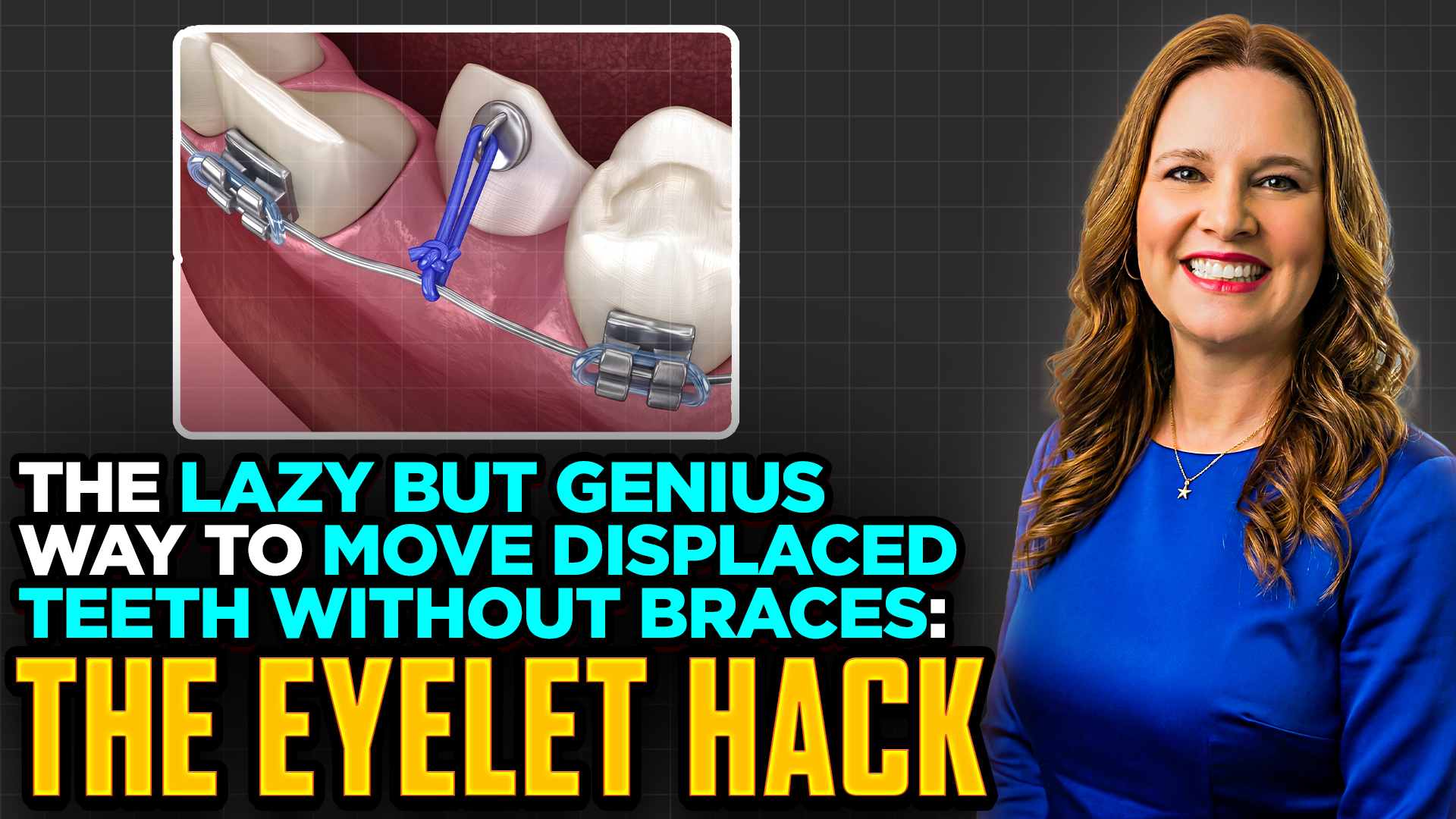
Eyelets and Elastic Thread in Orthodontics: Strategic Tracking and Mechanics
Eyelets and elastic thread are indispensable, versatile clinical tools used to track severely displaced teeth into the dental arch. While they can be used synchronously, these mechanics also function independently to address complex positional anomalies, such as severely impacted or ectopically erupted canines. They provide a predictable pathway for tooth movement when standard orthodontic archwires cannot be directly engaged.
Orthodontic Armamentarium Breakdown
- Elastic Thread: This flexible, high-utility material delivers targeted traction to malpositioned teeth. Because it is highly adaptable, it can be passed through narrow spaces where traditional power chains or wire ligatures fail.
- Orthodontic Eyelets: An eyelet is a specialized bondable attachment featuring a smooth, small loop instead of standard bracket slots. Standard brackets cannot adequately secure elastic thread on severely displaced surfaces. Bonding a low-profile eyelet directly to the tooth structure creates a secure anchor point to thread the elastic material through.
Crucial Troubleshooting Tips for General Dentists
To prevent patient discomfort and ensure constant, efficient tooth tracking, clinicians must carefully manage the unique properties of these materials:
- Prevent Mesiodistal Sliding: If elastic thread is tied directly over an open space on a main archwire, it will slide out of position across the wire span. To eliminate this issue, place a passive, exactly sized open coil spring over the main wire. Tie the elastic thread so it seats directly between the coils, anchoring it firmly in place.
- Tie Secure Double Knots: The slick surface of elastic thread is prone to unravelling under tension. Clinicians must tie a tight, distinct double knot at the attachment site to prevent mechanical failure.
- Shorten the Appointment Cycle: Elastic thread loses its internal elastic memory much faster than standard power chains. Patients wearing active thread should bypass the standard long-term tracking cycle and be recalled frequently to have the thread reactivated.
For specialized guidance on tracking impacted canines or custom biomechanical consulting, visit the StraightSmile Solutions Services Portal.