
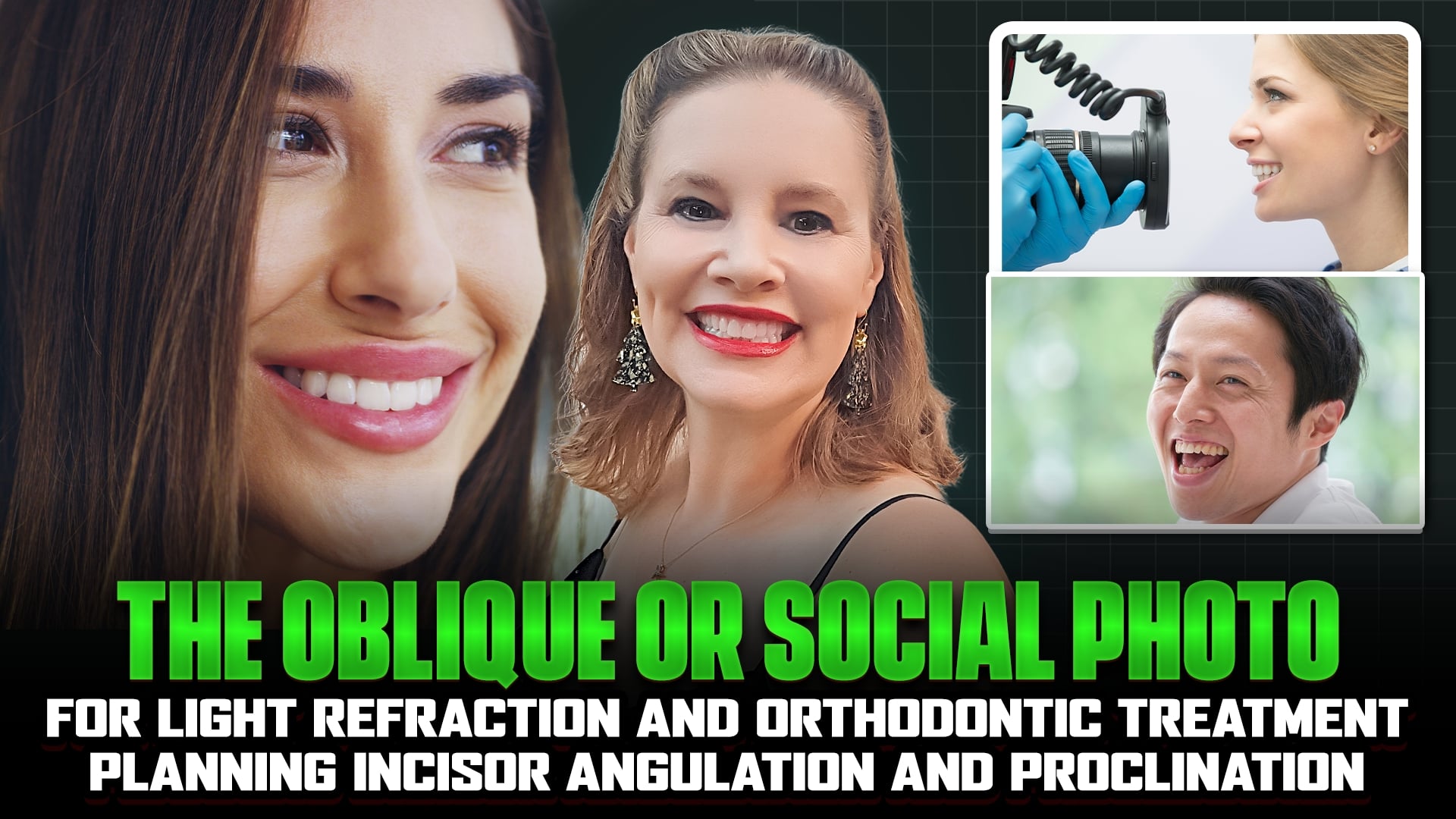
 Elevating Orthodontic Care: The Power of the Social PhotoIn modern orthodontics, capturing the perfect smile requires looking beyond traditional dental angles. While standard front and side views offer essential structural data, they often miss how a smile functions in real-world interactions. This is where the oblique, or “social,” photo becomes an indispensable tool for your practice. Taken at a 45-degree angle, this view bridges the gap between clinical diagnostics and patient-centered cosmetic outcomes.Why the Social Photo MattersThe social photo captures the smile as the world actually sees it. When patients converse or laugh, people rarely view them dead-on or in profile. This angled perspective provides critical insights that standard records miss:Light Refraction: It reveals how light interacts with the tooth surface, highlighting natural contours and imperfections.Proclination Assessment: You can better evaluate the forward tilt of the anterior teeth.Anatomical Thickness: It helps gauge the actual thickness of the enamel and structure, which heavily influences the final aesthetic result.Enhancing Patient CommunicationIntegrating the social photo into your records changes how you present treatment plans. Patients often struggle to understand complex x-rays or standard intraoral photos. However, they instantly recognize their own smile from a social angle. Showing this view fosters a deeper, more collaborative relationship, as patients can clearly visualize the cosmetic improvements you propose.A Modern Approach to Practice GrowthEmbracing this technique allows general practitioners to think outside the box. Incorporating cosmetic, day-spa-inspired visual tools elevates the standard patient experience. It shifts the perception of orthodontics from a rigid medical procedure to a personalized aesthetic journey. By updating your photography protocols to include the oblique view, you enhance your diagnostic precision while setting your practice apart in a competitive market.