
I. Introduction
- Dr. Amanda from Straight Smile Solutions discusses a commonly overlooked cause of adult-onset bite asymmetries.
- These issues are most often seen in adult patients in their 40s–60s, particularly females.
- New-onset unilateral posterior open bites (POB), cants, or facial asymmetries may not be orthodontic in origin.
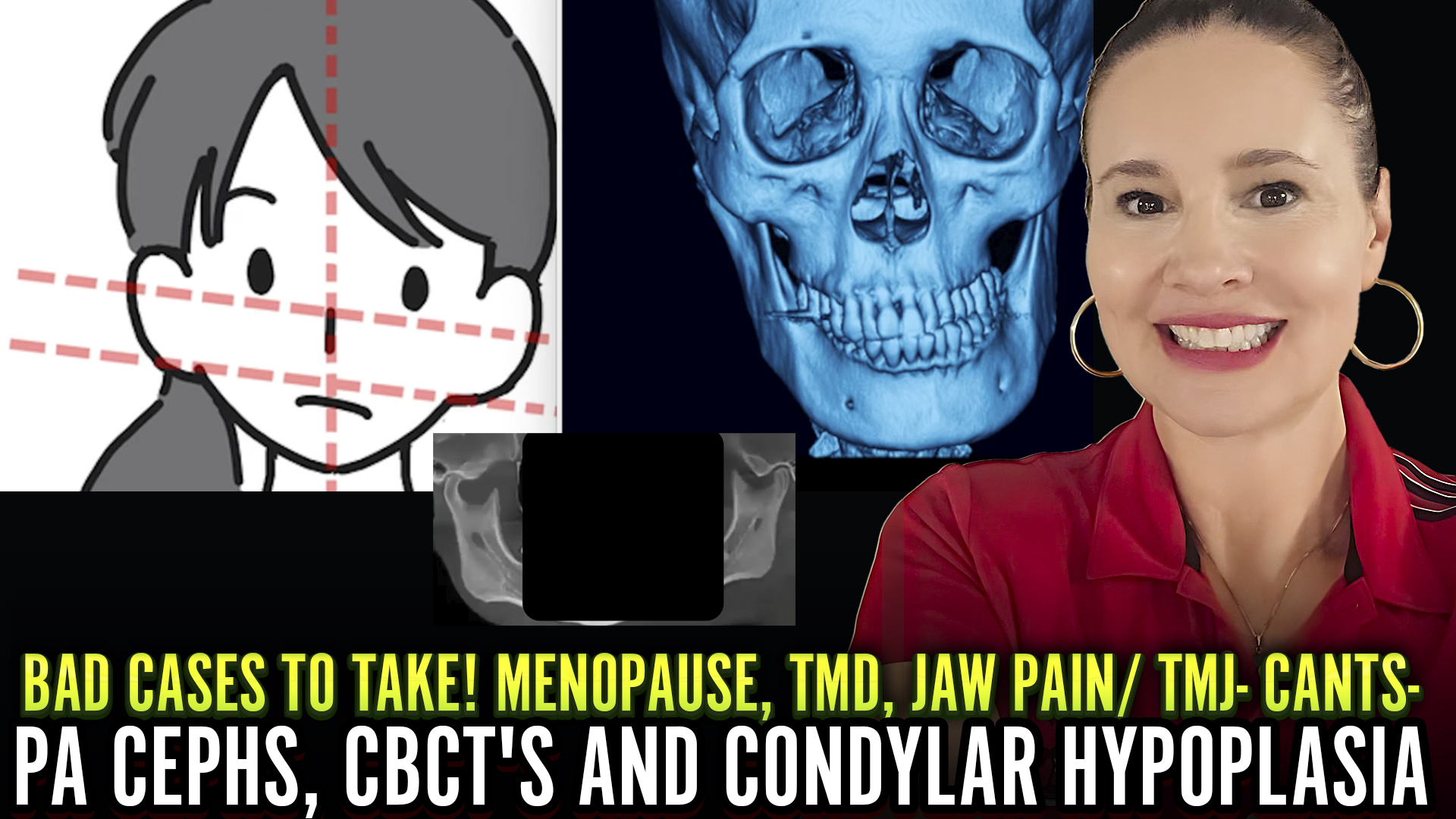
- In some cases, the root cause lies in TMJ pathology, specifically condylar hypoplasia or condylar resorption, rather than teeth or jaw alignment alone.
II. When Orthodontics Is Not the Answer
- Clinicians should avoid immediately focusing on:
- Teeth
- Braces or aligners
- Jaw position
- Facial esthetics
- Instead, consider joint health and the possible need for joint replacement.
- Adult patients who previously had stable bites but now show progressive asymmetry warrant deeper investigation.
III. What Is Condylar Hypoplasia?
- Condylar hypoplasia is a condition where the mandibular condyle is smaller, underdeveloped, or resorbing.
- It can be:
- Congenital (rare, ~1 in 5,600 births)
- Acquired due to trauma, infection, inflammation, or systemic factors
- Progressive changes in condylar size or shape can cause:
- Facial asymmetry
- Bite canting
- Unilateral or bilateral posterior open bites
IV. The Role of CBCT and Modern Imaging
- In the past, 2D panos made it difficult to distinguish true pathology from artifacts.
- With CBCT and radiology reports, clinicians can now clearly assess:
- Condylar size and shape
- Side-to-side asymmetry
- Signs of resorption or degeneration
- Any adult patient with unexplained POBs or cants should have focused condylar analysis included in imaging reports.
V. Menopause, Hormones, and TMJ Changes
- Hormonal shifts during perimenopause and menopause can significantly affect bone and joint health.
- A sharp drop in estrogen, especially without hormone replacement therapy (HRT), may:
- Increase inflammation
- Accelerate bone resorption
- Worsen TMJ degeneration
- Exacerbate existing asymmetries
- Menopause can cause latent issues to suddenly become clinically obvious and progressive.
VI. Clinical Implications for Providers
- New-onset adult asymmetry should raise red flags before starting aligner therapy.
- Recommended steps include:
- Ordering CBCT with condylar evaluation
- Requesting radiologist commentary on TMJ pathology
- Avoiding orthodontic camouflage
- These cases often require jaw surgery and condylar replacement, followed by orthodontics, not the reverse.
Conclusion
Adult posterior open bites, cants, and asymmetries, especially in peri- or postmenopausal patients, may signal underlying condylar pathology rather than orthodontic relapse. Recognizing the influence of hormonal changes and joint degeneration is critical. Proper diagnosis protects patients from ineffective treatment and ensures they are guided toward the appropriate surgical and interdisciplinary care pathway.