
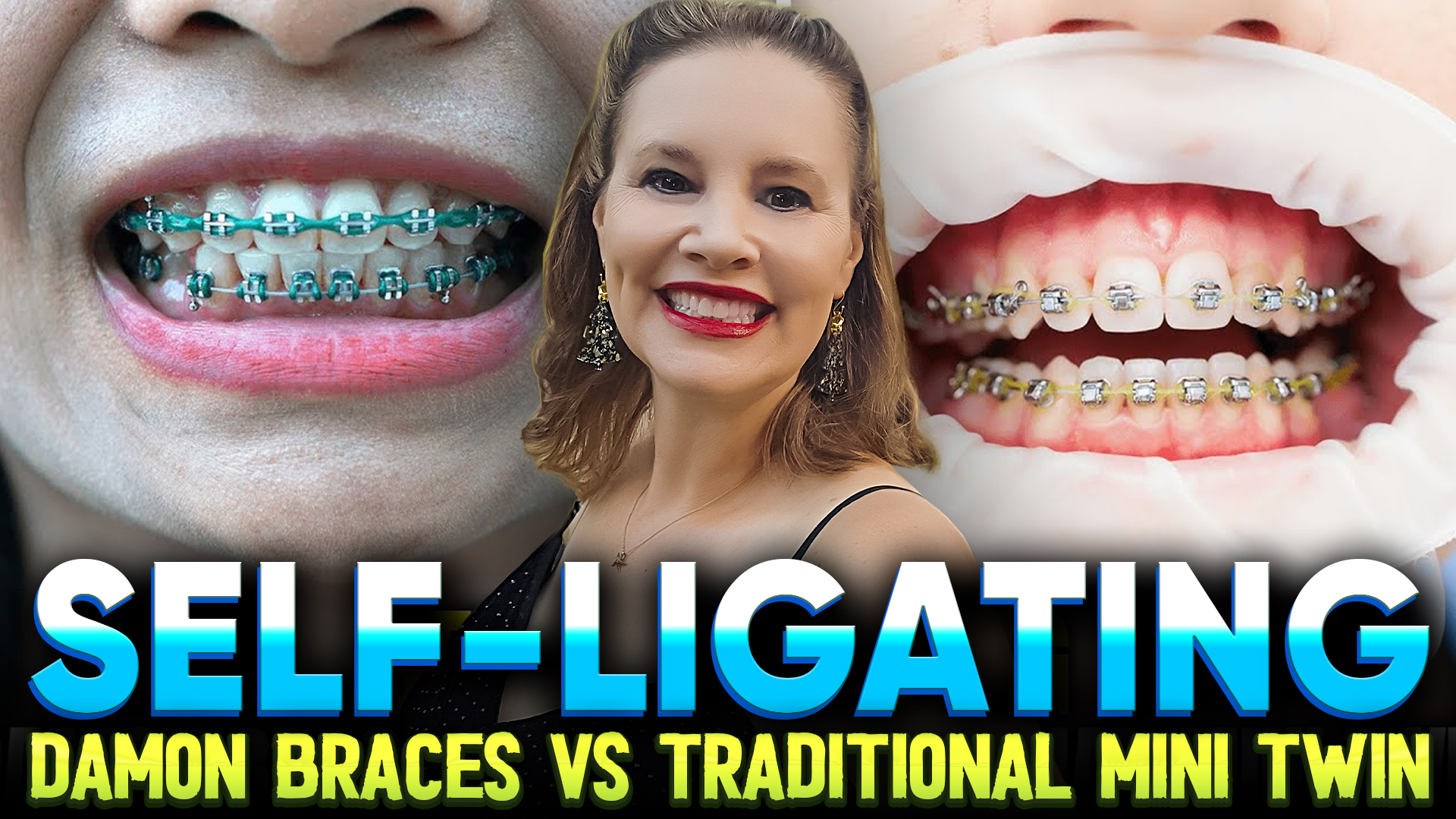
When choosing the right orthodontic treatment, patients are often faced with a choice between different bracket systems. While traditional braces remain a staple in orthodontics, self-ligating systems like Damon braces have gained massive popularity. Understanding the structural and functional differences between these two systems can help you make an informed decision for your smile.
The Structural Difference: Ties vs. Doors
The core distinction between these two systems lies in how the orthodontic archwire is secured inside the bracket slot:
- Traditional Mini Twins: These brackets require a small elastomeric O-ring or rubber tie to hold the wire in place. These ties come in various colors but naturally degrade, stretch, and lose their tightness over time.
- Self-Ligating Braces: These specialized brackets feature a built-in “trap door” mechanism. The door slides or snaps shut directly over the archwire, completely eliminating the need for external rubber ties.
Case Type Matters: Crowding vs. Spacing
Self-ligating braces offer significant clinical advantages, but their benefits depend heavily on your specific orthodontic needs:
- Severe Crowding: If your teeth are heavily crowded, self-ligating brackets shine during the initial leveling and aligning phase. The low-friction mechanism allows teeth to slide into place more freely. This can lead to a more efficient alignment process and fewer office visits.
- Spacing Issues: If your goal is to close large gaps, self-ligating brackets offer no extra clinical benefits over traditional braces. Closing spaces requires the use of interconnected rubber power chains anyway, which bypasses the benefit of the built-in bracket doors.
Appointment Frequency and Lifestyle
Because traditional rubber ties degrade within six to eight weeks, patients with standard braces must visit the clinic frequently to have them changed.
With self-ligating systems, a heavy archwire can be locked into the bracket door and left to work effectively for months. During the first year of treatment, a patient with self-ligating braces might only need to visit the office every two to three months, compared to the strict four-to-six-week cycle required by traditional ties. This saves an immense amount of time for busy patients.
Cost Considerations
From a financial perspective, self-ligating brackets are highly sophisticated pieces of hardware that cost doctors significantly more to purchase. Because of this, dental practices typically charge an extra premium—often ranging from $500 to $1,000 more than traditional braces. If you have a spacing case, paying this extra fee may not be worth the investment. However, for severe crowding, the time saved in the dental chair can make the cost well worth it.