
- Introduction to Gummy Smiles
- Definition: A gummy smile refers to a smile that reveals excessive gum tissue.
- Common misconception: Many people think a gummy smile is abnormal, especially in children and teens.
- Amanda’s perspective: Not all gummy smiles require treatment; understanding the underlying cause is crucial before opting for any corrective measures.
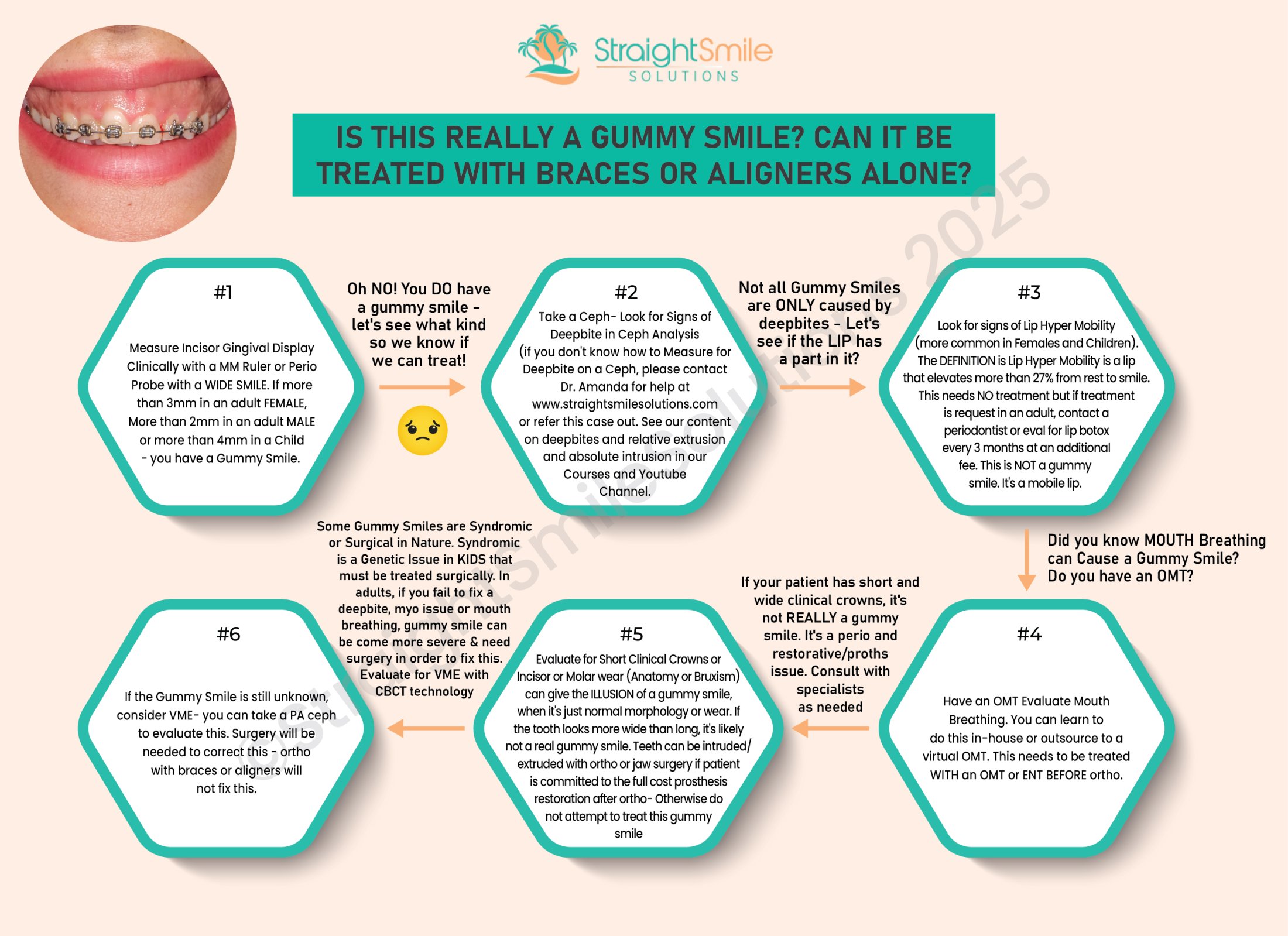
- Dr. Amanda’s 6-Step Approach to Evaluating Gummy Smiles
- Step 1: Measure Gingival Display
- Clinically measure with a millimeter ruler, intraoral probe, or pero probe.
- A WID smile is important to note (see Dr. Amanda’s YouTube channel for more on WID smiles).
- Typical gum display:
- Females: 2–3 mm of gum show.
- Males: 2 mm or less.
- Kids: 3–4 mm of gum is normal.
- Excessive gum exposure in children is generally not an issue, but more than 4 mm may indicate a true gummy smile.
- Step 2: X-ray or CBCT for Deep Bite Evaluation
- A deep bite is one of the most common causes of gummy smiles.
- CBCT or an x-ray can reveal if a deep bite is present.
- A deep bite may result in over-eruption of the teeth and cause gum exposure.
- Step 3: Assess Lip Mobility
- A hypermobile lip is when the upper lip moves excessively when smiling.
- This may cause the appearance of a gummy smile even without any dental or orthodontic issues.
- Botox injections in the lip can help control excessive movement, but this is often not necessary unless it bothers the patient.
- Note: It’s important to differentiate between orthodontic problems and lip issues.
- Step 4: Investigate Mouth Breathing or OMT Issues
- Mouth breathing can contribute to a gummy smile and can affect facial development.
- OMT (orofacial myofunctional therapy) can help address mouth breathing and other issues.
- A thorough evaluation by an OMT specialist is recommended if mouth breathing is suspected.
- Step 5: Examine Teeth Size and Shape
- Small, worn, or “stumpy” clinical crowns may contribute to the appearance of a gummy smile.
- Some individuals naturally have shorter teeth, which can make the gums appear more prominent.
- If this is the case, crown lengthening or gingivectomy may be necessary, often in combination with veneers.
- This issue is a periodontal one, not orthodontic, and should be referred to a periodontist.
- Step 6: Consider Genetic Factors or Syndromes
- If none of the previous steps identify the cause, the gummy smile could be due to a genetic issue or a syndromic condition.
- Vertical Maxillary Excess (VME), which involves excess bone growth in the upper jaw, maybe a contributing factor.
- VME is typically treated with jaw surgery, which may involve repositioning the maxilla to reduce gum exposure.
- TADs (Temporary Anchorage Devices) are less effective for VME, and surgery may be necessary for a permanent solution.
III. Additional Considerations
- Gummy Smile Treatment is Not a One-Size-Fits-All
- Not all gummy smiles need intervention. Sometimes, the issue may be aesthetic, and treatment is unnecessary.
- Only in specific cases, such as deep bites or VME, should more invasive treatments like surgery or orthodontics be pursued.
- Misdiagnosis can lead to improper treatments, potentially resulting in poor outcomes for the patient.
- Age and Growth Factors
- In children, a gummy smile is often a normal part of development.
- As children grow, their gums and teeth may naturally align, reducing the appearance of a gummy smile.
- Intervention may not be needed unless there are signs of underlying issues like VME or deep bites.
- Conclusion
- Do Not Rush to Treat Gummy Smiles
- Not all gummy smiles are problematic; many are simply a normal part of facial development.
- Before considering treatments like orthodontics or surgery, Amanda emphasizes the importance of understanding the cause.
- If necessary, referrals to periodontists, orthodontists, or OMT specialists may be required, depending on the underlying issue.
- Amanda’s guidance encourages a thoughtful and measured approach to gummy smile treatment, ensuring the best outcomes for patients.