
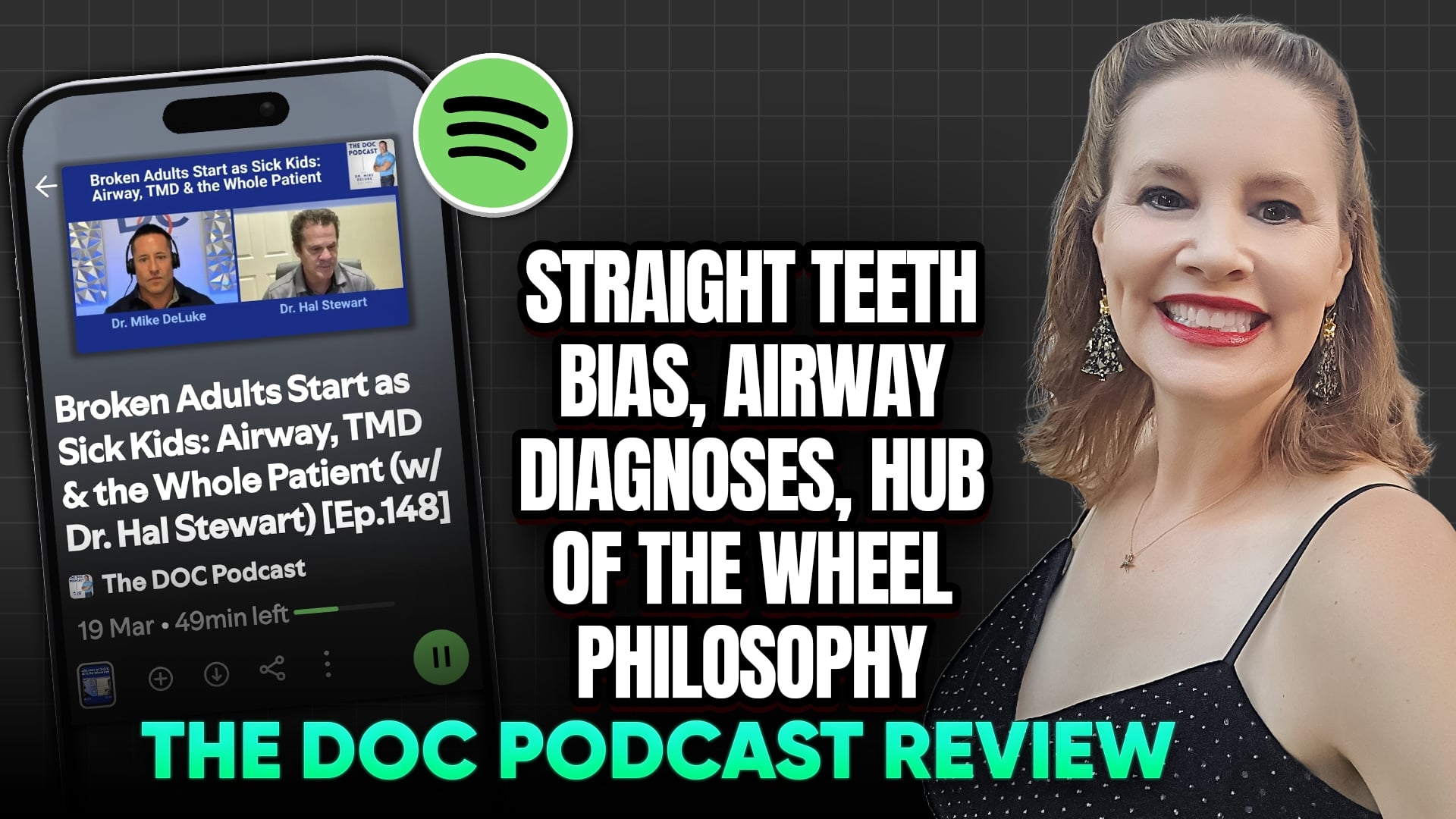
 Beyond the Kool-Aid: Finding the Truth in Orthodontic Airway HealthThe dental podcast landscape is often filled with biased perspectives. Key Opinion Leaders (KOLs) frequently speak under corporate contracts. This limits their clinical opinions.However, a recent episode of The DOC Podcast breaks through the noise. Hosted by Dr. Mike Duke, the episode tackles the ongoing debate over airway health. It compares the positions of the American Association of Orthodontists (AAO) and the American Dental Association (ADA).The Problem with the AAO ModelThe AAO white paper places orthodontists strictly under the direction of medical doctors. It views pediatric airway issues strictly as medical problems. Orthodontists following this model cannot treat children without clear physician approval.This creates massive real-world issues:Pediatrician gaps: Most pediatricians have no training in orthodontics.Patient limbo: Children wait for care while parents face delays.High costs: Unnecessary, expensive laboratory sleep tests are forced upon families.False premises: The model falsely implies orthodontics automatically cures sleep apnea.In reality, tooth movement cannot fix non-orthodontic structural issues like tongue-ties.A Better Way: The Collaborative ApproachDr. Duke and dental expert Steve Kstensson advocate for a practical philosophy. Dentists are uniquely positioned to catch early craniofacial underdevelopment. Small upper or lower jaws are easily spotted during routine cleanings. Airway screening should be standard practice for every general and pediatric dentist.This collaborative workflow protects patients while respecting boundaries:1. Nose-First PhilosophyAll airway health begins with proper nasal breathing. Dentists must actively screen for chronic mouth breathing.2. Wearable TechnologyDentists can distribute simple, overnight screening tools to patients. This allows the office to capture crucial biological data cheaply.3. Medical CooperationThe recorded data is sent directly to medical colleagues. MDs handle final diagnoses without requiring expensive sleep lab stays.4. Active Referral NetworksOrthodontists must work closely with myofunctional therapists, speech-language pathologists (SLPs), and ENTs. This treats the root cause of the breathing issues.Take Back Your DomainDentists do not need to diagnose medical conditions to protect young patients. Gathering data and recognizing early skeletal changes falls firmly within dental expertise. It is time to move past restrictive corporate positions. We must implement physiological airway screening into daily practice.