
Behind the Smile: Three Crucial Uses for Steel Orthodontic Ligature Ties
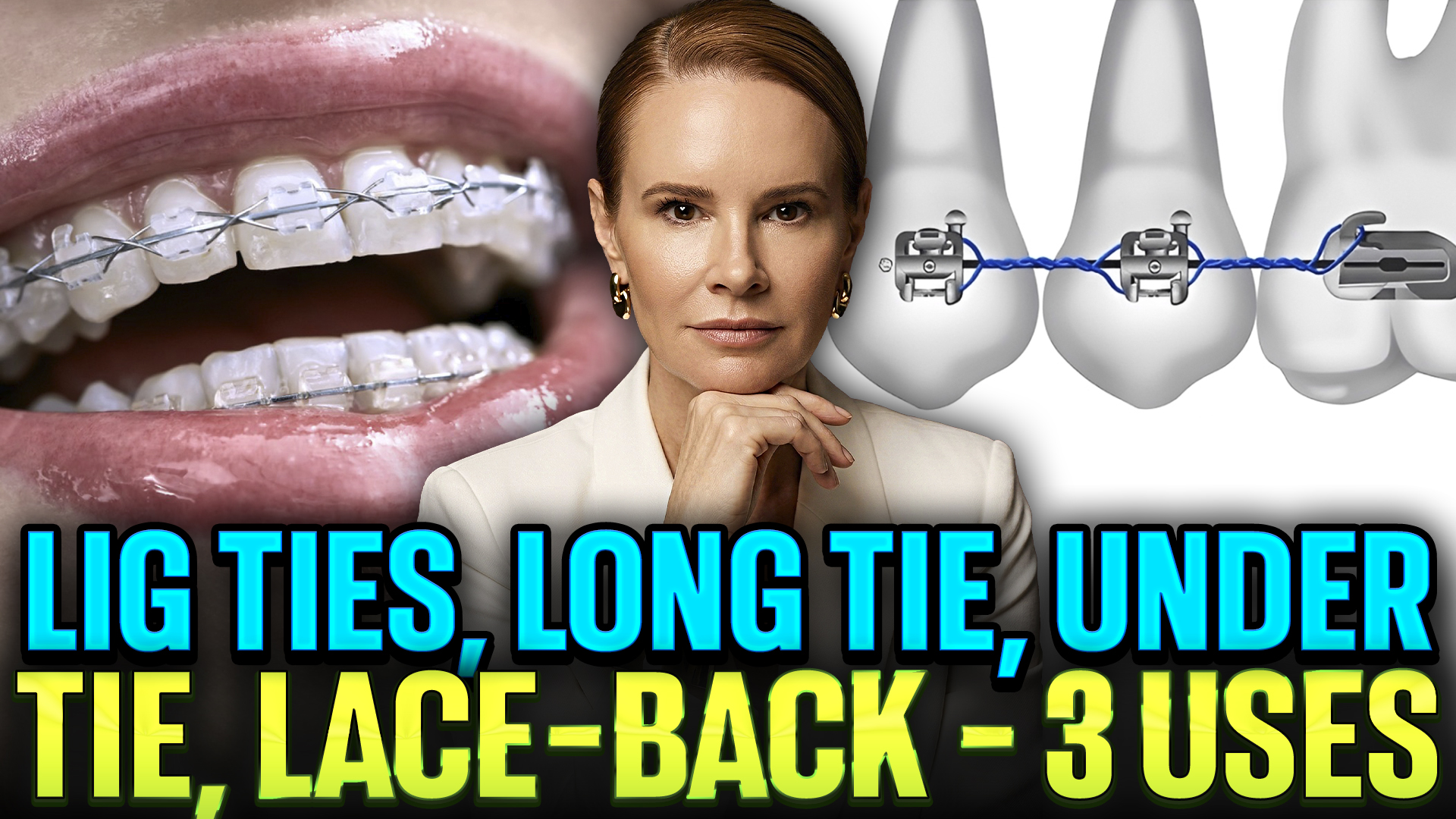
When people think about braces, colorful elastic bands and power chains are usually the first things that come to mind. However, behind those bright colors lies a hidden, passive tool that orthodontists rely on to keep treatment on track: the long stainless steel ligature tie. Also known as leg ties, under-ties, or lace-backs, these ultra-thin wires are an essential component in advanced dental alignment.
Unlike rubber bands that actively pull teeth, steel ties exert no active force. Here are three critical ways orthodontists utilize them to manage your smile:
1. Locking Down Closed Gaps
Power chains are highly effective at closing gaps between teeth. However, teeth have a natural memory due to elastic fibers in the gums. This means they love to drift back to their old positions the moment pressure stops. Once a gap is completely closed, a doctor will often swap the elastic for a steel ligature tie. By twisting this rigid wire tightly across a segment of teeth beneath the archwire, the closed space is securely locked into place. This maintains the progress without the aggressive, active side effects of a power chain.
2. Creating Anchorage Blocks
In complex orthodontic cases, a doctor might need to pull a single stubborn tooth backward—like a canine. If they attach an elastic to just one back tooth, both teeth will pull toward each other. To prevent this, the doctor will use a steel tie to lace several strong back teeth together into a single, combined unit. This creates an unyielding anchorage block. With the back teeth locked into a single heavy segment, the power chain can safely pull the front teeth backward without causing the rear teeth to budge forward.
3. Long-Term Travel Security
Standard colored elastics degrade, stretch out, and get sloppy over time, which is why braces require frequent adjustment appointments. If a patient is traveling internationally, going away to summer camp, or moving away for a few months, standard ties can stall progress. To fix this, an orthodontist can tie the brackets with individual stainless steel ties instead. Because steel does not stretch or break down, it keeps the archwire completely secure, mimicking a self-ligating bracket system. This allows the teeth to safely continue aligning for months while the patient is away.