
Introduction
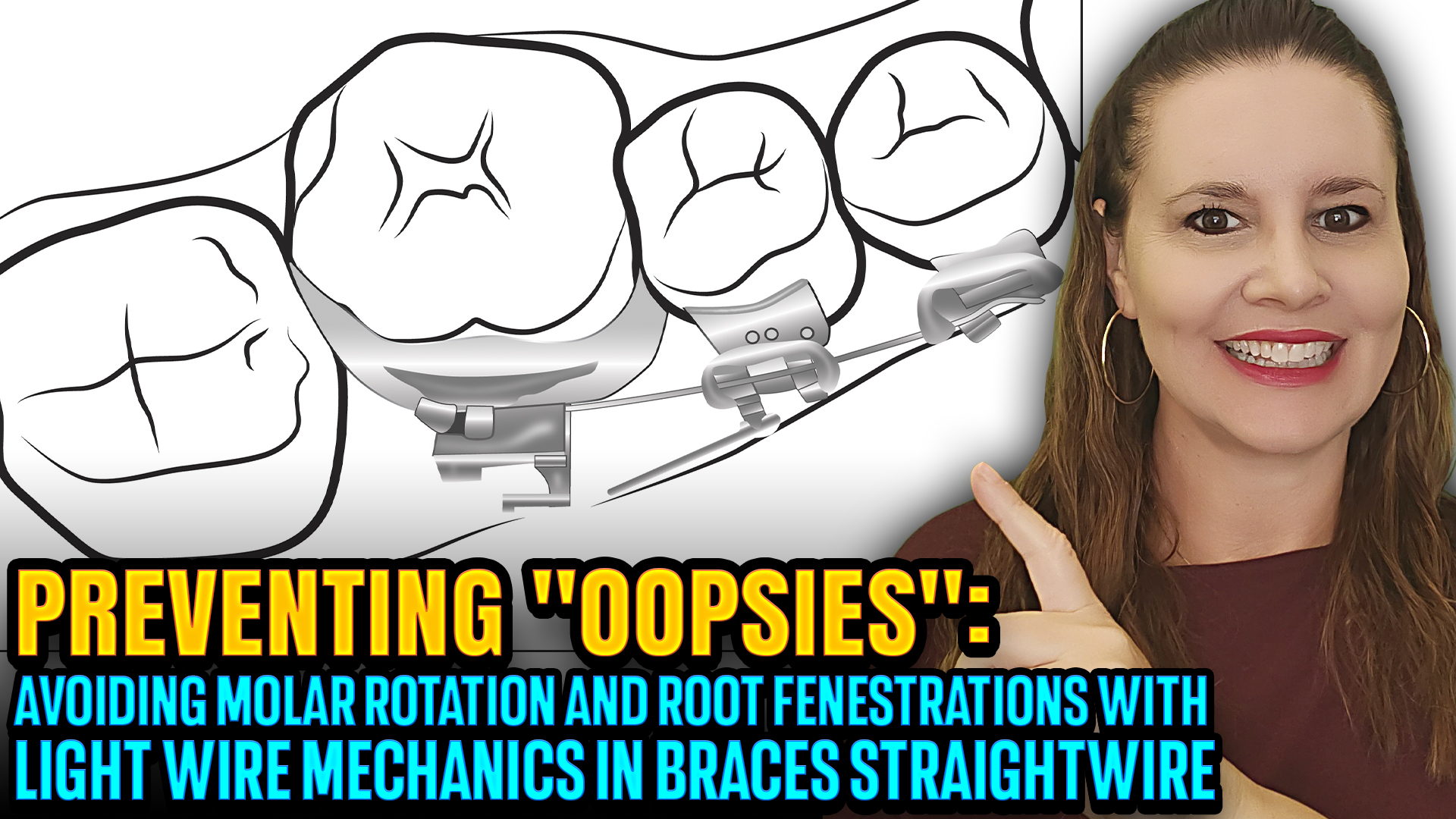
Dr. Amanda from Straight Smile Solutions highlights a commonly overlooked but serious braces complication: unintended tooth rotation and even fenestration caused by improperly sized straight or light archwires. These “oopsies” are not advanced biomechanics failures; they are preventable setup and monitoring errors that can carry real clinical and legal consequences if missed.
How Short Wires Create Problems
How Straightwire Mechanics Are Designed to Work
- Archwires are meant to fully engage brackets and extend slightly past the molar tubes
- A small amount of wire exiting the tube ensures:
- Full force expression
- Balanced push–pull mechanics
- Proper counter-moments to control rotation
What Goes Wrong with Short Wires
-
- Over-trimming the wire during placement
- Only the tip of the wire engages the molar tube
- The remainder of the tube span is empty
- Results in:
- Force applied in only one direction
- Loss of counterforce
- Progressive, unintended tooth rotation
Why This Can Become Dangerous
-
- Continued unbalanced force can push a tooth outside the alveolar bone
- Risk of:
- Fenestration
- Dehiscence
- Bone loss
- Liability for the treating doctor
- Often missed when patients disappear for weeks or months
Not Always a Staff Error
- Light wires can shift over time
- Common in:
- Long spans
- Mixed dentition
- Areas near unerupted teeth
- A shifted wire may partially disengage from the tube without anyone noticing
Prevention Strategies
- Always confirm the wire fully passes through the molar tubes
- Ensure visible wire extension before trimming
- Monitor light wires closely at every visit
- Consider cinching only when biomechanically appropriate
- Never assume “it’s in the tube” without visual confirmation
Conclusion
These straightwire “oopsies” are preventable with attention to detail and consistent monitoring. Even simple mechanics can cause serious damage if a wire disengages unnoticed. Dr. Amanda’s core message: If you’re wearing braces, you must anticipate emergencies, monitor them actively, and never rely on assumptions.