Introduction
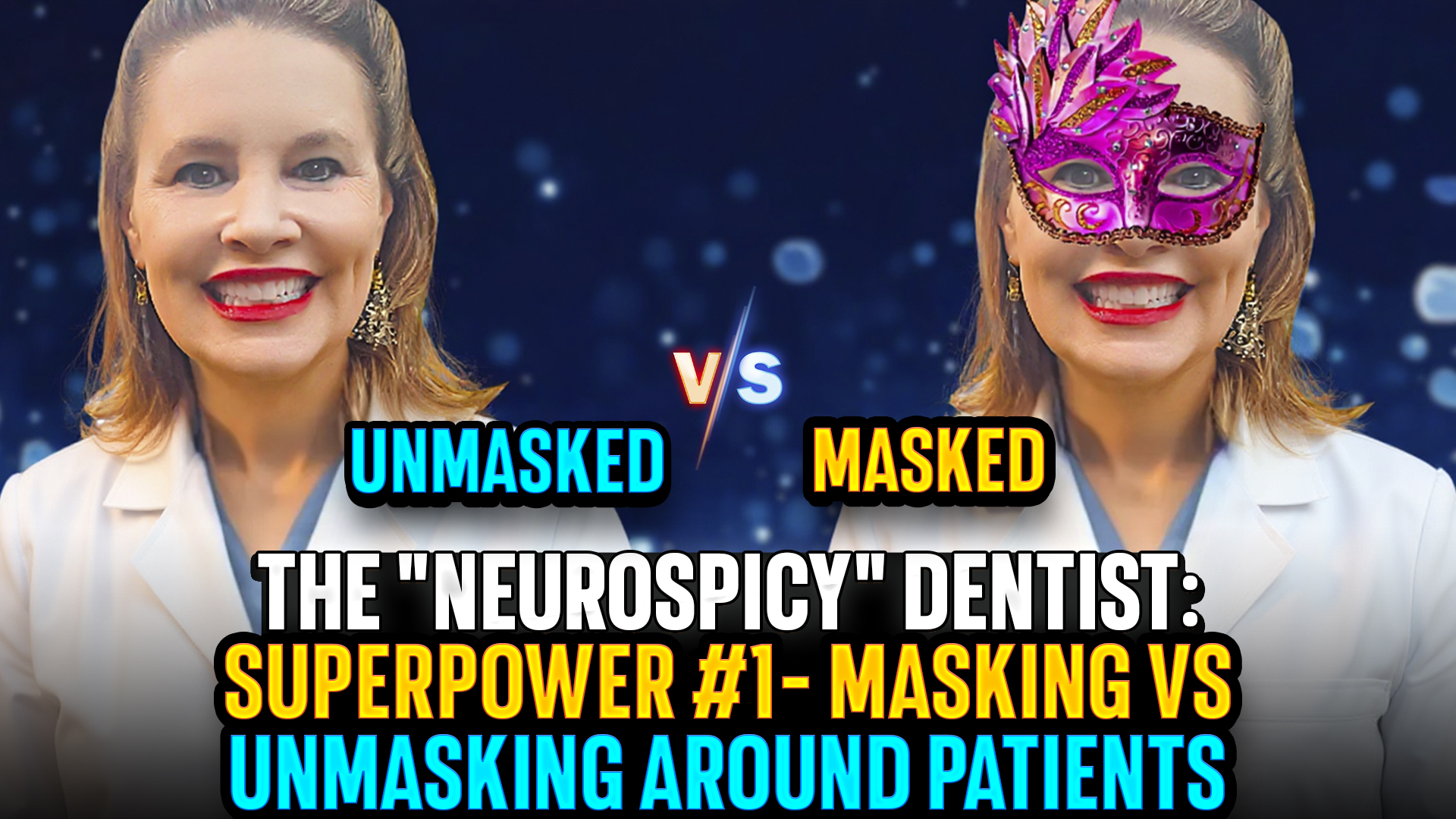
Dr. Amanda from Straight Smile Solutions addresses masking versus unmasking among neurodivergent dentists, particularly those with ASD, ADHD, Tourette’s, or similar traits. She shares her late-in-life realization about being neurodivergent, explains the concept of masking, and offers practical insights for adapting dental practice to align with personal strengths and limitations.
Body
- Prevalence & Misunderstanding
- Estimates suggest 19% of Americans are neurodivergent, likely higher in dentistry due to the profession’s appeal to certain traits.
- Media portrayals (e.g., “Love on the Spectrum”) often show extreme presentations, missing the more subtle, common realities.
- Many dentists may be unaware they are neurodivergent, misattributing challenges to their workplace, relationships, or mental health.
- Personal Journey
- Chose dentistry over medicine due to lifestyle fitness (daytime hours, orthodontics interest).
- I cannot sustain evening work — even with caffeine — and avoid stimulant medications due to side effects.
- Found private practice preferable over DSOs for control of schedule and environment.
- Masking vs. Unmasking
- Masking: presenting a socially acceptable version of oneself (e.g., “Fun Amanda”) to meet professional or social expectations.
- Unmasking: authentic self, which may be quieter, shyer, and less socially energized.
- Masking becomes harder with age and hormonal changes, especially for women in their 40s and 50s.
- Unique Challenges & Traits
- Experiences alexithymia — delayed emotional recognition, requiring extra time to process feelings.
- Often perceived as unemotional, but deeply empathetic after processing.
- Adjusting hours, workload, and habits (earlier sleep, consistent routines) significantly improves well-being without medication.
- Call to Awareness
- Little published research on neurodivergent dentists compared to physicians.
- Recognizing neurodivergence allows tailored changes for greater career satisfaction.
Conclusion
Masking can help dentists navigate professional expectations, but it may be draining and harder to sustain over time. By recognizing their neurodivergence, dentists can adapt work environments, schedules, and personal habits to reduce stress and enhance fulfillment, often through small but intentional changes.