I. Introduction
- Brief introduction to the concept of airway orthodontics
- Introducing Dr. Amanda from StraightSmile Solutions
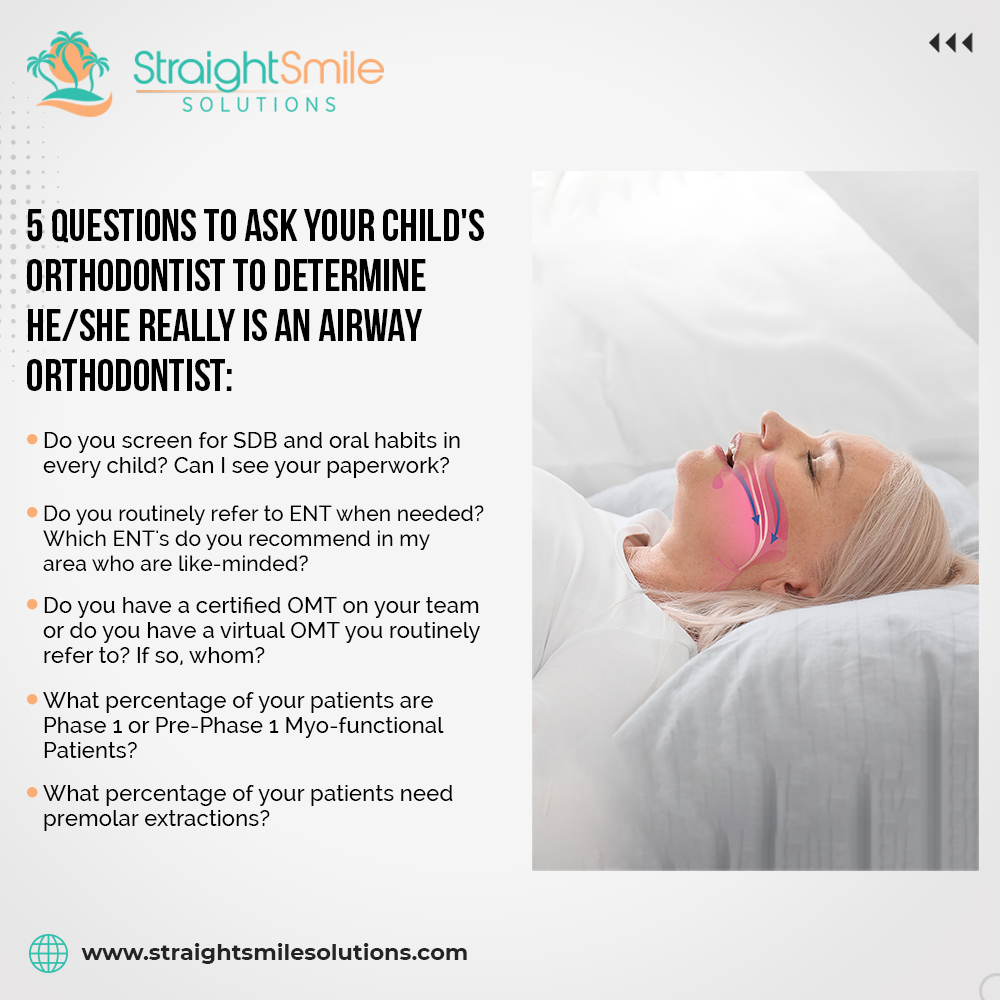
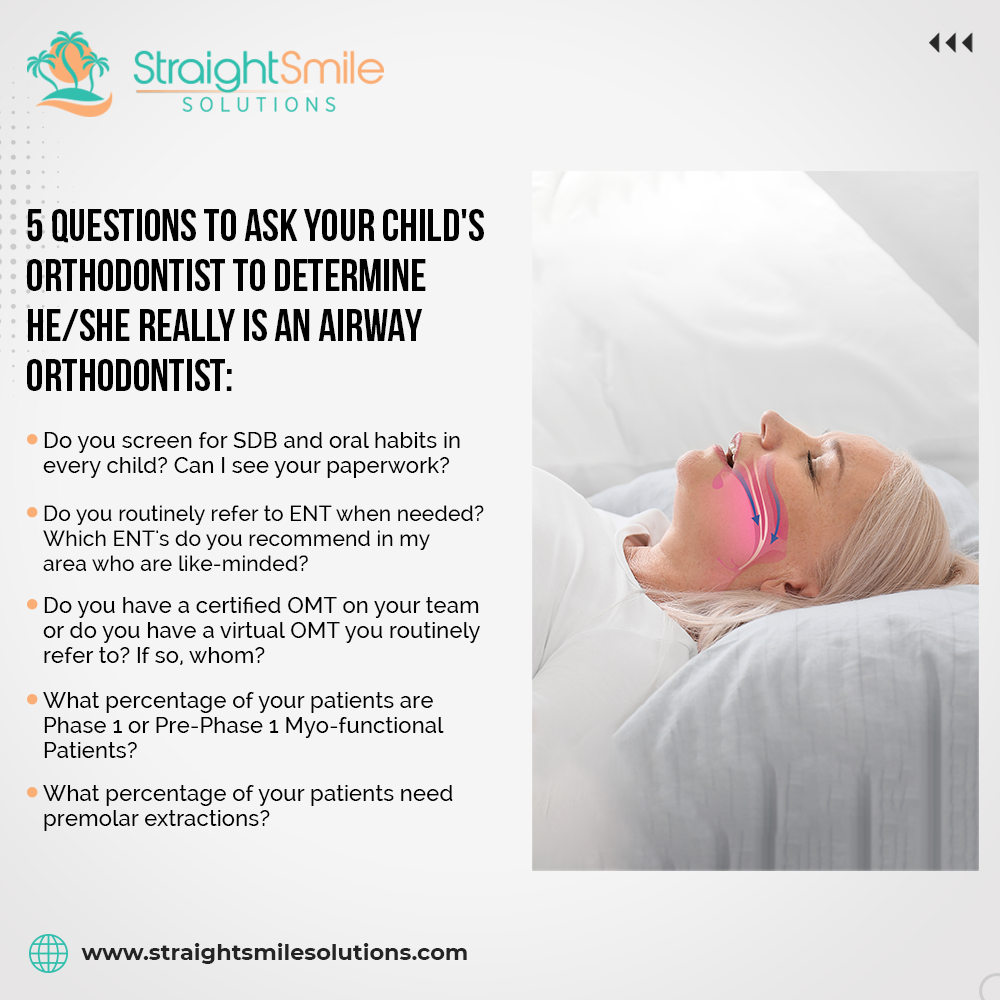
- Purpose of the article: To discuss five crucial questions for dentists and orthodontists to assess if they are practicing airway orthodontics effectively
II. Screening for Sleep-Disordered Breathing (SDB)
- Importance of screening for SDB in every child
- Significance of oral habits and SDB forms
- Timing and accuracy of SDB screening
- Emphasizing the need for thorough parental involvement
III. Documentation and Referrals
- Importance of proper paperwork in airway orthodontics
- Utilizing effective SDB and oral habits forms
- Establishing referral pathways to Ear, Nose, and Throat (ENT) specialists
- Building collaborative relationships with like-minded ENT professionals
IV. Incorporating Orofacial Myofunctional Therapy (OMT)
- Essential role of certified OMT professionals in the team
- Importance of routine referral to OMT specialists
- Emphasizing the need for consistent utilization of OMT in treatment plans
- Avoiding sporadic or insufficient referrals to OMT specialists
V. Early Intervention and Phase One Treatment
- Significance of early intervention in airway orthodontics
- Identifying candidates for phase one or pre-phase one myofunctional therapy
- Assessing the percentage of patients receiving early intervention
- Avoiding delayed intervention for better treatment outcomes
VI. Minimizing Premolar Extractions
- Assessing the necessity of premolar extractions in treatment plans
- Evaluating the patient demographics and treatment approach
- Red flags associated with excessive premolar extractions in children and teens
- Considering alternative treatment modalities for optimal outcomes
VII. Conclusion
- Recapitulation of the importance of airway orthodontics
- Dr. Amanda’s insights and recommendations for dental professionals
- Encouragement to implement changes for enhanced patient care and outcomes
- Acknowledgment of the evolving landscape of orthodontic practices and the need for continual improvement
VIII. Closing Note
- Expressing gratitude for the readers’ attention
- Invitation to engage in further discussions and learning opportunities
- Wishing success and growth in the journey towards airway-centric orthodontic practices
- Contact information from Dr. Amanda for further inquiries or consultations