
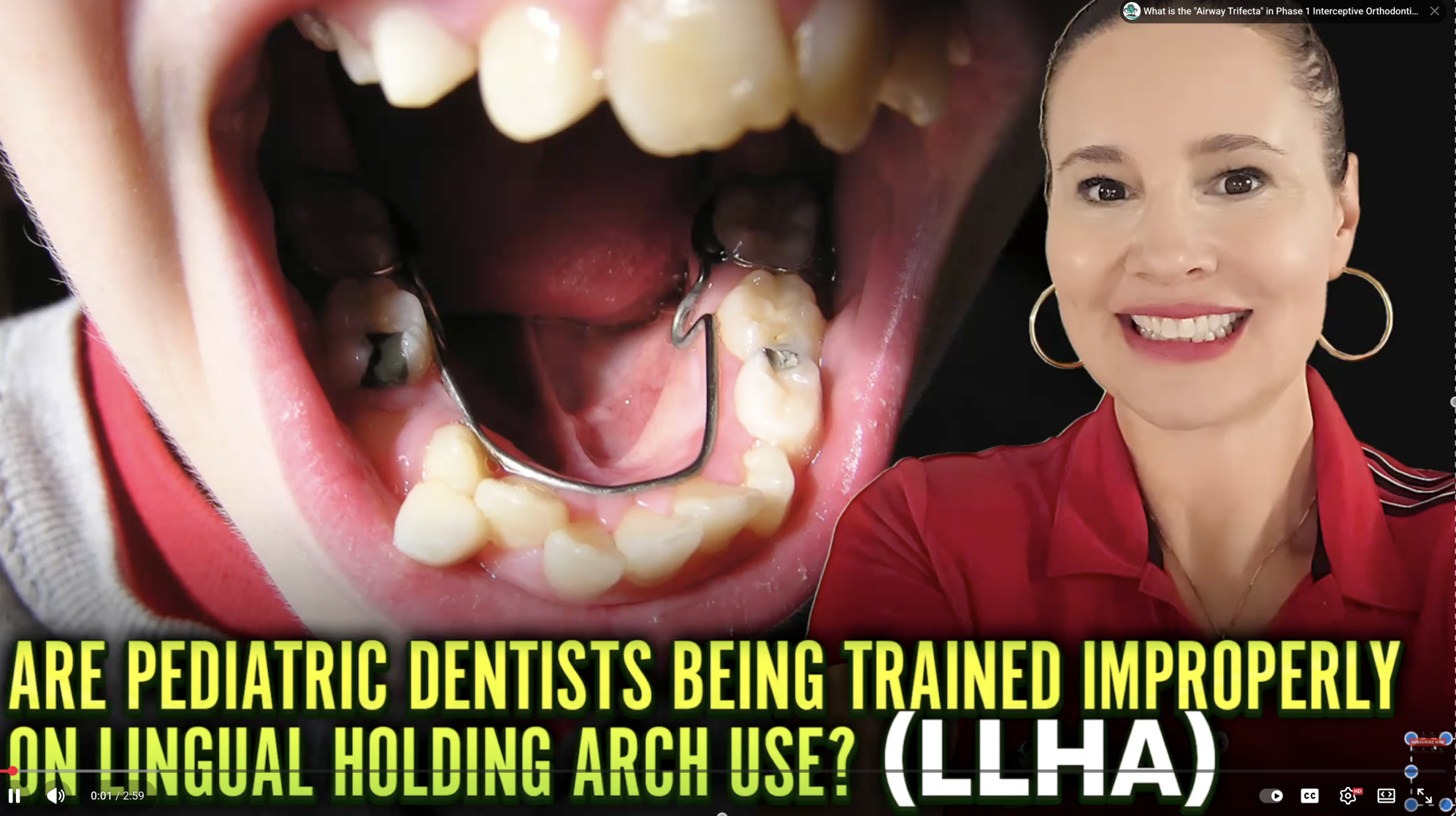
Are LLHA (Lower Lingual Holding Arches) Dangerous? Do You Need Them If You Pull C’s or D’s?
I. Introduction
Dr. Amanda from Straight Smile Solutions addresses common myths and the overuse of Lower Lingual Holding Arches (LLHAs). LLHAs are widely used by orthodontists and pediatric dentists for anchorage and space maintenance. While they have valid indications, Dr. Amanda cautions that they are often placed automatically and unnecessarily, especially after extracting primary canines (C’s) or first primary molars (D’s).
II. What LLHAs Are Actually Meant to Do
- Designed for:
- Space maintenance
- Anchorage control
- Most appropriate when:
- A primary second molar (E) is lost early
- The permanent second premolar (5) is not erupting soon
- They are not meant to be routine appliances placed after every lower primary extraction.
III. The Myth: You Must Place an LLHA After Pulling C’s or D’s
- According to orthodontic literature and residency training:
- From age 6–7 and up, LLHAs are not routinely required after removing C’s or D’s.
- Pulling a single lower canine:
- May theoretically cause a midline shift
- Dr. Amanda’s preference: remove the contralateral canine instead of placing an LLHA.
- Pulling a D:
- Rarely causes space loss when the E is still present.
- Lower teeth do not migrate significantly, especially with developing premolars underneath.
IV. The Incisor Retroclination Myth
- Claim: Lower incisors will retrocline if an LLHA is not placed.
- Reality:
- Incisor movement does not occur without orthodontic forces.
- Any relapse after Phase 1 orthodontics is a retention issue, not caused by extracting baby teeth.
- Retroclined incisors without ortho usually indicate:
- Myofunctional problems
- Muscle imbalance
- A lingual arch will not fix these issues.
V. When LLHAs Are Appropriate
- After early loss of a primary E (unless the 5 is erupting soon).
- In select cases with:
- Mild Class III tendencies
- Established arch development
- Never place an LLHA on:
- An undeveloped, constricted arch
- A poor bite that hasn’t been corrected first.
Conclusion
LLHAs are valuable when used correctly, but harmful when overused. Dr. Amanda estimates that 90% of LLHAs placed are unnecessary, and 10% actively worsen the bite. Clinicians should abandon the use of automatic appliance placement and instead rely on proper diagnosis, arch development, and evidence-based orthodontic principles to avoid doing more harm than good.