
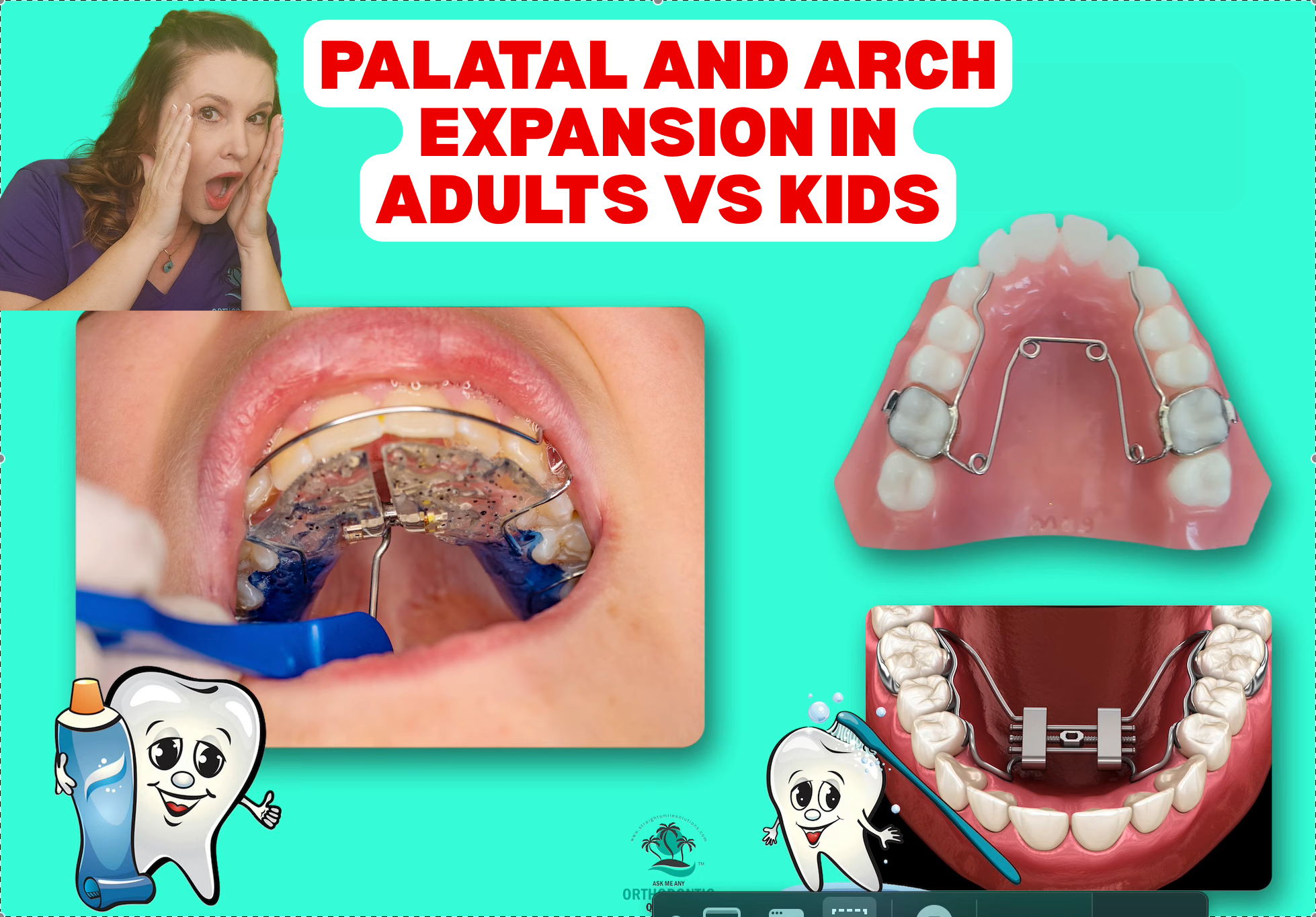
Arch Expansion in Adults vs. Kids: SARPE, MARPE, RPE, MSE & Schwartz
Introduction
Dr. Amanda explains the key differences between arch expansion in children versus adults and clarifies what is possible with RPE, MARPE, SARPE, MSE, and other expanders. This topic builds on her previous videos on skeletal versus dental expansion, and she emphasizes reviewing those foundations before diving into the limitations of adult versus pediatric expansion. The goal is to provide clinicians with a realistic understanding of when true skeletal expansion is possible, when treatment only results in dental tipping, and when surgery becomes the only predictable option.
- Why Expansion Works Easily in Kids
- In children, the maxilla is formed by two palatal shelves connected by a suture filled with interdigitations.
• This suture has not fused, making it easy to widen using RPEs or similar appliances.
• True skeletal expansion improves tongue posture, airway, and bite stability.
• Earlier is always better: young, growing patients experience more predictable widening with fewer negative side effects.
- Why Expansion Fails in Adults Without Surgery
- By adulthood, the palatal suture is fully fused, preventing natural splitting.
• Expanders, quad-helix appliances, and aligners only produce dental tipping, not skeletal widening.
• Dental tipping may cause bite distortions, such as posterior open bites, making treatment unpredictable and often unstable.
• In many cases, leaving a mild posterior crossbite is safer than attempting incomplete expansion.
- Surgical Routes: MARPE, MSE, and SARPE
- True skeletal expansion in adults requires surgical assistance.
• MARPE/MSE: mini-screw–assisted expanders anchored into the palate with 2–4 screws.
– Dr. Amanda strongly recommends surgeon placement only, citing risks of hemorrhage and even death if placed incorrectly.
• SARPE: Surgically Assisted Rapid Palatal Expansion.
– Performed in the OR where the palate is cut, separated, and expanded in a controlled manner.
– Dr. Amanda has assisted in these cases and confirms they provide predictable skeletal changes when properly executed.
- Practical Guidance for Clinicians
- Adult “expansion” that isn’t surgical = tipping only.
• Use caution when considering appliances for adults; results may be unstable or cosmetically limited.
• Refer surgical cases to qualified oral surgeons or orthodontists experienced in MARPE/MSE or SARPE.
• Consider non-treatment or accepting crossbites when tipping would cause more harm than good.
Conclusion
Children can achieve true skeletal expansion easily, while adults require surgery for predictable widening. Non-surgical appliances in adults produce only tipping and often create bite complications. Proper referrals and realistic expectations ensure safe, stable outcomes in adult expansion cases.