
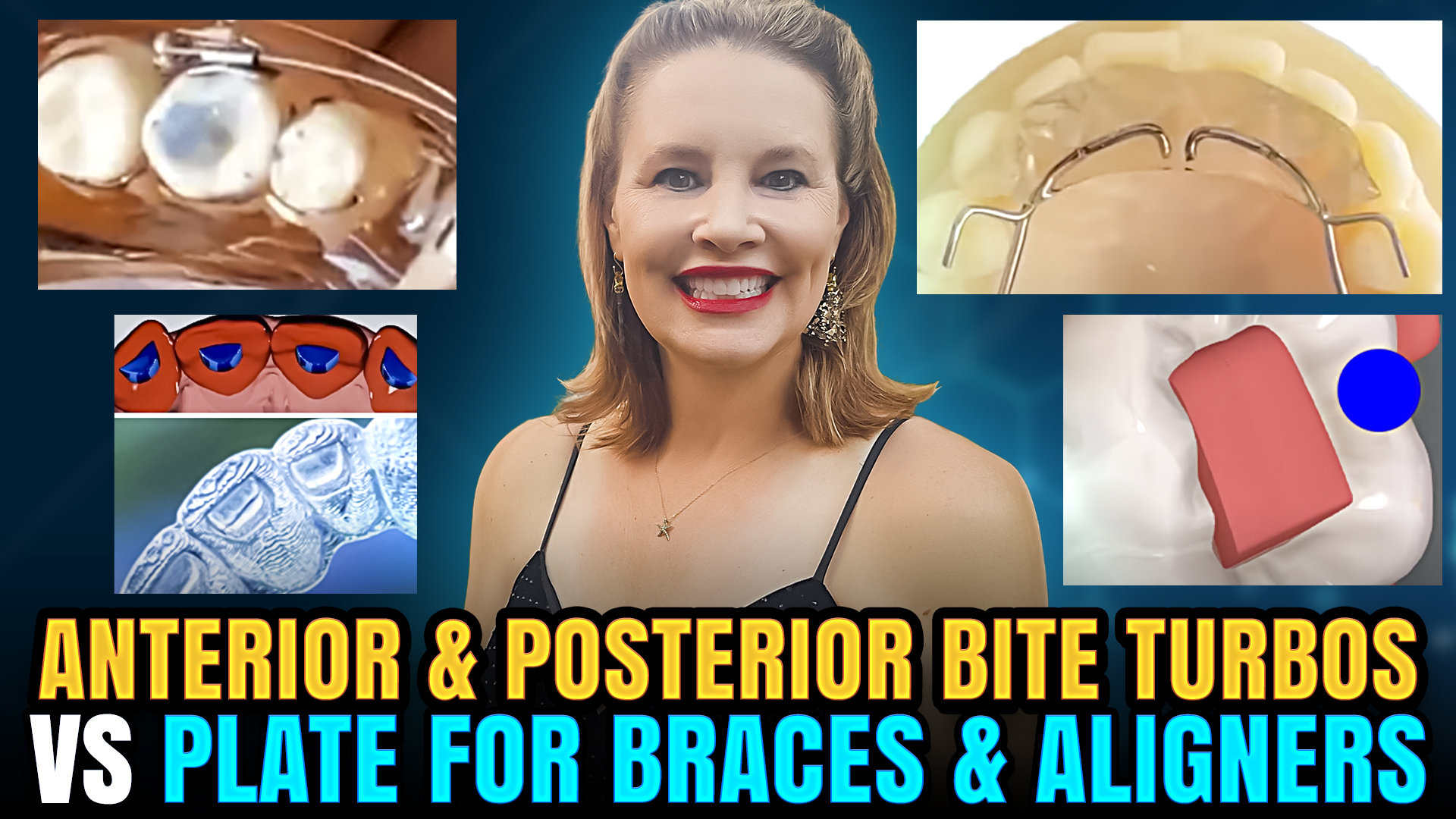
I. Introduction to Bite-Opening Tools
● Dr. Amanda, orthodontic expert and founder of StraightSmile Solutions, shares insight into the use of anterior bite plates, anterior bite turbos, and posterior bite turbos.
● These tools play a key role in:
○ Opening the bite
○ Leveling the curve of Spee
○ Intruding incisors
○ Correcting deep bites
● Each patient’s case is unique, so tools must be chosen wisely as part of a holistic treatment strategy.
II. There’s No One-Size-Fits-All
● Orthodontic care must be personalized. No single technique works for every case.
● Factors influencing treatment choices:
○ Individual skeletal and dental anatomy
○ Functional and aesthetic goals
○ Growth pattern, smile arc, and occlusion
● Proper tool selection can prevent complications and improve efficiency.
III. Education Opportunities through Straight Smile Solutions
A. The StraightWire Course
● Ideal for general dentists and orthodontic providers.
● Cost: $549 (as of publication), equivalent to $40 per CE unit.
● Offers a full year of access to complete the course.
● CE is sponsored by AGD PACE, making it ideal for professionals seeking accreditation.
B. Free YouTube Resources
● All course content is also available for free on YouTube.
● Organized into playlists for easier browsing.
● While not always in perfect logical order, it’s a great budget-friendly option for those who want to learn.
● Note: The YouTube content contains some overlap and repetition, which is trimmed out in the paid course.
IV. Anterior vs. Posterior Bite Turbos
A. In Braces
● Bite turbos are typically glued onto the teeth.
● They may be placed on:
○ Posterior molars (posterior turbos)
○ Behind anterior incisors (anterior turbos)
● Used to:
○ Temporarily disengage teeth during movement
○ Assist with bite opening and curve of Spee correction
B. In Aligners
● Bite turbos are often baked into the aligner material.
● No need to bond or remove—more convenient.
● Helps guide vertical tooth movement by applying pressure in key areas.
● Efficient and less labor-intensive than turbo placement in brackets.
V. The Role of Diagnostics
● Before using any bite-opening tools, clinicians must have a cephalometric radiograph (ceph).
● A ceph helps evaluate:
○ Incisor angulation
○ Curve of Spee
○ Skeletal profile
○ Depth of bite
● Additional considerations:
○ Smile line
○ E-line (esthetic line)
○ Lip support
○ TMJ considerations
○ Growth potential in younger patients
VI. Strategic Treatment Planning
● Not all deep bites require bite turbos—diagnosis must guide treatment.
● Tools should align with:
○ Long-term stability
○ Esthetic goals
○ Functional improvements
● Bite-opening methods vary between aligners and braces, and decisions should be case-specific.
VII. Personalized Clinical Support
● Straight Smile Solutions offers one-on-one support for challenging cases.
● Dr. Amanda encourages clinicians to seek help when needed and take advantage of resources to grow their confidence.
● The platform is designed to make orthodontics more accessible and manageable for general dentists.
VIII. Conclusion
● Anterior and posterior bite turbos are powerful tools when used appropriately.
● Understanding when, where, and how to use them is essential for effective treatment.
● Education is key—whether through the StraightWire course or free YouTube content.
● Dr. Amanda and the team at Straight Smile Solutions are here to support and empower clinicians on their orthodontic journey.