
I. Introduction
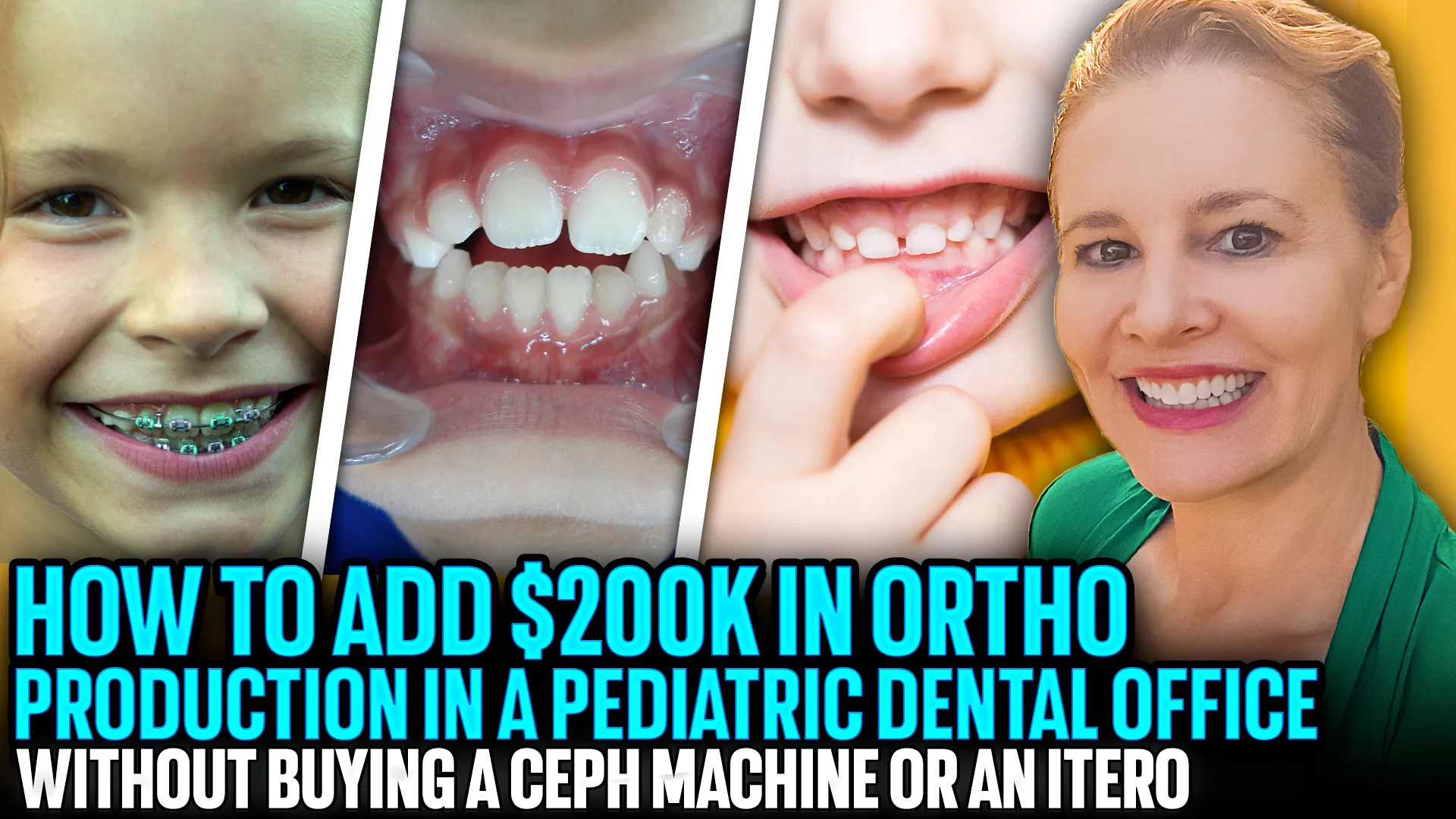
- Dr. Amanda from Straight Smile Solutions explains how pediatric dental offices can add $200,000 in orthodontic production in 2026 without purchasing a ceph machine or iTero scanner.
- This strategy is designed for pediatric dentists who already have a CBCT with a large field of view (FOV) and want to implement interceptive orthodontics efficiently.
- The key is early screening, systems, and team-driven workflows, not expensive new equipment.
II. Start with Early Screening: “Read the 2–5s”
- Every pediatric practice already has future orthodontic patients—you just need to identify them.
- By evaluating facial profile, lips, smile, and posture, orthodontic needs can often be predicted in children as young as 2–5 years old, even without X-rays.
- Early indicators include:
- Constricted palates or jaws
- Airway and mouth-breathing issues
- Myofunctional problems
- Vertical or transverse discrepancies
- Shifts, trauma, or palatal impingement
III. Build a Queue, Not Just a Case
- Place identified patients into a tracking or recall system and revisit the conversation at every visit.
- Discuss contributing factors such as:
- Nasal breathing and airway health
- Diet and posture
- ENT or myofunctional referrals
- Early habit correction tools
- While these visits may not always be billable orthodontically, they set up high-value Phase 1 and Phase 2 cases later.
IV. Why a CBCT Is Enough
- A CBCT with a sufficiently large FOV allows for:
- Pano and airway evaluation
- PAS assessment
- Growth and development monitoring
- A ceph is not mandatory, and while iTero improves efficiency, it is not required to start generating revenue.
- Interceptive orthodontics can be designed to be team-driven, especially with removable and simplified systems.
Conclusion
Adding $200K in orthodontic production does not require new machines it requires intentional screening, early conversations, and systems-based interceptive care. By identifying problems early and guiding families through proactive or reactive choices, pediatric dental offices can ethically grow orthodontic services while improving long-term patient outcomes.