
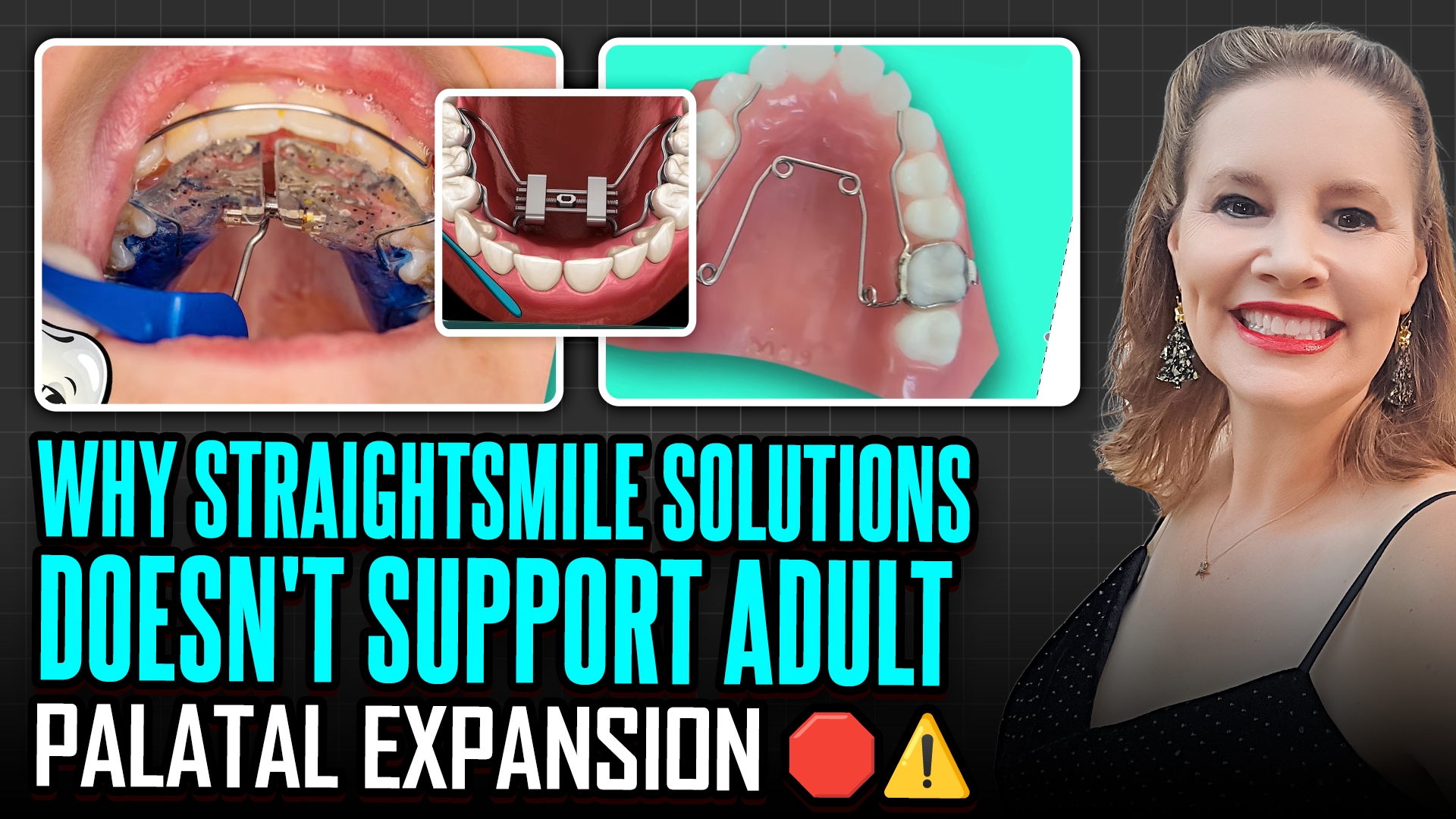
When it comes to orthodontic treatment planning, understanding the biological limitations of the human body is essential for patient safety. At StraightSmile Solutions, we love helping general practitioners navigate pediatric arch expansion. However, Dr. Amanda draws a strict line when it comes to adult palatal expansion cases involving workflows like MARPE or SARPE.
The primary reason for this boundary comes down to simple anatomy: a child’s maxilla consists of unfused palatal shelves, making it easy to widen the jaw, improve the airway, and fix bites early on. In contrast, an adult’s mid-palatal suture is completely fused.
Without surgery, attempting to use an expander, quad helix, or clear aligners on an adult does not widen the bone. Instead, it merely causes dental tipping. This artificial tipping flares the teeth outward, pushes the palatal cusps down, and frequently creates a frustrating posterior open bite. Ultimately, it introduces more instability and trouble than it is worth.
Achieving true skeletal expansion in an adult requires highly invasive surgical intervention. Procedures like MARPE (Mini-Screw Assisted Rapid Palatal Expansion) or SARPE (Surgically Assisted Rapid Palatal Expansion) involve complex bone distraction, surgical splitting, and serious risks like severe hemorrhage.
Because these advanced procedures fall completely outside the routine scope of general dentistry, Dr. Amanda does not consult on or teach them. For the safety of your practice and your patients, these complex cases should always be referred out to specialized oral surgeons and dedicated orthodontists who routinely manage surgical workflows.