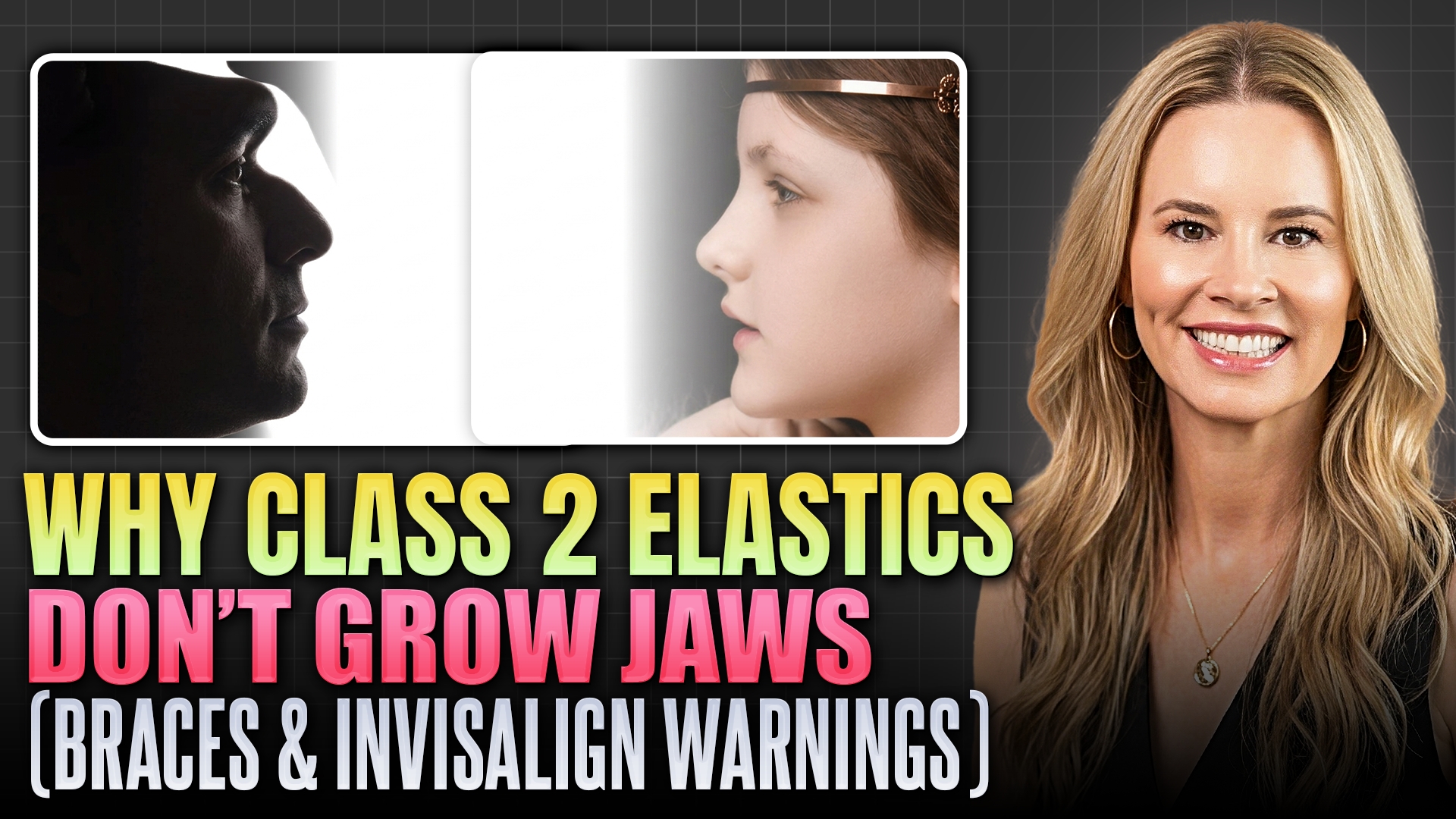
Understanding the Limitations of Bite Correction: Why Class Two Elastics Do Not Grow Jaws
A common misconception in orthodontics is that traditional Class Two elastics can stimulate jaw growth in developing children. While these tiny rubber bands are incredibly useful for adjusting how upper and lower teeth meet, they possess zero biological capability to elongate a skeletal jawbone. Understanding exactly what elastics do and mapping out their potential side effects is essential for mapping a truly successful bite correction strategy.
Traditional elastics work entirely through dental movement rather than skeletal manipulation. They function by applying constant tension that subtly tips the upper teeth backward and pulls the lower teeth forward. While this process masks a Class Two bite discrepancy, it leaves the underlying bone structure unchanged. Consequently, elastics are classified as a camouflage technique because they realign the teeth within the existing boundaries of the patient’s current jaw framework.
Relying exclusively on elastics introduces several specific side effects that clinicians must carefully evaluate during a profile analysis. Because they pull diagonally across the dental arches, elastics can cause unwanted extrusive effects that lengthen a patient’s face. They also cant the biting plane, flatten the upper lip, and push the lower incisors into a forward flare. If a young patient already possesses naturally forward-leaning teeth, utilizing elastics can easily push those roots past safe biological limits.
Furthermore, a patient’s facial profile dictates whether a camouflage technique is appropriate. For example, some individuals genetically possess a short lower jaw paired with a prominent chin bone. Attempting to grow the jaw or dramatically canting the bite plane in these specific cases can overemphasize the chin, throwing the facial aesthetics completely out of balance. When a mild overjet is present alongside a strong chin, leaving a minor bite discrepancy while simply straightening the teeth is often the most beautiful and stable outcome.