
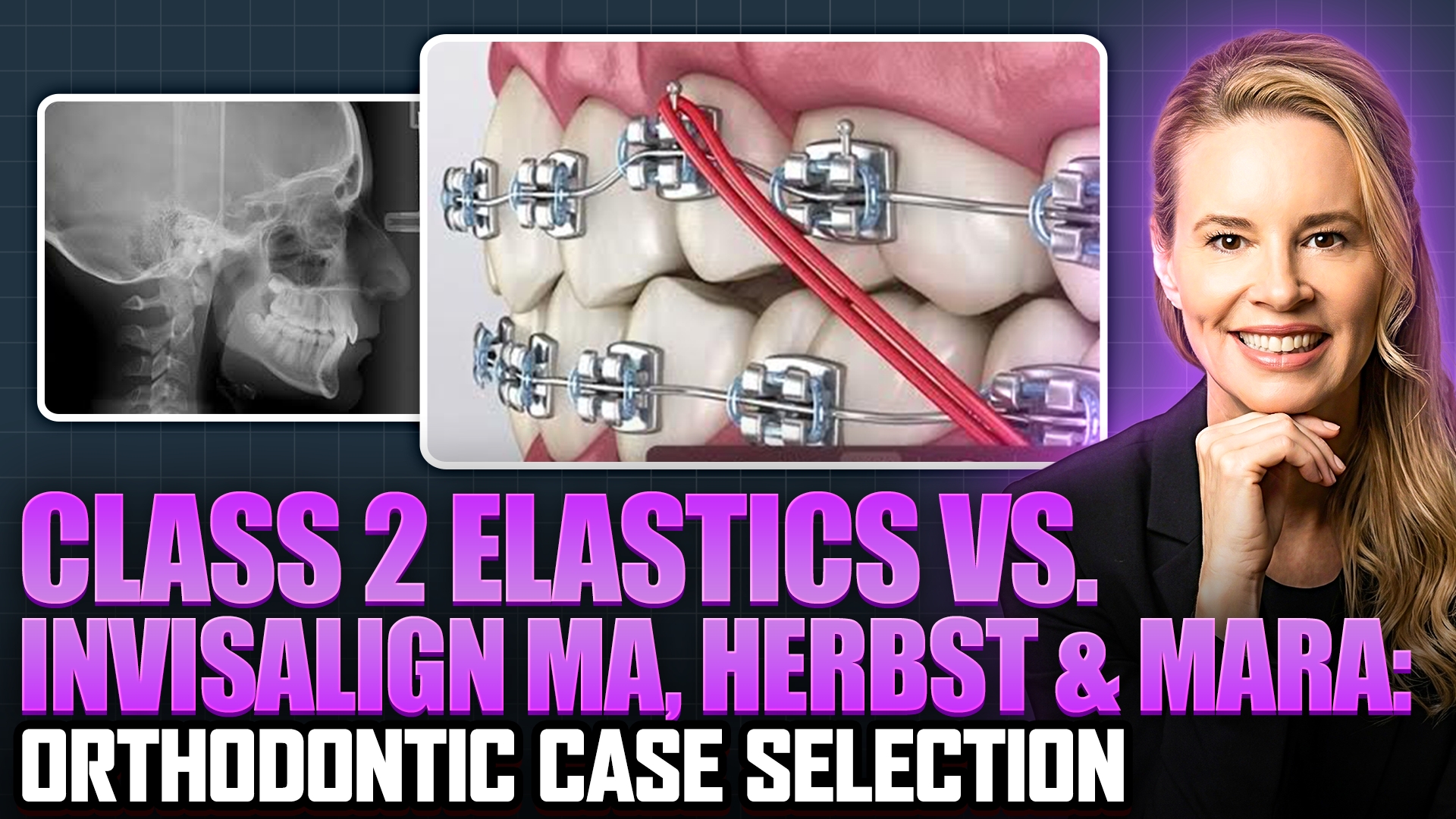
Choosing the right approach for a Class Two bite correction requires a deep understanding of the structural differences between traditional Class Two elastics and advanced orthopedic systems. While several treatments aim to resolve a mismatched bite, they achieve this goal through entirely different biological mechanisms. Understanding how elastics compare to more complex procedures helps patients and practitioners select the ideal path.
Traditional Class Two elastics primarily act as a dental camouflage technique. They apply continuous forces that tip the upper teeth backward and pull the lower teeth forward, masking the underlying jaw discrepancy. Because elastics rely purely on moving teeth within the existing bone, they do not alter jaw structure or stimulate bone growth. This means they are only appropriate for patients who do not already have forward-leaning lower incisors, as pushing flared teeth further can cross safe biological limits.
Advanced procedures like Mandibular Advancement systems and specialized fixed appliances work through an entirely different mechanical philosophy. Instead of simply shifting teeth, these advanced procedures physically guide the lower jaw forward. When utilized during active growth phases in young patients, this continuous advancement stimulates actual skeletal growth along the jawbone. This provides a true structural correction that significantly enhances a recessed jawline and permanently improves the facial profile.
While heavy mechanical appliances can also force jaw repositioning, their extreme forces risk root and bone damage if the case is not meticulously managed. Modern clear aligner systems with built-in advancement features now offer a much gentler alternative to these rigid devices. Ultimately, traditional elastics remain a valuable tool for minor dental shifting, but advanced skeletal procedures are necessary when true jaw development is required to fix the bite.