
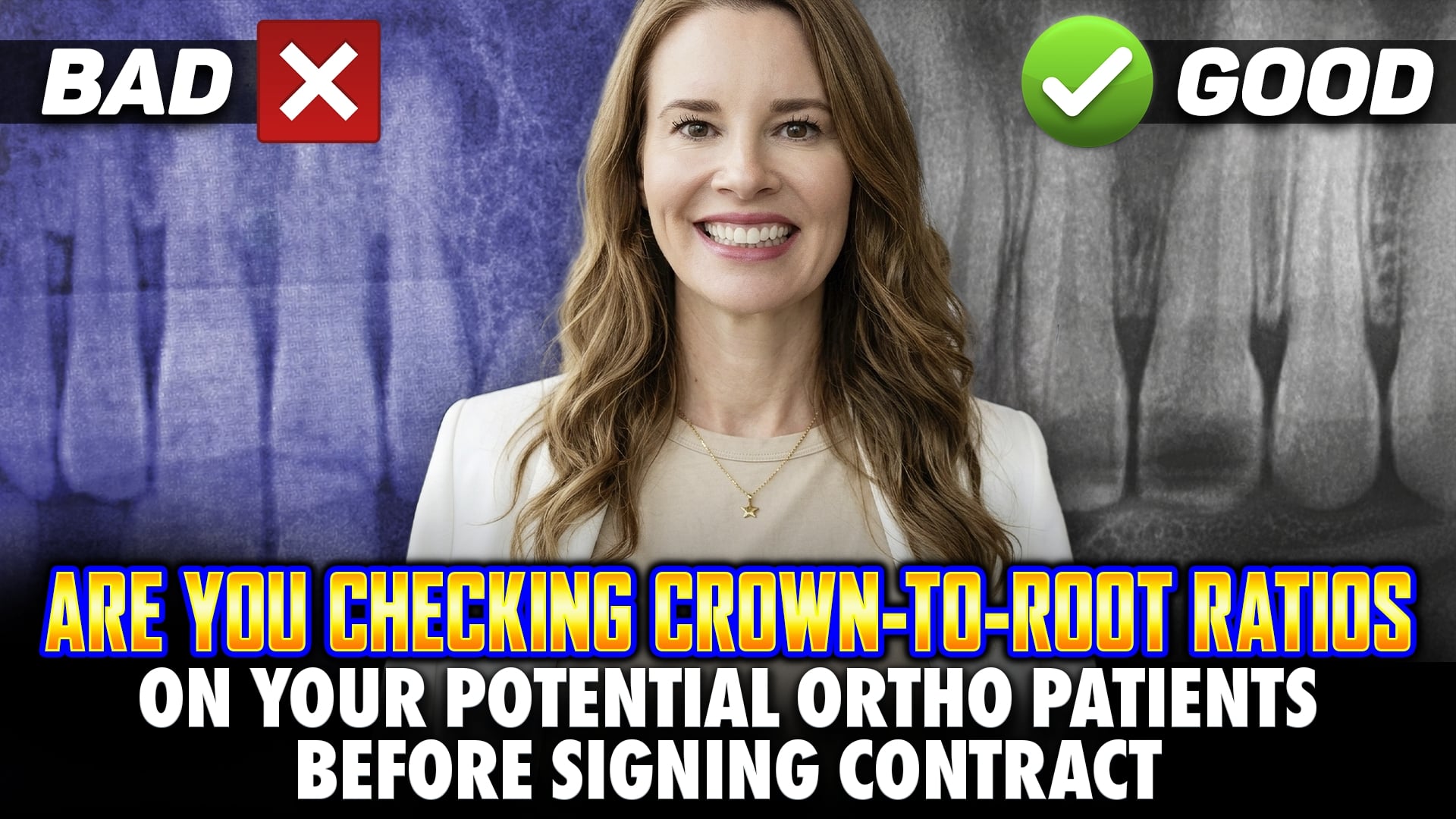
When planning orthodontic treatment for adult patients, evaluating the crown-to-root ratio is a critical step that should never be overlooked. Failing to consider the amount of bone supporting each tooth before starting a case can lead to highly unpredictable tooth movement, severe structural damage, or even tooth loss.
An ideal clinical scenario requires at least 50% of the entire tooth length to be securely embedded in healthy bone. When a patient presents with a compromised ratio—where less than half of the tooth root is supported—moving the teeth becomes incredibly risky. Adult patients often have a history of periodontal disease. Even if the disease is currently inactive with no active inflammation or deep pockets, the historical attachment loss remains permanent. Shifting these teeth can cause them to loosen completely or fall out during or after treatment, creating significant legal and clinical liability for the practitioner.
To safely navigate these complex adult periodontal cases, general and pediatric dentists should follow a strict protocol:
• Verify with Proper Diagnostics: Always use a Panoramic X-ray (Pano) or a CBCT scan rather than relying solely on a Full Mouth Series (FMX). A Pano acts as the gold standard to eliminate blind spots and reveal hidden pathology or severe root angulations.
• Get Periodontal Clearance: Never initiate active treatment until a periodontist evaluates the patient and explicitly “blesses” the case with written approval. This transfers the primary liability and ensures professional oversight.
• Apply Gentle Forces: Avoid traditional braces completely. Instead, opt for clear aligners utilizing the lowest and slowest forces possible to move the teeth gradually.
• Plan for Financial Risk: Because these cases carry a high risk of medical or dental termination before completion, utilize clear contracts regarding billing for services rendered. Collect a sizable upfront deposit or use third-party financing to cover front-loaded lab fees.
Orthodontists and general practitioners do not necessarily need to reject these patients. Instead, proceed with extreme caution, ensure continuous periodontal maintenance every three months, and let the specialist make the final call.