
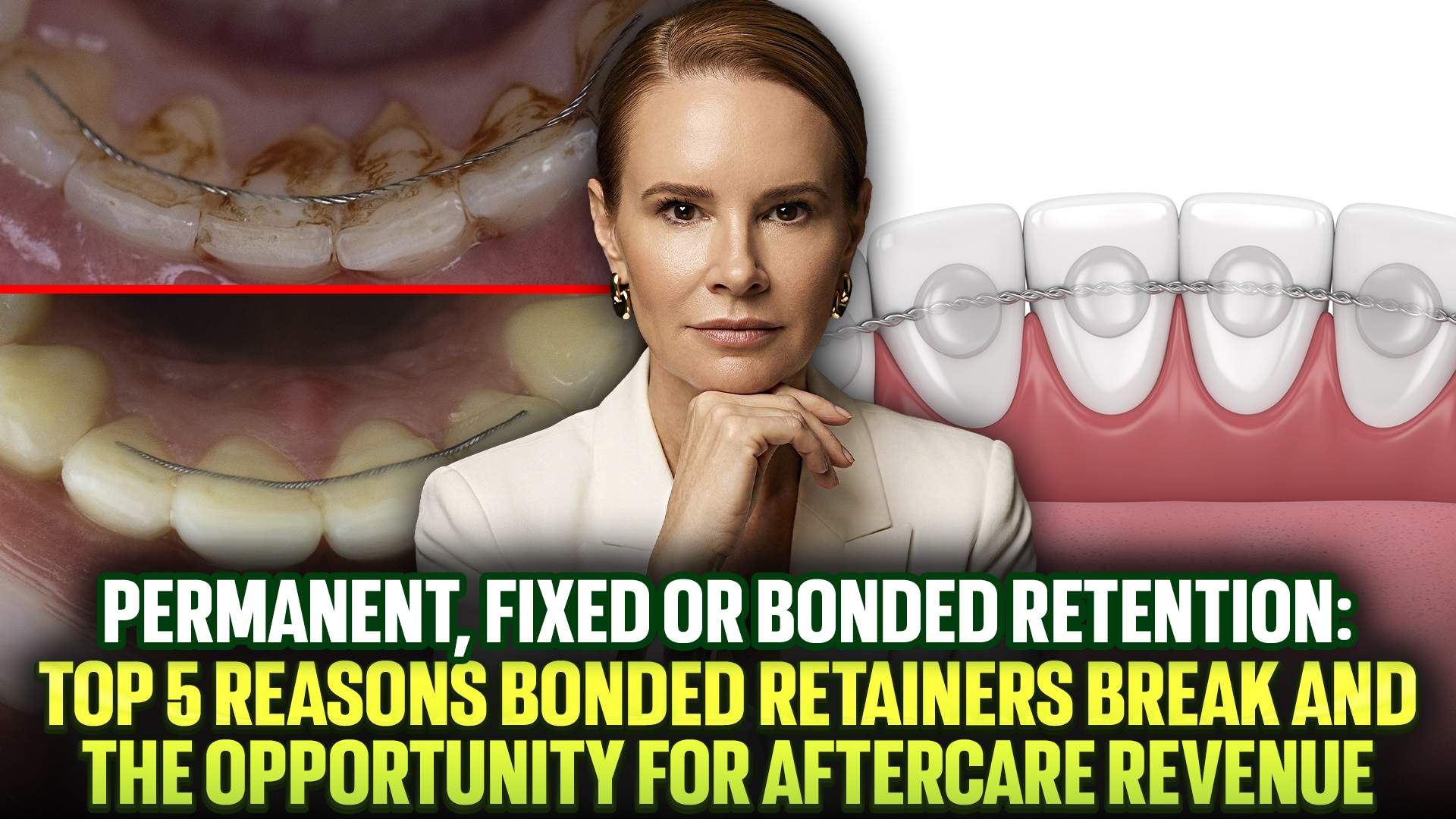
Bonded retainers are a staple in orthodontics, but many general practitioners treat them as a set and forget solution. In reality, these permanent fixtures are prone to failure and can quickly become a liability if they are not properly managed. For general dentists and dental hygienists, understanding why these retainers break is essential for preventing patient relapse and capturing overlooked revenue.Permanent retainers are rarely meant to last a lifetime. Over time, recurring chewing forces wear down the structural integrity of the metal, causing predictable material fatigue. Furthermore, when patients bite directly into hard or chewy foods like bagels, tacos, or pizza, they exert excessive pressure that easily snaps the delicate bond.Beyond physical wear, underlying biological and clinical factors play a major role in device failure. Heavy anterior contact from an unbalanced bite puts constant stress on the wire, which occurs when a case is not finished perfectly. Unaddressed myofunctional habits like tongue thrusting or nail biting also exert a continuous counterforce that forces teeth to shift and bonds to break. Clinically, poor isolation during placement causes immediate failure within days, while poor oral hygiene leads to plaque buildup and demineralization that eats away at the bonding material itself.Every time a patient with a fixed retainer sits in your hygiene chair, it represents a valuable screening opportunity. Teams should evaluate the wire for active damage, check for damaging occlusal contacts, and screen the overall bite. By shifting your practice toward a structured warranty and maintenance program with clear upcharges, you protect your patients from relapse while turning routine hygiene checks into a reliable profit center.