
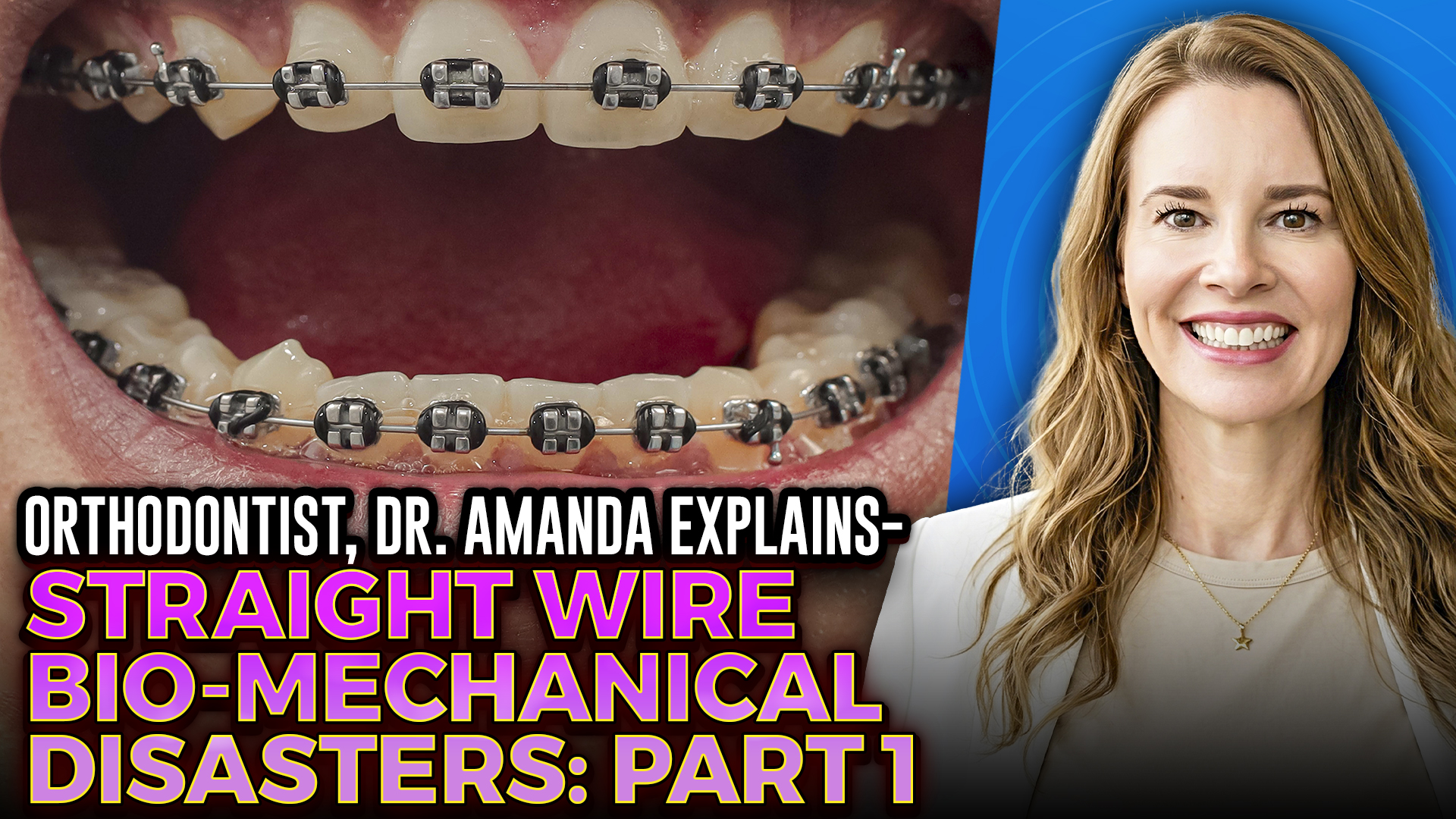
Stock photos are meant to look perfect, but in the dental world, they often showcase major clinical blunders. A closer look at a typical dental marketing image reveals a biomechanics nightmare, starting with passive round wires that fail to hide a series of diagnostic and placement mistakes.
The most glaring issue is erratic bracket heights. In an ideal setup with a passive NiTi archwire, the incisal edges should sit level. Instead, adjacent front teeth often sit at completely different heights, leaving the patient with a visibly wonky smile. While mismatched heights are occasionally intentional for future restorative work, an uneven look without a signed treatment plan is simply the result of poor execution. Furthermore, noticeable tipping highlights the need for quick periapical X-rays to verify root positions.
Moving to the lower arch, the mistakes become even more obvious. It is common to see rotated canines paired with sloppy tie work, where the elastic O-rings fail to wrap around all four bracket wings. This failure to properly tie the wire prevents true engagement, rendering the mechanics useless. This issue often stems from excess bonding glue trapped under the wings, which should be cleaned up immediately before trying to proceed.
To avoid these errors, clinicians should consider shifting away from manual bracket placement. Moving toward digital indirect bonding systems, such as software-guided placement programs, dramatically eliminates human error. Investing upfront in precise digital placement saves significant chair time and reduces overall appointments, ensuring the treatment is highly profitable and efficient.