
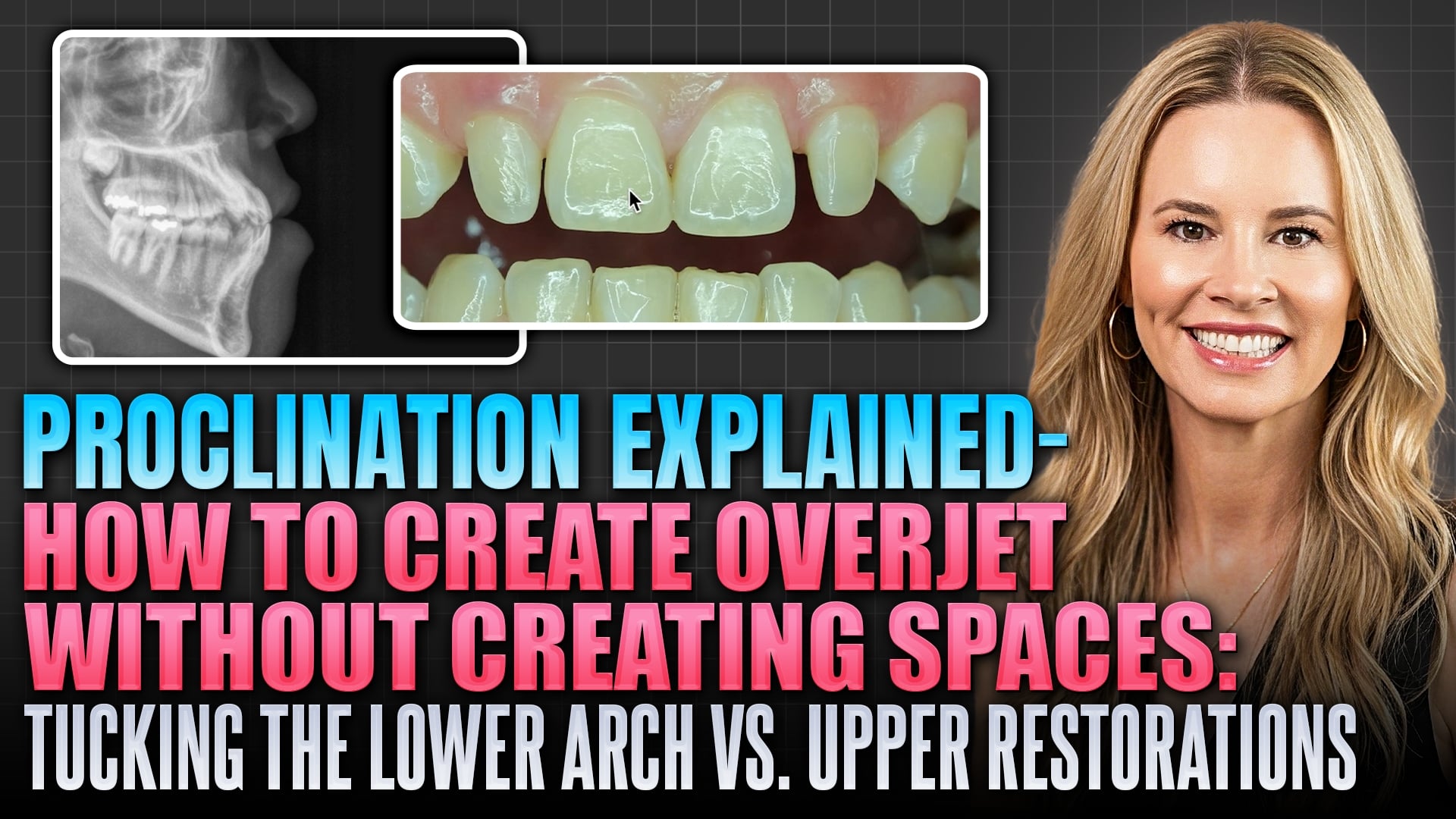
 The Pitfalls of Proclination: Why Your Orthodontic Shortcuts Are Failing
Many dental clinicians face a common dilemma when treating mild Class 3 cases or patients with a mandibular Bolton discrepancy: “Can’t we just procline the maxillary incisors to quickly generate more overjet?” On a digital mockup like Invisalign, this seems like an easy, elegant fix. However, relying on proclination as a shortcut is a recipe for clinical frustration, prolonged treatment times, and unhappy patients.
The fundamental truth about proclination is that moving teeth forward inherently creates space. Unless you plan to leave those spaces open, you cannot procline upper teeth without introducing gaps. While you can try to spread these spaces out distally, patients will almost certainly object to the resulting gaps. Reversing this midway through treatment to close the spacing effectively doubles your chair time without increasing your case fee.
Furthermore, pushing teeth blindly forward ignores critical biological boundaries. Without evaluating a cephalometric radiograph, you risk shoving the roots entirely out of the alveolar bone. True candidates for upper proclination must present with naturally upright incisors and an abundant, healthy bone structure to support the movement. Shortcuts like intrusion also fail to produce predictable overjet, despite what digital software might simulate.
To achieve predictable finishes, you must master alternative biomechanics. If a mandibular Bolton discrepancy exists, lower interproximal reduction (IPR) is often the superior choice, provided the lower incisors are not already overly upright. For growing patients, orthopedic maxilla traction remains the gold standard to balance the profile. Never leave spaces on the upper arch unless a virtual wax-up is finalized, restorative treatments are locked in, and the patient has financially committed to the restorations beforehand.