
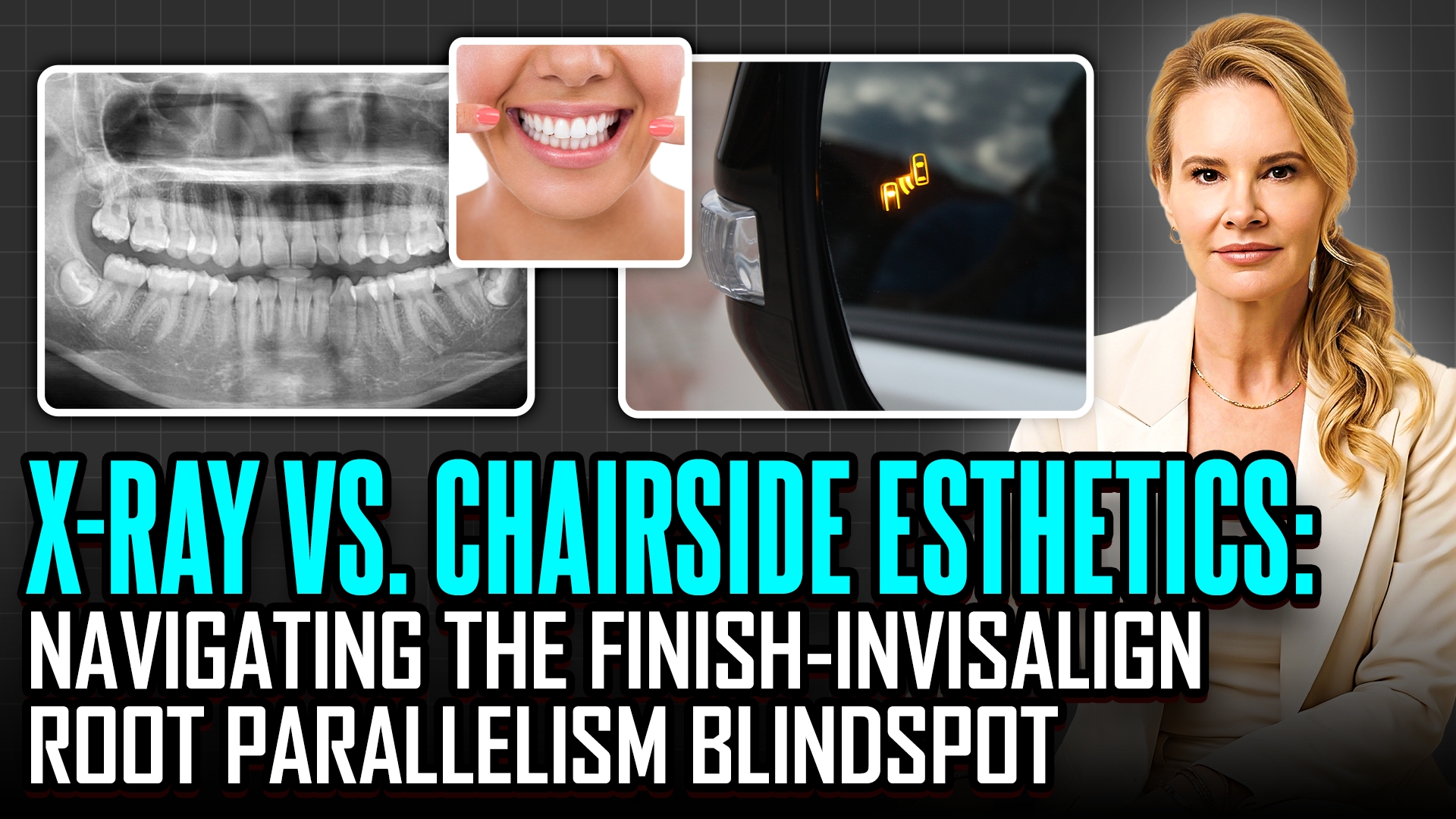
When wrapping up orthodontic cases, a major gap can form between what you see in the chair and what is actually happening beneath the gums. Many general practitioners face a common blindspot when finishing clear aligner cases like Invisalign or ClearCorrect. While the teeth might look completely straight and beautiful clinically, a progress radiograph might tell a completely different story.In traditional braces, standard workflows include a clear pausing point to evaluate root alignment. Practitioners typically take a progress panoramic X-ray or CBCT scan to check the roots, allowing them to reposition brackets as needed before final detailing.
Clear aligner therapies often lack this built-in disruption. Without a dedicated pause, it is easy to miss a severely tipped root that looks perfectly straight from the crown down.Catching these issues early is vital to prevent long-term damage like root resorption or traumatic occlusion. Approximately one month before you even consider standard debonding or finishing conversations, you should take a progress panoramic radiograph or CBCT to verify root parallelism.If a root is tipped, you must have an honest conversation with your patient regarding their options.
Uprighting the root can occasionally alter the crown’s position, temporarily making the tooth look worse or requiring future restorative work. If the patient prefers the current cosmetic appearance and the tipped root is not causing active damage, you can choose to leave it as is. However, this clinical decision must be explicitly detailed in a customized end-of-treatment release form signed by the patient or parent to protect your practice and ensure proper standard of care.