
The Hidden Connection Between Neurodivergence and Chronic Jaw Pain
For decades, the intersection of neurodiversity and dental health has remained largely unrecognized in mainstream medicine. Many individuals with neurodivergent phenotypes, particularly females with autism or ADHD, live with a baseline of chronic facial pain and severe dental breakdown. Surprisingly, this damage often occurs despite maintaining immaculate oral hygiene habits and having zero cavities. The root cause of this mysterious deterioration does not stem from poor hygiene or diet, but rather from the physical manifestations of an overlooked phenotype.
Neurodivergent individuals frequently possess distinct facial structures, such as a low-angle brachycephalic phenotype, which naturally alters bite alignment. To cope with sensory overload or to regulate the nervous system, many resort to subconscious oral stimming. While standard stimming behaviors like finger tapping or hand flapping are highly visible, oral stimming is entirely internal. This hidden habit includes intense jaw clenching, deep biting, and creating powerful suction forces inside the mouth while awake or asleep.
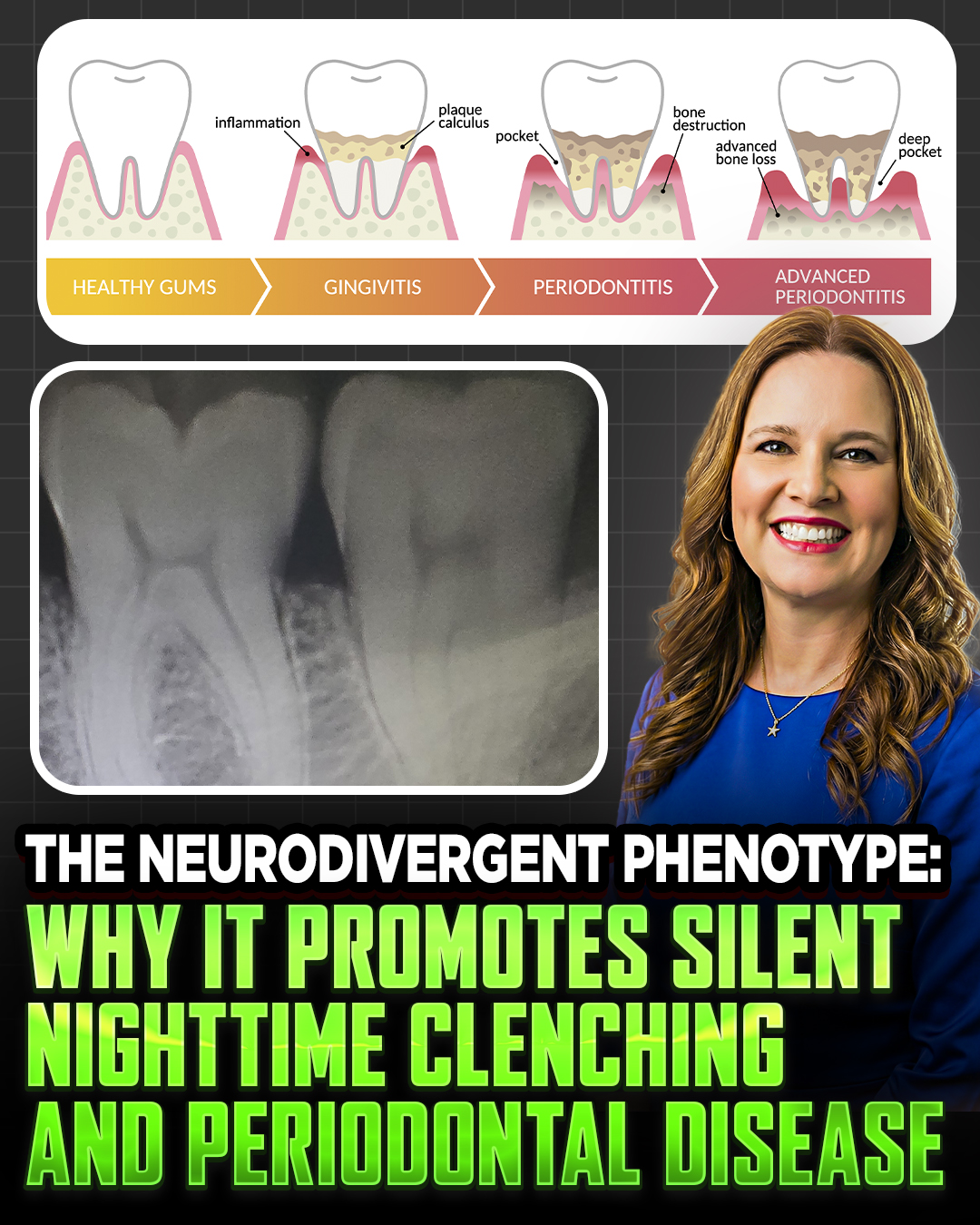
Over time, this relentless physical pressure causes severe periodontal breakdown, muscle fatigue, and unexplained dental damage. Because standard dentistry often approaches care with a one-size-fits-all mindset, typical mouthguards frequently fail to provide relief, and patients are mistakenly left with recommendations for heavy medication.
True relief requires addressing the structural root causes rather than masking the symptoms. Combining specialized occlusion-based dental adjustments with oral myofunctional therapy, tongue-tie releases, and targeted facial exercises can effectively disrupt these destructive habits. By retraining oral posture and consciously replacing oral stimming with healthy movement patterns, individuals can finally eliminate chronic facial pain and protect their long-term dental health.