
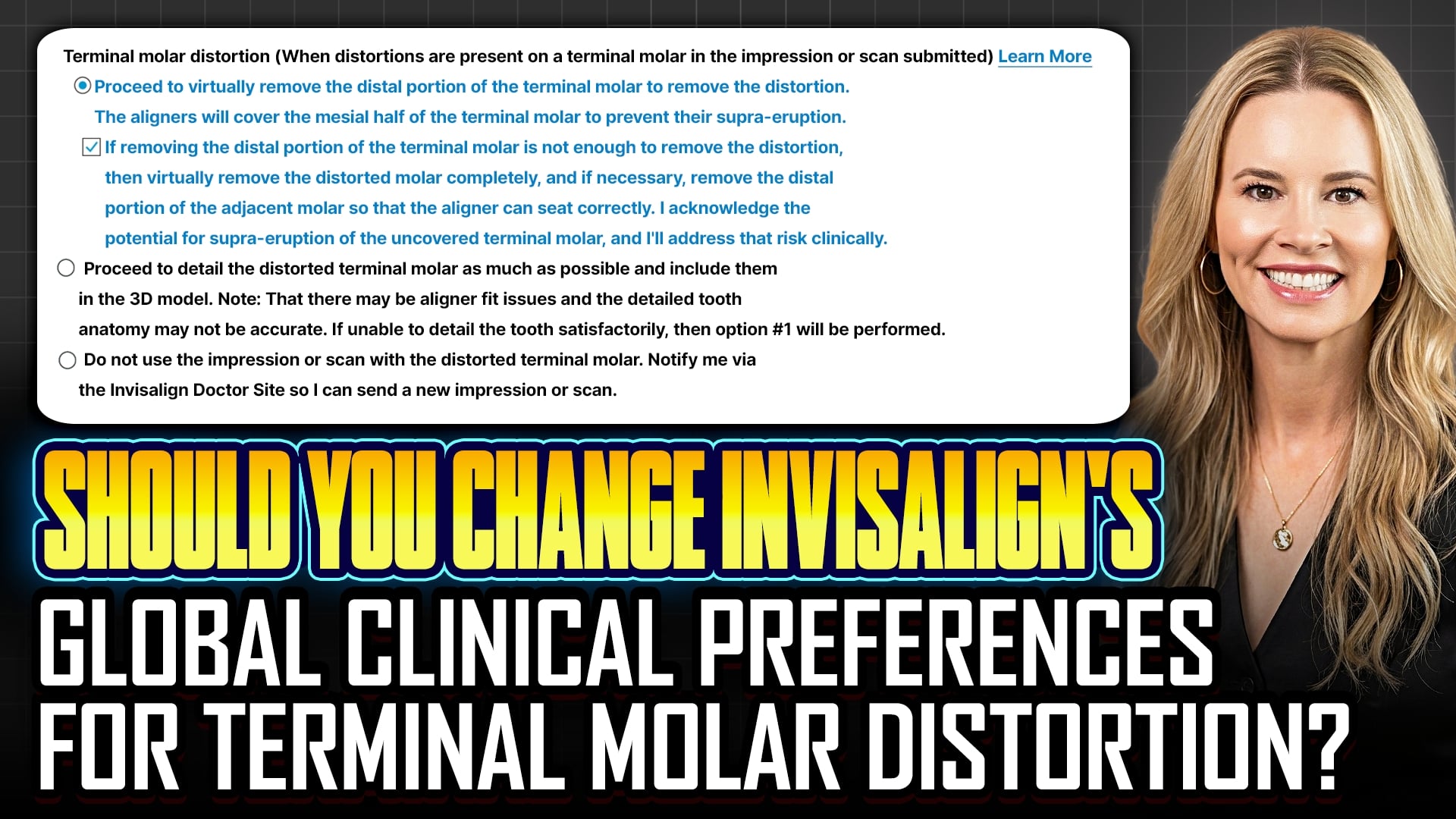
 The Critical Scan: Why the Last Molar Can Make or Break Your Clear Aligner Cases
Capturing a perfect digital impression is the foundation of any successful clear aligner treatment. However, many practitioners consistently struggle with one specific area of the mouth: the terminal molars. While it is tempting to rush through the back of the mouth, neglecting these final teeth can severely compromise your clinical outcomes.
The Problem in the Back of the MouthIt is easy to get sloppy when scanning terminal molars. The back of the mouth presents a perfect storm of clinical challenges. Patients often struggle to open wide enough, cheek muscles create tight resistance, the tongue gets in the way, and a hyperactive gag reflex can make positioning the scanner incredibly difficult.
Because of these hurdles, doctors and clinical assistants frequently settle for incomplete scans of the second or third molars.Why Every Millimeter MattersIn traditional orthodontics, practitioners occasionally bypass the last molars if they are not actively moving them. In clear aligner therapy, this is a recipe for disaster. The aligner plastic relies on the total anatomy of the dental arch for retention and proper seating. If your digital model cuts off half of a terminal molar, the final manufactured tray will not fit securely over that tooth.
This lack of proper engagement creates a loose fit, reduces the overall tracking of the aligners, and can lead to unwanted posterior open bites.The TakeawayDo not let patient anatomy or clinical fatigue compromise your digital impressions. Take the extra time to retract the cheeks, manage the tongue, and fully capture the distal surfaces of those last molars. A complete scan guarantees a better-fitting aligner, smoother treatment tracking, and far fewer mid-course corrections.