Sourcing Clear Aligners: The Risks of In-House Printing and Overseas Sourcing
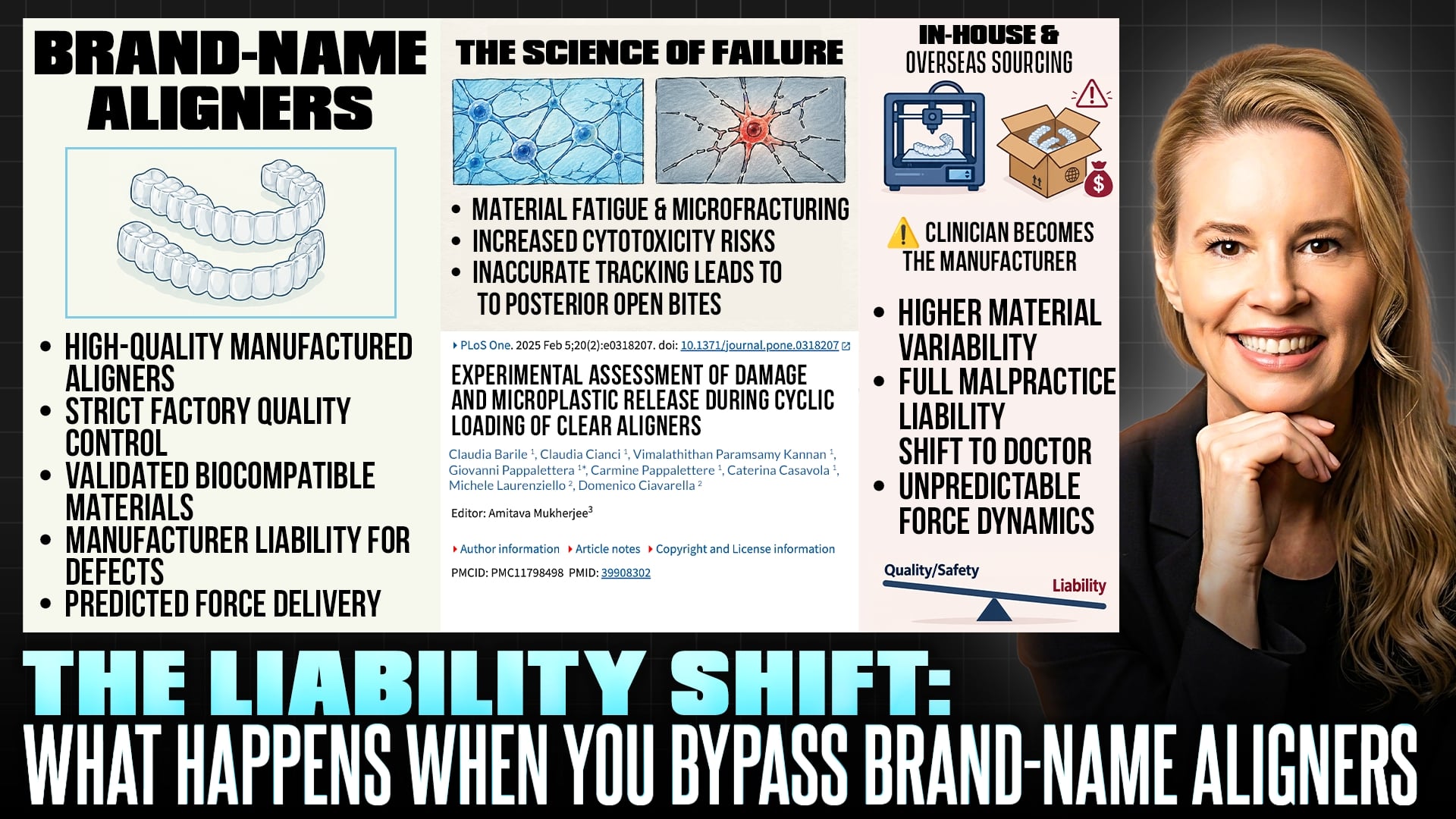
As the dental industry evolves, many clinicians are considering a shift away from major, name-brand clear aligner companies. Sourcing aligners from white-label overseas vendors or implementing in-house 3D printing setup can seem like an attractive way to reduce high laboratory overhead. However, moving away from established United States manufacturers introduces significant legal, logistical, and material safety risks that doctors must carefully evaluate.
Recent material science research highlights emerging concerns regarding plastic degradation. Experimental assessments of clear aligners under cyclic loading demonstrate that microplastics can be released into the oral cavity as patients bite and wear down the material over time. While all major FDA-approved clear aligners are completely BPA-free, the long-term biological impact of microplastic shedding is still being studied. If a practice manufactures its own aligners in-house, determining medical liability for material breakdown becomes highly complex. Every single component—from the raw 3D printing resin to the processing equipment—must be fully FDA-approved. Sourcing fabricators overseas introduces similar hurdles, as material compliance standards vary globally, and certain state dental boards enforce strict regulations regarding where patient appliances can be manufactured.
Beyond manufacturing liabilities, switching or compounding aligner brands can trigger contractual violations. Major brands update their terms and conditions annually, often restricting providers from actively marketing or delivering competing clear aligner brands simultaneously. Doctors must thoroughly review their active manufacturer agreements and consult with legal and malpractice insurance representatives before changing their workflow. Practices must remain prepared to offer alternative solutions, such as traditional wire retainers, for patients expressing concerns over plastic materials.